Hermann Hesse - The Glass Bead Game
Здесь есть возможность читать онлайн «Hermann Hesse - The Glass Bead Game» весь текст электронной книги совершенно бесплатно (целиком полную версию без сокращений). В некоторых случаях можно слушать аудио, скачать через торрент в формате fb2 и присутствует краткое содержание. Год выпуска: 1969, Жанр: Современная проза, Социально-психологическая фантастика, на английском языке. Описание произведения, (предисловие) а так же отзывы посетителей доступны на портале библиотеки ЛибКат.
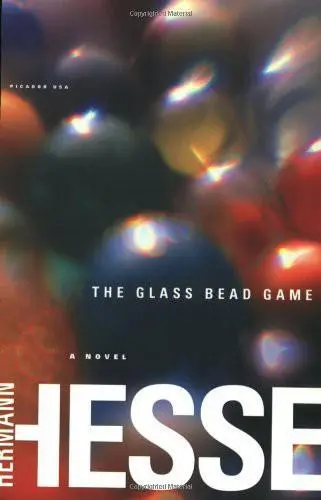
- Название:The Glass Bead Game
- Автор:
- Жанр:
- Год:1969
- ISBN:нет данных
- Рейтинг книги:4 / 5. Голосов: 2
-
Избранное:Добавить в избранное
- Отзывы:
-
Ваша оценка:
The Glass Bead Game: краткое содержание, описание и аннотация
Предлагаем к чтению аннотацию, описание, краткое содержание или предисловие (зависит от того, что написал сам автор книги «The Glass Bead Game»). Если вы не нашли необходимую информацию о книге — напишите в комментариях, мы постараемся отыскать её.
Something like chess but far more intricate, the game of Magister Ludi known as the Glass Bead Game is thought in its purest form, a synthesis through which philosophy, art, music and scientific law are appreciated simultaneously. The scholar-players are isolated within Castalia, an autonomous elite institution devoted wholly to the mind and the imagination…
The Glass Bead Game — читать онлайн бесплатно полную книгу (весь текст) целиком
Ниже представлен текст книги, разбитый по страницам. Система сохранения места последней прочитанной страницы, позволяет с удобством читать онлайн бесплатно книгу «The Glass Bead Game», без необходимости каждый раз заново искать на чём Вы остановились. Поставьте закладку, и сможете в любой момент перейти на страницу, на которой закончили чтение.
Интервал:
Закладка:
Without ever forsaking the fundamental plan of his studies, which as we have seen he outlined in his letter to Fritz Tegularius, he pushed forward energetically on a broad front wherever he scented an element of essential value to himself, that is to say, wherever the path of “awakening,” on which he had already set out, seemed to lead him. One of the positive results of his period of apprenticeship with Elder Brother was that he overcame his resistance against returning to Waldzell. Henceforth he participated in one of the advanced courses there every year, and without quite realizing how it had happened he became a personage regarded with interest and esteem in the Vicus Lusorum. He belonged to that central and most sensitive organ of the entire Game organization, that anonymous group of players of proven worth in whose hands lay the destinies of the Game at any given time, or at least the type of play that happened to be in fashion.
Officials of the Game institutes belonged to but did not dominate this group, which usually met in several remote, quiet rooms of the Game Archives. There the members beguiled their time with critical studies of the Game, championing the inclusion of new subject areas, or arguing for their exclusion, debating for or against certain constantly shifting tastes in regard to the form, the procedures, the sporting aspects of the Glass Bead Game. Everyone who had made a place for himself in this group was a virtuoso of the Game; each knew to a hair the talents and peculiarities of all the others. The atmosphere was like that in the corridors of a government ministry or an aristocratic club where the rulers and those who will take over their responsibilities in the near future meet and get to know one another. A muted, polished tone prevailed in this group. Its members were ambitious without showing it, keen-eyed and critical to excess. Many in Castalia, and some in the rest of the country outside the Province, regarded this elite as the ultimate flower of Castalian tradition, the cream of an exclusive intellectual aristocracy, and a good many youths dreamed for years of some day belonging to it themselves. To others, however, this elect circle of candidates for the higher reaches in the hierarchy of the Glass Bead Game seemed odious and debased, a clique of haughty idlers, brilliant but spoiled geniuses who lacked all feeling for life and reality, an arrogant and fundamentally parasitic company of dandies and climbers who had made a silly game, a sterile self-indulgence of the mind, their vocation and the content of their life.
Knecht was untouched by either of these attitudes. It did not matter to him whether he figured in student gossip as some sort of phenomenon or as a parvenu and climber. What was important to him were his studies, all of which now centered around the Game. Another preoccupation was, perhaps, that one question of whether the Game really was the supreme achievement of Castalia and worth devoting one’s life to. For even as he was familiarizing himself with the ever more recondite mysteries of the Game’s laws and potentialities, even as he became more and more at home in the labyrinths of the Archives and the complex inner world of the Game’s symbolism, his doubts had by no means been silenced. He had already learned by experience that faith and doubt belong together, that they govern each other like inhaling and exhaling, and that his very advances in all aspects of the Game’s mirocosm naturally sharpened his eyes to all the dubiousness of the Game. For a little while, perhaps, the idyll in the Bamboo Grove had reassured him, or perhaps one might say confused him. The example of Elder Brother had shown him that there were ways of escaping from this dubiousness. It was possible, for example, as that recluse had done, to turn oneself into a Chinese, shut oneself off behind a garden hedge, and live in a self-sufficient and beautiful kind of perfection. One might also become a Pythagorean or a monk and scholastic — but these were still escapes, renunciations of universality possible and permissible only to a few. They involved renunciation of the present and the future in favor of something perfect enough, but past. Knecht had sensed in good time that this type of escape was not the way for him. But what then was the way for him? Aside from his great talent for music and for the Glass Bead Game, he was aware of still other forces within himself, a certain inner independence, a self-reliance which by no means barred him or hampered him from serving, but demanded of him that he serve only the highest master. And this strength, this independence, this self-reliance, was not just a trait in his character, it was not just inturned and effective only upon himself; it also affected the outside world.
As early as his years at school, and especially during the period of his contest with Plinio Designori, Joseph Knecht had often noticed that many schoolmates his own age, but even more the younger boys, liked him, sought his friendship, and moreover tended to let him dominate them. They asked him for advice, put themselves under his influence. Ever since, this experience had been repeated frequently. It had its pleasant and flattering side; it satisfied ambition and strengthened self-confidence. But it also had another, a dark and terrifying side. For there was something bad and unpalatable about the attitude one took toward these schoolmates so eager for advice, guidance, and an example, about the impulse to despise them for their lack of self-reliance and dignity, and about the occasional secret temptation to make them (at least in thought) into obedient slaves. Moreover, during the time with Plinio he had had a taste of the responsibility, strain, and psychological burden which is the price paid for every brilliant and publicly representative position. He knew also that the Music Master sometimes felt weighed down by his own position. It was lovely, and tempting, to exert power over men and to shine before others, but power also had its perditions and perils. History, after all, consisted of an unbroken succession of rulers, leaders, bosses, and commanders who with extremely rare exceptions had all begun well and ended badly. All of them, at least so they said, had striven for power for the sake of the good; afterward they had become obsessed and numbed by power and loved it for its own sake.
What he must do was to sanctify and make wholesome the power Nature had bestowed on him by placing it in the service of the hierarchy. This was something he had always taken for granted. But where was his rightful place, where would his energies be put to best use and bear fruit? The capacity to attract and more or less to influence others, especially those younger than himself, would of course have been useful to an army officer or a politician; but in Castalia there was no place for such occupations. Here these qualities were useful only to the teacher and educator, but Knecht felt hardly drawn to such work. If it had been a question of his own desires alone, he would have preferred the life of the independent scholar to all others — or else that of a Glass Bead Game player. And in reaching this conclusion he once more faced the old, tormenting question: was this game really the highest, really the sovereign in the realm of the intellect? Was it not, in spite of everything and everyone, in the end merely a game after all? Did it really merit full devotion, lifelong service? Generations ago this famous Game had begun as a kind of substitute for art, and for many it was gradually developing into a kind of religion, allowing highly trained intellects to indulge in contemplation, edification, and devotional exercises.
Obviously, the old conflict between aesthetics and ethics was going on in Knecht. The question never fully expressed but likewise never entirely suppressed, was the very one that had now and then erupted, dark and threatening, from beneath the surface of the schoolboy poems he had written in Waldzell. That question was addressed not just to the Glass Bead Game, but to Castalia as a whole.
Читать дальшеИнтервал:
Закладка:
Похожие книги на «The Glass Bead Game»
Представляем Вашему вниманию похожие книги на «The Glass Bead Game» списком для выбора. Мы отобрали схожую по названию и смыслу литературу в надежде предоставить читателям больше вариантов отыскать новые, интересные, ещё непрочитанные произведения.






Обсуждение, отзывы о книге «The Glass Bead Game» и просто собственные мнения читателей. Оставьте ваши комментарии, напишите, что Вы думаете о произведении, его смысле или главных героях. Укажите что конкретно понравилось, а что нет, и почему Вы так считаете.