Hermann Hesse - The Glass Bead Game
Здесь есть возможность читать онлайн «Hermann Hesse - The Glass Bead Game» весь текст электронной книги совершенно бесплатно (целиком полную версию без сокращений). В некоторых случаях можно слушать аудио, скачать через торрент в формате fb2 и присутствует краткое содержание. Год выпуска: 1969, Жанр: Современная проза, Социально-психологическая фантастика, на английском языке. Описание произведения, (предисловие) а так же отзывы посетителей доступны на портале библиотеки ЛибКат.
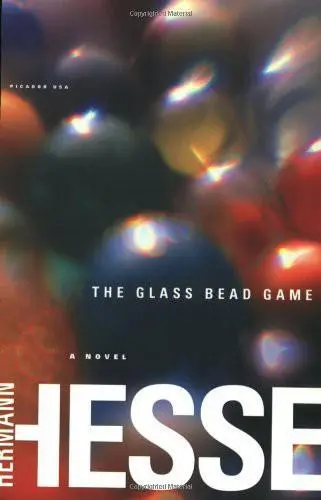
- Название:The Glass Bead Game
- Автор:
- Жанр:
- Год:1969
- ISBN:нет данных
- Рейтинг книги:4 / 5. Голосов: 2
-
Избранное:Добавить в избранное
- Отзывы:
-
Ваша оценка:
The Glass Bead Game: краткое содержание, описание и аннотация
Предлагаем к чтению аннотацию, описание, краткое содержание или предисловие (зависит от того, что написал сам автор книги «The Glass Bead Game»). Если вы не нашли необходимую информацию о книге — напишите в комментариях, мы постараемся отыскать её.
Something like chess but far more intricate, the game of Magister Ludi known as the Glass Bead Game is thought in its purest form, a synthesis through which philosophy, art, music and scientific law are appreciated simultaneously. The scholar-players are isolated within Castalia, an autonomous elite institution devoted wholly to the mind and the imagination…
The Glass Bead Game — читать онлайн бесплатно полную книгу (весь текст) целиком
Ниже представлен текст книги, разбитый по страницам. Система сохранения места последней прочитанной страницы, позволяет с удобством читать онлайн бесплатно книгу «The Glass Bead Game», без необходимости каждый раз заново искать на чём Вы остановились. Поставьте закладку, и сможете в любой момент перейти на страницу, на которой закончили чтение.
Интервал:
Закладка:
After the last of these sessions the Magister Ludi said in his rather high, courteous voice and in that carefully enunciated speech of his, but without the slightest solemnity: “Very well; you need not come tomorrow. Our business is completed for the moment. But I shall soon be having to trouble you again. Many thanks for your collaboration; it has been valuable to me. Incidentally, in my opinion you ought to apply for your admission to the Order now. There will be no difficulties; I have already informed the heads of the Order.” As he rose he added: “One word more, just by the way. Probably you too sometimes incline, as most good Glass Bead Game players do in their youth, to use our Game as a kind of instrument for philosophizing. My words alone will not cure you of that, but nevertheless I shall say them: Philosophizing should be done only with legitimate tools, those of philosophy. Our Game is neither philosophy nor religion; it is a discipline of its own, in character most akin to art. It is an art sui generis. One makes greater strides if one holds to that view from the first than if one reaches it only after a hundred failures. The philosopher Kant — he is little known today, but he was a formidable thinker — once said that theological philosophizing was ‘a magic lantern of chimeras.’ We should not make our Glass Bead Game into that.”
Joseph was surprised. His excitement was so great that he almost failed to hear the last cautionary remarks. It had flashed through his mind that this meant the end of his freedom, the completion of his period of study, admission to the Order, and his imminent enrollment in the ranks of the hierarchy. He expressed his thanks with a low bow, and went promptly to the secretariat of the Order in Waldzell, where sure enough he found himself already inscribed on the list of new nominees to the Order. Like all students at his level, he knew the rules of the Order fairly well, and remembered that the ceremony of admission could be performed by every member of the Order who held an official post in the higher ranks. He therefore requested that this be done by the Music Master, obtained a pass and a short furlough, and next day set out for Monteport, where his patron and friend was staying. He found the venerable old Master ailing, but was welcomed with rejoicing.
“You have come just in time,” the old man said. “Soon I would no longer be empowered to receive you into the Order as a younger brother. I am about to resign my office; my release has already been granted.”
The ceremony itself was simple. On the following day the Music Master invited two brothers of the Order to be present as witnesses, as prescribed by the statutes. Previously, he had given Knecht a paragraph from the rules as the subject of a meditation exercise. It was the familiar passage: “If the high Authority appoints you to an office, know this: every step upward on the ladder of offices is not a step into freedom but into bondage. The higher the office, the tighter the bondage. The greater the power of the office, the stricter the service. The stronger the personality, the less self-will.”
The group then assembled in the Magister’s music cell, the same in which Knecht had long ago been introduced to the art of meditation. The Master called upon the novice, in honor of the initiation, to play a chorale prelude by Bach. Then one of the witnesses read aloud the abbreviated version of the rules of the Order, and the Music Master himself asked the ritual questions and received his young friend’s oath. He accorded Joseph another hour; they sat in the garden and the Master advised him on how to identify himself with the rules and live by them. “It is good,” he said, “that at the moment I am departing you are stepping into the breach; it is as if I had a son who will stand in my stead.” And when he saw Joseph’s sad look he added: “Come now, don’t be downcast. I’m not. I am very tired and looking forward to the leisure I mean to enjoy, and which you will share with me frequently, I hope. And next time we meet, use the familiar pronoun of address to me. I could not offer that as long as I held office.” He dismissed him with that winning smile which Joseph had now known for twenty years.
Knecht returned quickly to Waldzell, for he had been given only three days leave. He was barely back when the Magister Ludi sent for him, greeted him affably as one colleague to another, and congratulated him on his admission to the Order. “All that is now lacking to make us completely colleagues and associates,” he continued, “is your assignment to a definite place in our organization.”
Joseph was somewhat taken aback. So this would be the end of his freedom.
“Oh,” he said timidly, “I hope I can prove useful in some modest spot somewhere. But to be candid with you, I had been hoping I would be able to continue studying freely for a while longer.”
The Magister looked straight into his eyes with a faintly ironic smile. “You say ‘a while,’ but how long is that?”
Knecht gave an embarrassed laugh. “I really don’t know.”
“So I thought,” the Master said. “You are still speaking the language of students and thinking in student terms, Joseph Knecht. That is quite all right now, but soon it will no longer be all right, for we need you. Besides, you know that later on, even in the highest offices of our Order, you can obtain leaves for purposes of study, if you can persuade the authorities of the value of these studies. My predecessor and teacher, for example, while he was still Magister Ludi and an old man, requested and received a full year’s furlough for studies in the London Archives. But he received his furlough not for ‘a while,’ but for a specific number of months, weeks, and days. Henceforth you will have to count on that. And now I have a proposal to make to you. We need a reliable man who is as yet unknown outside our circle for a special mission.”
The assignment was the following. The Benedictine monastery of Mariafels, one of the oldest centers of learning in the country, which maintained friendly relations with Castalia and in particular had favored the Glass Bead Game for decades, had asked him to send a young teacher for a prolonged stay, to give introductory courses in the Game and also to stimulate the few advanced players in the monastery. The Magister’s choice had fallen upon Joseph Knecht. That was why he had been so discreetly tested; that was why his entry into the Order had been accelerated.
FOUR
TWO ORDERS
IN A GOOD many respects Joseph Knecht’s situation was once again similar to that in his Latin school days after the Music Master’s visit. Joseph himself would scarcely have imagined that the appointment to Mariafels represented a special distinction and a large first step on the ladder of the hierarchy, but he was after all a good deal wiser about such matters nowadays and could plainly read the significance of his summons in the attitude and conduct of his fellow students. Of course he had belonged for some time to the innermost circle within the elite of the Glass Bead Game players, but now the unusual assignment marked him to all and sundry as a young man whom the superiors had their eye on and whom they intended to employ. His associates and ambitious fellow players did not exactly withdraw or become unfriendly — the members of this highly aristocratic group were far too well-mannered for that — but an aloofness nevertheless arose. Yesterday’s friend might well be tomorrow’s superior, and this circle registered and expressed such gradations and differentiations by the most delicate shades of behavior.
One exception was Fritz Tegularius, whom we may well call, next to Ferromonte, Joseph Knecht’s closest friend throughout his life. Tegularius, destined by his gifts for the highest achievements but severely hampered by certain deficiencies of health, balance, and self-confidence, was the same age as Knecht at the time of Knecht’s admission to the Order — that is, about thirty-four — and had first met him some ten years earlier in a Glass Bead Game course. At the time Knecht had sensed how strong an attraction he exerted upon this quiet and rather melancholy youth. With that psychological instinct which he possessed even then, although without precisely knowing it, he likewise grasped the essence of this love on the part of Tegularius. It was friendship ready for unconditional devotion, a respect capable of the utmost subordination. It was imbued with an almost religious fervor, but overshadowed and held in bounds by an aristocratic reserve and a foreboding of inner tragedy. In the beginning, still shaken and oversensitive, not to say suspicious, as a result of the Designori episode, Knecht had held Tegularius at a distance by consistent sternness, although he too felt drawn to this interesting and unusual schoolfellow. For a characterization of Tegularius we may use a page from Knecht’s confidential memoranda which, years later, he regularly drew up for the exclusive use of the highest authorities. It reads:
Читать дальшеИнтервал:
Закладка:
Похожие книги на «The Glass Bead Game»
Представляем Вашему вниманию похожие книги на «The Glass Bead Game» списком для выбора. Мы отобрали схожую по названию и смыслу литературу в надежде предоставить читателям больше вариантов отыскать новые, интересные, ещё непрочитанные произведения.








Обсуждение, отзывы о книге «The Glass Bead Game» и просто собственные мнения читателей. Оставьте ваши комментарии, напишите, что Вы думаете о произведении, его смысле или главных героях. Укажите что конкретно понравилось, а что нет, и почему Вы так считаете.