Hermann Hesse - The Glass Bead Game
Здесь есть возможность читать онлайн «Hermann Hesse - The Glass Bead Game» весь текст электронной книги совершенно бесплатно (целиком полную версию без сокращений). В некоторых случаях можно слушать аудио, скачать через торрент в формате fb2 и присутствует краткое содержание. Год выпуска: 1969, Жанр: Современная проза, Социально-психологическая фантастика, на английском языке. Описание произведения, (предисловие) а так же отзывы посетителей доступны на портале библиотеки ЛибКат.
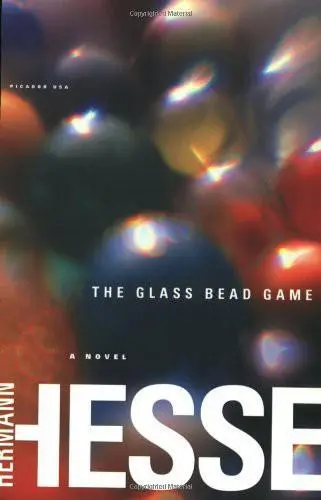
- Название:The Glass Bead Game
- Автор:
- Жанр:
- Год:1969
- ISBN:нет данных
- Рейтинг книги:4 / 5. Голосов: 2
-
Избранное:Добавить в избранное
- Отзывы:
-
Ваша оценка:
The Glass Bead Game: краткое содержание, описание и аннотация
Предлагаем к чтению аннотацию, описание, краткое содержание или предисловие (зависит от того, что написал сам автор книги «The Glass Bead Game»). Если вы не нашли необходимую информацию о книге — напишите в комментариях, мы постараемся отыскать её.
Something like chess but far more intricate, the game of Magister Ludi known as the Glass Bead Game is thought in its purest form, a synthesis through which philosophy, art, music and scientific law are appreciated simultaneously. The scholar-players are isolated within Castalia, an autonomous elite institution devoted wholly to the mind and the imagination…
The Glass Bead Game — читать онлайн бесплатно полную книгу (весь текст) целиком
Ниже представлен текст книги, разбитый по страницам. Система сохранения места последней прочитанной страницы, позволяет с удобством читать онлайн бесплатно книгу «The Glass Bead Game», без необходимости каждый раз заново искать на чём Вы остановились. Поставьте закладку, и сможете в любой момент перейти на страницу, на которой закончили чтение.
Интервал:
Закладка:
The monastery of Mariafels, through the many centuries of its existence, had shared in the making and the suffering of the history of the West. It had experienced periods of flowering and decline, had passed through rebirths and new nadirs, and had been at various times and in assorted fields famous and brilliant. Once a center of Scholastic learning and the art of disputation, still possessing an enormous library of medieval theology, it had risen to new glory after periods of slackness and sluggishness. It then became famous for its music, its much-praised choir, and the Masses and oratorios composed and performed by the Fathers. From those days it still retained a fine musical tradition, half a dozen nut-brown chests full of music manuscripts, and the finest organ in the country. Then the monastery had entered a political era, which had likewise left behind a tradition and a certain skill. In times of war and barbarization Mariafels had several times become a little island of rationality where the better minds among the opposed parties cautiously sought each other out and groped their way toward reconciliation. And once — that was the last high point in its history — Mariafels had been the birthplace of a peace treaty which for a while met the longings of the exhausted nations. Afterward, when a new age began and Castalia was founded, the monastery took an attitude of wait-and-see, was in fact rather hostile, presumably on instructions from Rome. A request from the Board of Educators to grant hospitality to a scholar who wished to work for a time in the monastery’s Scholastic library was politely turned down, as was an invitation to send a representative to a conference of musicologists. Intercourse between Castalia and the monastery had first begun in the time of Abbot Pius, who in his latter years became keenly interested in the Glass Bead Game. Ever since then a friendly though not very lively relationship had developed. Books were exchanged, reciprocal hospitality granted. Knecht’s patron, the Music Master, had spent a few weeks in Mariafels during his younger years, copying music manuscripts and playing the famous organ. Knecht knew of this, and rejoiced at the prospect of staying in a place of which his venerated Master had occasionally spoken with pleasure.
The respect and politeness with which he was received went so far beyond his expectations that he felt rather embarrassed. This was, after all, the first time that Castalia had offered the monastery a Glass Bead Game player of high distinction for an indefinite period. Joseph had learned from Dubois that he was not to regard himself as an individual, especially during the early period of his stay, but solely as the representative of Castalia, and that he was to accept and respond both to courtesies and possible aloofness solely as an ambassador. That attitude helped him through his initial constraint.
He likewise soon overcame the feelings of strangeness, anxiety, and mild excitability which troubled his first few nights and kept him from sleeping. And since Abbot Gervasius displayed a good-natured and merry benevolence toward him, he quickly came to feel at ease in his new environment. The freshness and vigor of the landscape delighted him. The monastery was situated in rough, mountainous country, full of abrupt cliffs and pockets of rich pasture where handsome cattle grazed. He savored with deep pleasure the massiveness and size of the ancient buildings, in which the history of many centuries could be read. He enjoyed the beauty and simple comfort of his apartment, two rooms on the top floor of the guest wing. For recreation he went on exploratory walks through the fine little city-state with its two churches, cloisters, archives, library, Abbot’s apartment, and courtyards, with its extensive barns filled with thrifty livestock, its gurgling fountains, gigantic vaulted wine and fruit cellars, its two refectories, the famous chapter house, the well-tended gardens and the workshops of the lay brothers: cooper, cobbler, tailor, smith, and so on, all forming a small village around the largest courtyard. He was granted entry to the library; the organist showed him the great organ and allowed him to play on it; and he was strongly attracted to the chests in which an impressive number of unpublished and to some extent quite unknown music manuscripts of earlier ages awaited study.
The monks did not seem to be terribly impatient for him to begin his official functions. Not only days but weeks passed before anyone seriously brought up the real purpose of his presence there. From his first day, it was true, some of the Fathers, and the Abbot himself in particular, had been eager to chat with Joseph about the Glass Bead Game. But no one said anything about instruction or any other systematic work with the Game. In other respects, too, Knecht felt that the manners, style of life, and general tone of intercourse among the monks was couched in a tempo hitherto unknown to him. There was a kind of venerable slowness, a leisurely and benign patience in which all these Fathers seemed to share, including those whose temperaments seemed rather more active. It was the spirit of their Order, the millennial pace of an age-old, privileged community whose orderly existence had survived hundreds of vicissitudes. They all shared it, as every bee shares the fate of its hive, sleeps its sleep, suffers its sufferings, trembles with its trembling. This Benedictine temper seemed at first glance less intellectual, less supple and acute, less active than the style of life in Castalia, but on the other hand calmer, less malleable, older, more resistant to tribulation. The spirit and mentality of this place had long ago achieved a harmony with nature.
With curiosity and intense interest, and with great admiration as well, Knecht submitted to the mood of life in this monastery, which at a time before Castalia existed had been almost the same as it was now, and even then fifteen hundred years old, and which was so congenial to the contemplative side of his nature. He was an honored guest, honored far beyond his expectations and deserts; but he felt distinctly that these courtesies were a matter of form and custom and not specially addressed to him as a person, nor to the spirit of Castalia or of the Glass Bead Game. Rather, the Benedictines were displaying the majestic politeness of an ancient power to a younger one. He had been only partly prepared for this implicit superiority, and after a while, for all that his life in Mariafels was proving so agreeable, he began to feel so insecure that he asked his authorities for more precise instructions on how to conduct himself. The Magister Ludi in person wrote him a few lines: “Don’t worry about taking all the time you need for your study of the life there. Profit by your days, learn, try to make yourself well liked and useful, insofar as you find your hosts receptive, but do not obtrude yourself, and never seem more impatient, never seem to be under more pressure than they. Even if they should go on treating you for an entire year as if each day were your first as a guest in their house, enter calmly into the spirit of it and behave as if two or even ten years more do not matter to you. Take it as a test in the practice of patience. Meditate carefully. If time hangs heavy on your hands, set aside a few hours every day, no more than four, for some regular work, study, or the copying of manuscripts, say. But avoid giving the impression of diligence; be at the disposal of everyone who wishes to chat with you.”
Knecht followed this advice, and soon began feeling more relaxed. Hitherto he had been thinking too much of his assignment to act as instructor to amateur Glass Bead Game players — the ostensible reason for his mission here — whereas the Fathers of the monastery were treating him rather as the envoy of a friendly power who must be kept in good humor. And when at last Abbot Gervasius recollected the assignment, and brought him together with several of the monks who had already had an introduction to the art of the Glass Bead Game and hoped he would give them a more advanced course, it turned out to his astonishment and his intense disappointment that the noble Game was cultivated in a most superficial and amateurish way at this hospitable place. He would evidently have to content himself with a very modest level of knowledge of the Game. Slowly, though, he came to realize that he had not really been sent here for the sake of lifting the standards of the Glass Bead Game in the monastery. The assignment of coaching the few Fathers moderately devoted to the Game and equipping them with a modest degree of skill was easy, much too easy. Any other adept at the Game, even if he were still far from belonging to the elite, would have been equal to the task. Instruction, then, could not be the real purpose of his mission. He began to realize that he had probably been sent here less to teach than to learn.
Читать дальшеИнтервал:
Закладка:
Похожие книги на «The Glass Bead Game»
Представляем Вашему вниманию похожие книги на «The Glass Bead Game» списком для выбора. Мы отобрали схожую по названию и смыслу литературу в надежде предоставить читателям больше вариантов отыскать новые, интересные, ещё непрочитанные произведения.









Обсуждение, отзывы о книге «The Glass Bead Game» и просто собственные мнения читателей. Оставьте ваши комментарии, напишите, что Вы думаете о произведении, его смысле или главных героях. Укажите что конкретно понравилось, а что нет, и почему Вы так считаете.