Hermann Hesse - The Glass Bead Game
Здесь есть возможность читать онлайн «Hermann Hesse - The Glass Bead Game» весь текст электронной книги совершенно бесплатно (целиком полную версию без сокращений). В некоторых случаях можно слушать аудио, скачать через торрент в формате fb2 и присутствует краткое содержание. Год выпуска: 1969, Жанр: Современная проза, Социально-психологическая фантастика, на английском языке. Описание произведения, (предисловие) а так же отзывы посетителей доступны на портале библиотеки ЛибКат.
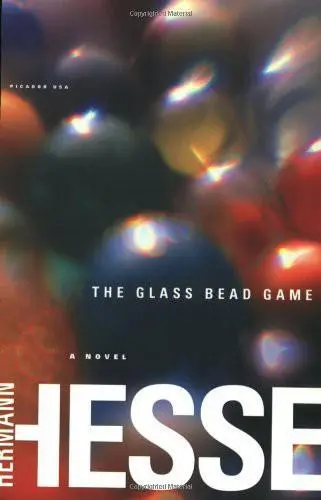
- Название:The Glass Bead Game
- Автор:
- Жанр:
- Год:1969
- ISBN:нет данных
- Рейтинг книги:4 / 5. Голосов: 2
-
Избранное:Добавить в избранное
- Отзывы:
-
Ваша оценка:
The Glass Bead Game: краткое содержание, описание и аннотация
Предлагаем к чтению аннотацию, описание, краткое содержание или предисловие (зависит от того, что написал сам автор книги «The Glass Bead Game»). Если вы не нашли необходимую информацию о книге — напишите в комментариях, мы постараемся отыскать её.
Something like chess but far more intricate, the game of Magister Ludi known as the Glass Bead Game is thought in its purest form, a synthesis through which philosophy, art, music and scientific law are appreciated simultaneously. The scholar-players are isolated within Castalia, an autonomous elite institution devoted wholly to the mind and the imagination…
The Glass Bead Game — читать онлайн бесплатно полную книгу (весь текст) целиком
Ниже представлен текст книги, разбитый по страницам. Система сохранения места последней прочитанной страницы, позволяет с удобством читать онлайн бесплатно книгу «The Glass Bead Game», без необходимости каждый раз заново искать на чём Вы остановились. Поставьте закладку, и сможете в любой момент перейти на страницу, на которой закончили чтение.
Интервал:
Закладка:
However, just as he thought he had grasped this, his authority in the monastery, and consequently his self-assurance, was unexpectedly reinforced. This came in the nick of time, for in spite of all the charms of being a guest there, he had already at times begun to feel his stay as something like a punitive transfer. One day, however, in a conversation with the Abbot he inadvertently made some allusion to the Chinese I Ching . The Abbot showed marked interest, asked a few questions, and could not disguise his delight when he found his guest so unexpectedly versed in Chinese and the Book of Changes . The Abbot, too, was fond of the I Ching . He knew no Chinese, and his knowledge of the book of oracles and other Chinese mysteries was limited — in all their scholarly interests the present inmates of the monastery seemed content with a harmless smattering. Nevertheless, this intelligent man, who was so much more experienced and worldly-wise than his guest, obviously had a real feeling for the spirit of ancient Chinese attitudes toward politics and life. A conversation of unusual liveliness ensued. For the first time real warmth was injected into the prevailing tone of remote courtesy between host and guest. The consequence was that Knecht was asked to give the Abbot instruction in the I Ching twice a week.
While his relationship to his host, the Abbot, thus increased in liveliness and meaning, while his friendly fellowship with the organist throve and the small ecclesiastical state in which he lived gradually became familiar territory to him, the promise of the oracle he had consulted before leaving Castalia also neared fulfillment. As the wanderer who carried his possessions with him, he had been promised not only the shelter of an inn but also “the persistent attentions of a young servant.” The wanderer felt justified in taking the consummation of this promise as a good sign, a sign that he in truth had “his possessions with him.” In other words, far away from the schools, teachers, friends, patrons, and helpers, far from the nourishing and salutary home atmosphere of Castalia, he carried within himself the spirit and the energies of the Province, and with their aid he was moving toward an active and useful life.
The foretold “young servant,” as it turned out, appeared in the shape of a seminary pupil named Anton. Although this young man subsequently played no part in Joseph Knecht’s life, in Joseph’s peculiarly divided mood during his sojourn in the monastery the boy seemed a harbinger of new and greater things. Anton was a close-mouthed youngster, but temperamental and talented looking, and almost ready for admission into the community of monks. Joseph’s path often crossed his, whereas he scarcely knew any of the other seminary pupils, who were confined in a wing by themselves, where guests were not admitted. In fact it was obvious that they were being kept from contact with him. Seminary pupils were not permitted to participate in the Game course.
Anton worked as a helper in the library several times a week. Here it was that Knecht met him, and occasionally had a few words with him. As time went on, it became evident to Knecht that this young man with the intense eyes under heavy black brows was devoted to him with that enthusiasm and readiness to serve so typical of the boyish adoration he had encountered so often by now. Although every time it happened he felt a desire to fend it off, he had long ago come to recognize it as a vital element in the life of the Castalian Order. But in the monastery he decided to be doubly withdrawn; he felt it would be a violation of hospitality to exert any sway over this boy who was still subject to the discipline of religious education. Moreover, he was well aware that strict chastity was the commandment here, and this, it seemed to him, could make a boyish infatuation even more dangerous. In any case, he must avoid any chance of giving offense, and he governed himself accordingly.
In the library, the one place where he habitually met Anton, he also made the acquaintance of a man he had at first almost failed to notice, so modest was his appearance. In time, however, he was to know him very well indeed, and to love him for the rest of his life with the kind of grateful reverence he felt, otherwise, only toward the now retired Music Master. The man was Father Jacobus, perhaps the most eminent historian of the Benedictine Order. He was at that time about sixty, a spare, elderly man with a sparrow hawk’s head on a long, sinewy neck. Seen from the front, his face had something dull and lifeless about it, since he was chary of gazing outward; but his profile, with the boldly curved line of the forehead, the deep furrow above the sharp bridge of his hooked nose, and the rather short but attractively shaped chin, suggested a definite and original personality.
This quiet old man — who, incidentally, on closer acquaintance could be extremely vivacious — had a table of his own in a small room off the main hall of the library. Though the monastery possessed such priceless books, he seemed to be the only really serious working scholar in the place. It was, by the way, the novice Anton who by chance called Joseph Knecht’s attention to Father Jacobus. Knecht had noticed that the room in which the scholar had his table was regarded almost as a private domain. The few users of the library entered it only if they had to, and then moved softly and respectfully on tiptoe, although the Father bent over his books did not appear to be easily disturbed. Knecht, of course, quickly imitated this circumspection, and thereby remained at a remove from the industrious old man.
One day, however, when Anton had brought Father Jacobus some books, Knecht noticed how the young man lingered a moment at the open door of the study, looking back at the scholar already absorbed in his work again. There was adoration in Anton’s face, an expression of admiration and reverence mingled with those emotions of affectionate consideration and helpfulness that well-bred youth sometimes manifests toward the paltriness and fragility of age. Knecht’s first reaction was delight; the sight was pleasing in itself, as well as evidence that Anton could so look up to older men without any trace of physical feeling. A rather sarcastic thought followed immediately, a thought Joseph felt almost ashamed of: how poor the state of scholarship must be in this institution that the only seriously active scholar in the place was stared at as if he were a fabulous beast. Nevertheless, Anton’s look of reverent admiration for the old man opened Knecht’s eyes. He became aware of the learned Father’s existence. He himself took to throwing a glance now and then at the man, discovered his Roman profile, and gradually found out one thing and another about Father Jacobus which seemed to suggest a most extraordinary mind and character. Knecht had already learned that he was a historian and regarded as the foremost authority on the history of the Benedictine Order.
One day the Father spoke to him. His manner of speech had none of the broad, deliberately benevolent, deliberately good-natured, somewhat avuncular tone which seemed to be the style of the monastery. Speaking in a low and almost timorous voice, but placing his stresses with a wonderful precision, he invited Joseph to visit him in his room after vespers. “You will find in me,” he said, “neither a specialist on the history of Castalia nor a Glass Bead Game player. But since, as it now seems, our two so different Orders are forming ever-closer ties of friendship, I should not wish to exclude myself, and would be happy to take personal advantage now and then of your presence among us.”
He spoke with utter seriousness, but his low voice and shrewd old face conferred upon his all-too-polite phrases that wonderful note of equivocation, ranging through the whole compass from earnestness to irony, from deference to faint mockery, from passionate engagement to playfulness, such as may be sensed when two holy men or two princes of the Church greet each other with endless bows in a game of mutual courtesies and trial of patience. This blending of superiority and mockery, of wisdom and obstinate ceremonial, was deeply familiar to Joseph Knecht from his studies of Chinese language and life. He found it marvelously refreshing, and realized that it was some time since he had last heard this tone — which, among others, the Glass Bead Game Master Thomas commanded with consummate skill. With gratitude and pleasure, Joseph accepted the invitation.
Читать дальшеИнтервал:
Закладка:
Похожие книги на «The Glass Bead Game»
Представляем Вашему вниманию похожие книги на «The Glass Bead Game» списком для выбора. Мы отобрали схожую по названию и смыслу литературу в надежде предоставить читателям больше вариантов отыскать новые, интересные, ещё непрочитанные произведения.








Обсуждение, отзывы о книге «The Glass Bead Game» и просто собственные мнения читателей. Оставьте ваши комментарии, напишите, что Вы думаете о произведении, его смысле или главных героях. Укажите что конкретно понравилось, а что нет, и почему Вы так считаете.