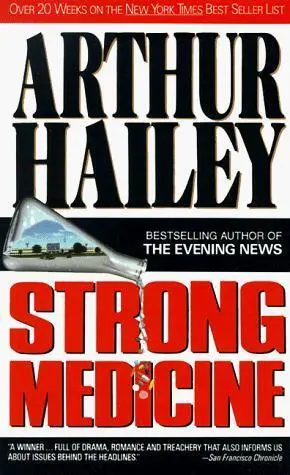
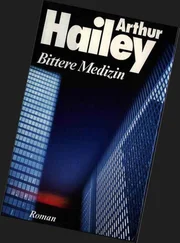
Arthur Hailey - Strong Medicine
Здесь есть возможность читать онлайн «Arthur Hailey - Strong Medicine» весь текст электронной книги совершенно бесплатно (целиком полную версию без сокращений). В некоторых случаях можно слушать аудио, скачать через торрент в формате fb2 и присутствует краткое содержание. Жанр: Современная проза, на английском языке. Описание произведения, (предисловие) а так же отзывы посетителей доступны на портале библиотеки ЛибКат.
- Название:Strong Medicine
- Автор:
- Жанр:
- Год:неизвестен
- ISBN:нет данных
- Рейтинг книги:5 / 5. Голосов: 1
-
Избранное:Добавить в избранное
- Отзывы:
-
Ваша оценка:
Strong Medicine: краткое содержание, описание и аннотация
Предлагаем к чтению аннотацию, описание, краткое содержание или предисловие (зависит от того, что написал сам автор книги «Strong Medicine»). Если вы не нашли необходимую информацию о книге — напишите в комментариях, мы постараемся отыскать её.
Strong Medicine — читать онлайн бесплатно полную книгу (весь текст) целиком
Ниже представлен текст книги, разбитый по страницам. Система сохранения места последней прочитанной страницы, позволяет с удобством читать онлайн бесплатно книгу «Strong Medicine», без необходимости каждый раз заново искать на чём Вы остановились. Поставьте закладку, и сможете в любой момент перейти на страницу, на которой закончили чтение.
Интервал:
Закладка:
Martin laughed.”That's right, they do.”
He asked Celia, "May I leave you here for a few minutes? I have to make a phone call.”
"Of course.”
When Martin had gone, closing the door behind him, she told ',,ates, "If it won't bother you, I'd like to watch.”
"Won't bother me at all. First, though, I have to kill one of these little buggers.”
He motioned to the rats. With quick, deft movements, the technician opened a refrigerator and, from the freezing compartment, took out a smallish, clear plastic box with a hinged lid. Inside was a slightly raised platform with a tray beneath containing crystalline material from which wisps of evaporation rose.”Dry ice," Yates said.”Put it in there just before you came.”
Opening one of the cages, he reached in and expertly grasped a large, squirming white-gray rat which he transferred to the plastic box, then closed the lid. Celia could now see the rat, on the small platform inside. "Because of the dry ice, in there it's a CO, environment," Yates said. "You know what that means?" Celia smiled at the elementary question.”Yes. Carbon dioxide is what we all breathe out after we've used the air's oxygen. We couldn't live on it.”
"Nor can chummy there. He's just about a goner.”
While they watched, the rat jerked twice, then was still, A minute passed.”He's stopped breathing," Yates said cheerfully. After another thirty seconds he opened the plastic box, removed the unmoving creature and pronounced, "Dead as a doornail. But it's a slow way to do it.”
"Slow? It seemed quick to me.”
Celia was trying to remember how rats were killed during her own laboratory days, but couldn't. "It's slow when you've got a lot to do. Dr. Peat-Smith likes us to use the CO, box, but there's another way that's faster. This one.”
Yates reached down. Opening a cupboard beneath the lab bench, he produced a second box, this time metal. The design differed from the first in that one end of the box had a small round aperture cut into it while immediately above was a hinged, sharp knife.”This here's a guillotine," Yates said, still cheerfully.”The French know how to do things.”
"But messily," Celia responded. Now she remembered; she had seen rats killed in a similar kind of device. "Oh, it ain't that bad. And it's fast.”
Yates glanced over his shoulder at the closed door, then, before Celia could object, he took a fresh rat from a cage and swiftly thrust it in the second box, its head protruding through the round hole. As if slicing bread, he pushed the hinged knife down. There was a soft crunching sound, another which might have been a cry, then the rat's head fell forward as blood spurted from arteries in the severed neck. Celia, despite her familiarity with laboratories and research, felt sick , Yates casually tossed the rat's body, still bleeding and twitching, into a trash receptacle and picked up the head.”All I have to do now is remove the brain. Fast and painless!" The technician laughed.”I didn't feel a thing.”
Angry and disgusted at once, Celia said, "You did not have to do that for me!" "Do what?" It was Martin's voice behind her. He had come in quietly, and now took in the scene. After a moment, and with equal quietness, he instructed, "Celia, please wait outside.”
As Celia left, Martin was glaring at Yates and breathing heavily. While she waited, through the intervening door she heard Martin's angrily raised voice.”Don't ever again!... not if you want to go on working here... my orders, always to use the CO, box which is painless, no other way!... get that other monstrosity out of here o:- break it up... I will not have cruelty, do you understand?" She heard the voice of Yates saying weakly, "Yessir.”
When Martin emerged, he took Celia's arm and escorted her to the conference room where they were alone, a thermos jug of coffee between them, from which Martin poured. "I'm sorry that happened; it shouldn't have," he told her.”Yates got carried away, probably because he isn't used to having an attractive woman watch him at work-at which he's very good, incidentally, and it's the reason I brought him here from Cambridge. He can dissect a rat's brain the way a surgeon would.”
Celia said, her mild annoyance past, "It was a small thing. It doesn't matter.”
"It matters to me.”
She said curiously, "You care about animals, don't you?" "Yes, I do.”
Martin sipped coffee, then said, "It's impossible to do research without inflicting some pain on animals. Human needs come first, and even animal lovers have to accept that. But the pain should be kept to a minimum, which you ensure by an attitude of caring; otherwise it's all too easy to become callous. I've reminded Yates of that. I don't think he'll forget.”
The incident made Celia like and respect Martin even more than before. But, she reminded herself, likes or dislikes must not affect her purpose here. "Let's get back to your progress," she said briskly.”You've talked about differences in the brains of young and old animals, also your plans to synthesize a DNA. But you haven't yet isolated a protein-the peptide you're looking for, the one that counts. Correct?" "Correct.”
Martin gave his swift, warm smile, then continued confidently.. "What you just described is the next step, also the toughest. We're working on it, and it will happen, though of course it all takes time.”
She reminded him, "When the institute opened, you said, 'Allow me two years.' You expected to. have so mething positive by then. That was two years and four months ago.”
He seemed surprised.”Did I really say that?" "You certainly did. Sam remembers. So do L" "Then it was reckless of me. Working, as we are here, at the frontier of science, timetables can't apply.”
Again Martin seemed untroubled, yet. Celia detected strain beneath the surface. Physically, too, Martin seemed out of condition. His face was pale; his eyes suggested fatigue, probably from long hours of work; and there were lines on his face which had not been there two years ago. "Martin," Celia said, "why won't you send progress reports? Sam has a board of directors he must satisfy, and shareholders 11
T he scientist shook his head, for the first time impatiently.”It's more important that I concentrate on research. Reports, so much writing and paperwork, take up valuable time.”
He asked abruptly, "Have you read John Locke?" "At college, a little.”
"He wrote that man makes discoveries by 'steadily intending his mind in a given direction.' A scientific researcher must remember that.” Celia abandoned the subject for the time being, but raised it later that day with the administrator, ex-Squadron Leader Bentley, who suggested a different reason for the absence of reports. "You should understand, Mrs. Jordan," Nigel Bentley said, "that Dr. Peat-Smith finds it excruciatingly difficult to put anything in writing. A reason is that his mind moves forward so quickly that what was important to him yesterday may be out of date today, and even more so tomorrow. He is actually embarrassed by things that he wrote earlier-two years ago, for example. He sees them as naive even though, at the time, they may have been incredibly perceptive. If he could have his way, he'd wipe out everything he's written in the past. It's a trait not uncommon in scientists. I've encountered it before.”
Celia said, "Tell me some more things I should know about the scientific mind.”
They were sharing the privacy of Bentley's modest but neatly organized office where Celia was having increasing respect for this competent, sparrowlike man she had chosen to run the research institute's business side. Nigel Bentley considered, then began, "Perhaps the most important thing is that scientists stay so long in the educational process, become so involved in their chosen, sometimes narrow, specialties, that they come to the realities of everyday life much later than the rest of us. Indeed, some great scholars never come to grips with those realities at all.”
Читать дальшеИнтервал:
Закладка:
Похожие книги на «Strong Medicine»
Представляем Вашему вниманию похожие книги на «Strong Medicine» списком для выбора. Мы отобрали схожую по названию и смыслу литературу в надежде предоставить читателям больше вариантов отыскать новые, интересные, ещё непрочитанные произведения.








Обсуждение, отзывы о книге «Strong Medicine» и просто собственные мнения читателей. Оставьте ваши комментарии, напишите, что Вы думаете о произведении, его смысле или главных героях. Укажите что конкретно понравилось, а что нет, и почему Вы так считаете.