Arthur Hailey - Evening News
Здесь есть возможность читать онлайн «Arthur Hailey - Evening News» весь текст электронной книги совершенно бесплатно (целиком полную версию без сокращений). В некоторых случаях можно слушать аудио, скачать через торрент в формате fb2 и присутствует краткое содержание. Жанр: Современная проза, на английском языке. Описание произведения, (предисловие) а так же отзывы посетителей доступны на портале библиотеки ЛибКат.
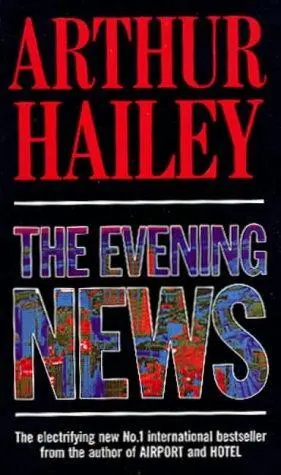
- Название:Evening News
- Автор:
- Жанр:
- Год:неизвестен
- ISBN:нет данных
- Рейтинг книги:3.5 / 5. Голосов: 2
-
Избранное:Добавить в избранное
- Отзывы:
-
Ваша оценка:
Evening News: краткое содержание, описание и аннотация
Предлагаем к чтению аннотацию, описание, краткое содержание или предисловие (зависит от того, что написал сам автор книги «Evening News»). Если вы не нашли необходимую информацию о книге — напишите в комментариях, мы постараемся отыскать её.
Evening News — читать онлайн бесплатно полную книгу (весь текст) целиком
Ниже представлен текст книги, разбитый по страницам. Система сохранения места последней прочитанной страницы, позволяет с удобством читать онлайн бесплатно книгу «Evening News», без необходимости каждый раз заново искать на чём Вы остановились. Поставьте закладку, и сможете в любой момент перейти на страницу, на которой закончили чтение.
Интервал:
Закладка:
He was greatly concerned, of course, about his father, though clearly Angus's inclusion in today's events was accidental. He had arrived unexpectedly and, unhappily, had been caught in the kidnappers' net.
At other moments during the day Sloane fretted impatiently, wanting to take some action, any action, yet knowing there was little he could do. He considered going to Larchmont, then realized he would gain nothing and would be out of touch if any fresh news broke. Another reason for staying put was the arrival of three FBI field agents who began a flurry of activity centering around Sloane.
Special Agent Otis Havelock, who was senior in the trio, at once demonstrated himself to be, in the words of an observing Horseshoe producer, "a take-charge guy.” He insisted on being conducted directly to Crawford Sloane's office and there, after introducing himself to Sloane, demanded from his escort the presence of the head of the network's security force. Next, the FBI agent used a telephone to summon help from the New York City Police Department.
Havelock—small, dapper and balding—had deep-set green eyes and a direct gaze which seldom shifted from the person with whom he was conversing. His permanently suspicious expression appeared to say, I've seen and heard it all before. Later, Sloane and others would learn that the unspoken assertion was the truth. A twenty-year FBI veteran, Otis Havelock had spent the greater part of his life dealing with the worst of human infamies.
CBA's security chief, a grizzled retired New York police detective, arrived speedily. Havelock told him, "I want this entire floor secured immediately. The people who've taken Mr. Sloane's family may make an attempt on Mr. Sloane himself Station two of your security guards at the elevators and post other guards at any stairways. They're to check, carefully check, the identity of all persons entering or leaving the floor. As soon as that's done, begin a thorough check of everyone who is on this floor already. Is that clear?”
The older man protested, "Sure it's clear, and we're all concerned for Mr. Sloane. But I don't have unlimited people and what you're asking is excessive. I have other security responsibilities I can't neglect.”
"You've neglected them already,” Havelock snapped. He produced a plastic identity card.”Look at this! I used it to get in this building. Just showed it to the guard downstairs and he waved me past.”
The security head peered at the card on which was a photo of a man in uniform.”Whose picture is that?”
"Ask Mr. Sloane.” Havelock handed Crawford Sloane the card.
As Sloane glanced at it, despite his anxieties he burst out laughing.”It's Colonel Qaddafi.”
"I had it specially made,” the FBI man said.”I use it sometimes to prove to companies like this how lousy their security is.”
He told the crestfallen security chief, "Now get on with what I said. Secure this floor and tell your people to look at ID cards carefully, including pictures .”
When the other man had gone, Havelock told Sloane, "The reason security's bad in most big companies is because security's not a revenue-producing department; therefore budget people cut it to the bone. If you'd had proper security here, it would have included protection for you and your family at home.”
Sloane said ruefully, "I wish you'd been around to suggest it."
A few minutes earlier, when Havelock phoned the New York Police Department, he had spoken with the chief of detectives, explaining that a kidnapping had taken place and asking for police protection of Crawford Sloane. Now, from outside, the sound of several rapidly approaching sirens grew louder, then stopped. Minutes later a uniformed police lieutenant and a sergeant marched in.
”What I'd like you to do,” Havelock told the lieutenant after introductions, "is keep a couple of radio cars outside to advertise police presence, also post an officer at every outside entrance, with one inside the main lobby. Tell your men to stop and question anyone suspicious.”
The police lieutenant said, "Will do.” To Crawford Sloane, he added almost reverently, "We'll take good care of you, sir. Whenever I'm home, my wife and I always watch you on the news. We like the way you do it.”
Sloane nodded.”Thank you.”
The policemen, looking around them, seemed inclined to linger, but Havelock had other ideas.”You can do a perimeter check by sending someone up to the roof. Take a look at the building from above. Make sure all exits are covered.”
With assurances that everything possible would be done, the lieutenant and the sergeant left.
”You'll be seeing a lot of me, I'm afraid, Mr. Sloane,” the special agent said when they were alone.”I've been ordered to stay close to you. You heard me say that we think you could be a kidnap target too.”
"I've sometimes thought I might be,” Sloane said. Then, expressing the guilt that had been building in him, "It never occurred to me that my family could be in danger.”
"That's because you were thinking rationally. But clever criminals are unpredictable.”
Sloane asked nervously, "You think that's the kind of people we may be dealing with?”
The FBI man's expression did not change; he seldom wasted time with words of comfort.”We don't know yet what kind they are. But I've found it useful never to underestimate the enemy. Then if it turns out later that I overrated him, that's to my advantage.”
Havelock continued, "Some more of our people will be moving in soon, here and at your home, with electronic gadgetry. We'll want to monitor your incoming phone calls, so while in this building you should take all calls on your regular line.” He motioned to Sloane's desk.”If there's a call from the kidnappers, do the obvious thing—keep talking as long as possible, though nowadays calls can be traced much faster than they used to be, and criminals know that too.”
"You realize our phones at home have unlisted numbers?”
"Yes, but I'm assuming the kidnappers have those numbers. Quite a few people are bound to know them.” Havelock produced a notebook.”Now, Mr. Sloane, I need answers to some questions.”
"Go ahead.”
"Have you, or members of your family, received any threats that you remember? Think carefully, please.”
"I'm not aware of any.”
"Is there anything you might have reported on the news which could have caused special antagonism on the part of someone, or some group?”
Sloane threw up his hands.”Once a day, at least.”
The FBI man nodded.”I guessed that, so two of my colleagues will view tapes of your broadcasts, working backward through the past two years, to see if ideas suggest themselves. How about antagonistic mail? You must get some.”
"I never see it. People in network news are shielded from the mail. It's a management decision.”
Havelock's eyebrows went up as Sloane continued, "Everything we broadcast generates a phenomenal amount of mail. Reading all those letters would take too much time. Then we'd probably want to respond, which would take more time still. Something else management believes is that we're better able to keep our sense of perspective and fairness if protected from individual reactions to the news.” Sloane shrugged.”Some may disagree, but that's the way it is.”
"So what happens to the mail?”
"It's handled by a department called Audience Services. All letters are answered and anything judged important is sent to the News Division president.”
"I presume all incoming mail is kept.”
"I believe so,"
Havelock made a note.”We'll assign people to go through that too.”
During a pause, Chuck Insen knocked on the office door and came in.
”If I can interrupt As the other two nodded, the executive producer said, "Crawf, you know we all want to do the best we can—for you, for Jessica, Nicky..."
Читать дальшеИнтервал:
Закладка:
Похожие книги на «Evening News»
Представляем Вашему вниманию похожие книги на «Evening News» списком для выбора. Мы отобрали схожую по названию и смыслу литературу в надежде предоставить читателям больше вариантов отыскать новые, интересные, ещё непрочитанные произведения.










Обсуждение, отзывы о книге «Evening News» и просто собственные мнения читателей. Оставьте ваши комментарии, напишите, что Вы думаете о произведении, его смысле или главных героях. Укажите что конкретно понравилось, а что нет, и почему Вы так считаете.