Arthur Hailey - Evening News
Здесь есть возможность читать онлайн «Arthur Hailey - Evening News» весь текст электронной книги совершенно бесплатно (целиком полную версию без сокращений). В некоторых случаях можно слушать аудио, скачать через торрент в формате fb2 и присутствует краткое содержание. Жанр: Современная проза, на английском языке. Описание произведения, (предисловие) а так же отзывы посетителей доступны на портале библиотеки ЛибКат.
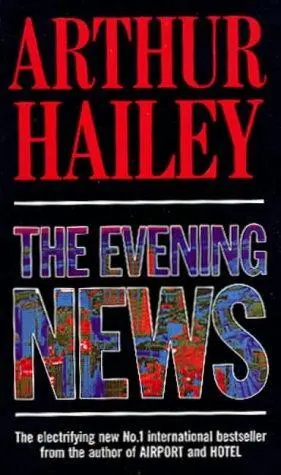
- Название:Evening News
- Автор:
- Жанр:
- Год:неизвестен
- ISBN:нет данных
- Рейтинг книги:3.5 / 5. Голосов: 2
-
Избранное:Добавить в избранное
- Отзывы:
-
Ваша оценка:
Evening News: краткое содержание, описание и аннотация
Предлагаем к чтению аннотацию, описание, краткое содержание или предисловие (зависит от того, что написал сам автор книги «Evening News»). Если вы не нашли необходимую информацию о книге — напишите в комментариях, мы постараемся отыскать её.
Evening News — читать онлайн бесплатно полную книгу (весь текст) целиком
Ниже представлен текст книги, разбитый по страницам. Система сохранения места последней прочитанной страницы, позволяет с удобством читать онлайн бесплатно книгу «Evening News», без необходимости каждый раз заново искать на чём Вы остановились. Поставьте закладку, и сможете в любой момент перейти на страницу, на которой закончили чтение.
Интервал:
Закладка:
Meanwhile, in the darkened control room where Chuck Insen had now established himself, a woman director slid into her central seat facing a bank of TV monitors, some illumined, others black. On her right, an assistant with an open notebook joined her. Operators and technicians were taking their places, a stream of orders flowing.
”Standby camera one. Mike check.”
"Bill, this will be a live announce. 'We interrupt this programming' open and a 'resume programming' close. Okay?”
"Okay. Got it.”
"Do we have a script yet?”
"Negative. Don may go ad-lib.”
"Bring the video up ten units.”
"Camera one, let's see Kettering.”
More monitors were coming alight, among thern one from the flash facility. The face of Don Kettering filled the screen.
The director's assistant was talking with network master control.”This is news. We're expecting to break into the network with a bulletin. Please stand by.”
The director inquired, "Is the special slide ready?”
A voice responded, "Here it is.”
On another monitor, bright red letters filled the screen:
CBA NEWS
SPECIAL
BULLETIN
"Hold it there.” The director turned in her chair to speak to Insen.”Chuck, we're ready as we'll ever be. Do we go or not?”
The executive producer, a telephone cradled in his shoulder, told her, "I'm finding out now.”
He was talking to the News Division president who was in the main newsroom where Crawford Sloane was pleading for delay.
The time was 11:52 A.M.
* * *
When the shattering national desk announcement began, Crawford Sloane was at the head of a stairway on the fourth floor, about to descend to the newsroom. His intention had been to find out more, if he could, about the earlier report from Larchmont.
As the speakerphones went live, he stopped to listen, then, scarcely believing what he had heard, stood briefly, dazed and in a state of shock. His momentary trance was interrupted by one of the Horseshoe secretaries who had seen him leave and now came running after him, calling out breathlessly, "Oh, Mr. Sloane! The Larchmont police are on your line. They want to talk to you urgently.”
He followed the girl back and took the call in his office.
”Mr. Sloane, this is Detective York. I'm at your home and have some unfortunate—'
"I just heard. Tell me what you know.”
"Actually, sir, it's very little. We know that your wife, son and father left for the Grand Union supermarket about fifty minutes ago. Inside the store, according to witnesses, they were approached . . .”
The detective continued his recital of known facts, including the trio's apparently forced departure in a Nissan van. He added, "We've just heard that FBI special agents are on the way here, and someone from FBI is coming over to you. I've been asked to tell you there's concern about your own safety. You'll receive protection, but for the time being you should not leave the building you are in.”
Sloane's mind was whirling. Consumed with anxiety, he asked, "Is there any idea who might have done this?”
"No, sir. It all happened suddenly. We're absolutely in the dark.”
"Do many people know about this—what's happened?”
"As far as I know, not many.” The detective added, "The longer we can keep it that way, the better.”
"Why?”
"With a kidnapping, Mr. Sloane, publicity can be harmful. We may be hearing from the kidnappers—they'll probably try to contact you first. Then we, or more likely the FBI, will want a dialog with them, a start to negotiating. We won't want the whole world in on that. Nor will they because . . “
Sloane interrupted.”Detective, I'll talk to you later. Right now there are things I have to do.”
Aware of activity around the Horseshoe and knowing what it meant, Sloane wanted to curb precipitate action. Hurrying from his office he called out, "Where's Les Chippingham?”
"In the newsroom,” a senior producer said. Then, more gently, "Crawf, we're all damn sorry, but it looks as if we're going on the air.”
Sloane scarcely heard. He raced for the stairs and descended them swiftly. Ahead he could see the news president in hasty conference with several others around the national desk. Chippingham was asking, "How sure are we of that Larchmont stringer?”
Ernie LaSalle answered, "WCBA say he's a little old guy they've had for years—four square, reliable.”
"Then I guess we should go with what we have.”
Sloane broke into the circle.”No, no, no, Les, don't go with it.
We need more time. The police just told me they may hear from the kidnappers. Publicity could harm my family.”
LaSalle said, "Crawf, we know what you're going through. But this is a big story and others have it. They won't hold off. WNBC—”
Sloane shook his head.”I still say no!” He faced the news president directly.”Les, I beg of you—delay!”
There was an embarrassed silence. Everyone knew that in other circumstances, Sloane would be the first to urge going ahead. But no one had the heart to say, Crawf you're not thinking coherently.
Chippingham glanced at the newsroom clock: 11:54.
LaSalle had taken over the phone call from Insen. Now he reported, "Chuck says everyone's set to go. He wants to know: Are we breaking into the network or not?”
Chippingham said, "Tell him I'm still deciding.” He was debating: Should they wait until noon? On monitors overhead he could see the national feeds of all networks. On CBA a popular soap opera was still in progress; when it concluded, commercials would follow. Cutting in now would be a costly disruption. Would less than another six minutes make much difference?
At that moment, simultaneously, several newsroom computers emitted a "beep.” On screens a bright "B”appeared the signal for an urgent press wire bulletin. Someone reading a screen called out, "AP has the Sloane kidnap story.”
On the national desk another phone rang. LaSalle answered, listened, then said quietly, "Thank you for telling us.” Hanging up, he informed the news president, "That was NBC. They called us as a courtesy to say they have the story. They're going with it on the hour.”
The time was fifteen seconds short of 11:55.
Making a decision, Chippingham said, "We go now!” Then to LaSalle, "Tell Chuck to break the network.”
17
In the CBA News headquarters building, two floors below street level in a small, plain room, two male operators sat facing complex switching systems with a galaxy of colored lights and dials, computer terminals and television monitors. Two sides of the room had glass surrounds looking out onto drab corridors. Passersby, if so inclined, could look in. This was network master control, technical command post for the entire CBA national network.
Through here all network programming flowed—entertainment, news, sports, documentaries, presidents' addresses, Capitol Hill follies, assorted live coverage and pre-recordings, and national commercials. Surprisingly, for all its importance as an electronic pulse center, master control's location and appearance were uninspiring.
At master control, each day usually advanced routinely according to a meticulous plan which codified each twenty-four hours of broadcasting in terms of minutes, sometimes seconds. Principally, execution of the plan was by computer, with the two operators overseeing—and occasionally interceding when unexpected events required regular programming to be interrupted.
An interruption was occurring now.
Moments earlier on a direct line from the News Division control room, Chuck Insen had instructed, "We have a news special. It's for the full network. Were taking air—now!”
As Insen spoke, the slide "CBA News Special Bulletin,” fed from the news control room, came up on a master control monitor.
Читать дальшеИнтервал:
Закладка:
Похожие книги на «Evening News»
Представляем Вашему вниманию похожие книги на «Evening News» списком для выбора. Мы отобрали схожую по названию и смыслу литературу в надежде предоставить читателям больше вариантов отыскать новые, интересные, ещё непрочитанные произведения.









Обсуждение, отзывы о книге «Evening News» и просто собственные мнения читателей. Оставьте ваши комментарии, напишите, что Вы думаете о произведении, его смысле или главных героях. Укажите что конкретно понравилось, а что нет, и почему Вы так считаете.