Arthur Hailey - Evening News
Здесь есть возможность читать онлайн «Arthur Hailey - Evening News» весь текст электронной книги совершенно бесплатно (целиком полную версию без сокращений). В некоторых случаях можно слушать аудио, скачать через торрент в формате fb2 и присутствует краткое содержание. Жанр: Современная проза, на английском языке. Описание произведения, (предисловие) а так же отзывы посетителей доступны на портале библиотеки ЛибКат.
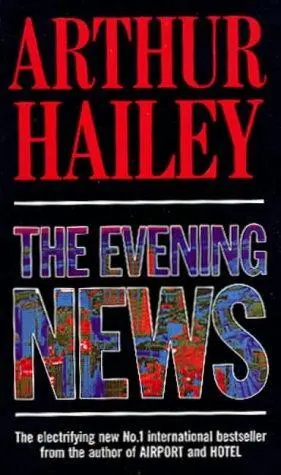
- Название:Evening News
- Автор:
- Жанр:
- Год:неизвестен
- ISBN:нет данных
- Рейтинг книги:3.5 / 5. Голосов: 2
-
Избранное:Добавить в избранное
- Отзывы:
-
Ваша оценка:
Evening News: краткое содержание, описание и аннотация
Предлагаем к чтению аннотацию, описание, краткое содержание или предисловие (зависит от того, что написал сам автор книги «Evening News»). Если вы не нашли необходимую информацию о книге — напишите в комментариях, мы постараемся отыскать её.
Evening News — читать онлайн бесплатно полную книгу (весь текст) целиком
Ниже представлен текст книги, разбитый по страницам. Система сохранения места последней прочитанной страницы, позволяет с удобством читать онлайн бесплатно книгу «Evening News», без необходимости каждый раз заново искать на чём Вы остановились. Поставьте закладку, и сможете в любой момент перейти на страницу, на которой закончили чтение.
Интервал:
Закладка:
Then barely a week ago, while being driven in darkness from Larchmont to Manhattan after visiting Crawford Sloane, there had been the remembrance of Partridge and Gemma's idyllic, halcyon days in Rome where their love had grown; Gemma's shining gift of laughter and joy; the checkbook she could never balance; the car she drove like a fiend, arousing his fears . . . until she surrendered the keys on learning she was pregnant. And after that, the news of their move from Rome to London . . .
Now, here he was, on another air journey and with more quiet moments, back again with thoughts of Gemma. This time, unlike the others, he did not resist the memories but let them flow.
* * *
Their life in London was unbelievably good.
They took over a peasant furnished flat in St. John's Wood which Partridge's predecessor had vacated, Gemma quickly adding touches of her own style and color. The rooms were always filled with flowers. She hung paintings they had brought from Rome, shopped for china and table linens in Kensington and added a striking bronze sculpture by a new young artist exhibiting in Cork Street.
At the CBA News London bureau, Partridge's work went well. Some stories he covered were in Britain, others on the Continent—in France, the Netherlands, Denmark and Sweden though he was seldom away from home for long.” en he wasn't working, he and Gemma explored London together, delighting in their joint discovery of history, splendor, curiosity and oddity, often in intriguing, narrow streets, some still as Dickens had described them, or around corkscrew, convoluted corners.
The multitude of mazelike streets perplexed Gemma and she often got lost. When Partridge suggested that parts of Rome could be equally difficult, she shook her head in disagreement.”They do not say idly 'the Eternal City,' Harry caro. In Rome you move onward; it is something you can feel. London plays with you like cat and mouse; it turns you sideways and backward and you never know. But I adore it; it is like a game.”
The traffic bewildered Gemma too. Standing with Partridge on the steps of the National Gallery, watching the speeding circle of massed taxis, cars and double-deck buses rounding Trafalgar Square, she told him, "It is so dangerous, darling. They are all going the wrong way.”Fortunately, because she could not adjust mentally to driving on the left, Gemma had no desire at all to use their car and, when Partridge was not available, she either walked a great deal or traveled by Underground or taxi.
The National was one of many galleries they visited and they savored other sights too, both conventional and off beat, from the changing of the guard at Buckingham Palace to viewing bricked up windows on old buildings—a holdover from the early 1800s when windows were taxed to finance the Napoleonic wars.
A guide they hired for a day showed them a statue of Queen Anne who, the guide noted, had nineteen pregnancies and was buried in a coffin four feet eight inches square. And at New Zealand House, formerly the Carlton Hotel he told them Ho Chi Minh once worked there as a kitchen porter—all of it the kind of information Gemma loved, and she squirreled it away in an ever-growing notebook.
A favorite Sunday pastime was visiting Speakers' Corner near Marble Arch where, as Partridge explained, 'prophets, loudmouths and lunatics get equal time.”
“What is so different about that, Harry?” Gemma once asked after listening.”Some speeches you report seriously on TV are no better. You should do a piece about Speakers' Corner for your news.”
Soon after, Partridge passed the suggestion to New York and the Horseshoe shot back approval. A report was done and became a much-praised, humorous "end piece” on a Friday night.
Another highlight was visiting Brown's Hotel, founded by Lord Byron's butler, and having afternoon tea—the ultimate English experience with impeccable service, dainty sandwiches, scones, strawberry jam and clotted Devonshire cream.”It is a sacred ritual, mio amore,” Gemma declared "Like communion, but tastier.”
In short, whatever they did together became a time of joy. And, all the while, Gemma's pregnancy progressed, promising supplemental happiness ahead.
It was during her seventh month of pregnancy that Partridge was sent on a one-day assignment to Paris. CBA News's Paris bureau, short-staffed, needed someone to cover accusations about an American film which portrayed critically—and inaccurately, it was claimed—the French Resistance in World War II, Partridge did the piece, which was sent by satellite to New York via London, though he doubted if it was important enough to make the National Evening News, and in the end it didn't.
Then, in the Paris bureau and about to leave to catch his homebound flight, he was handed a phone and told, "London wants you. Zeke is on the line.”
Zeke was Ezekiel Thomson, the London bureau chief—huge, tough, dour and black also, to those who worked with him, he seemed emotionless. The first thing Partridge became aware of as he listened on the phone was that Zeke's voice was choked and breaking.
”Harry, I've never had to do anything like this . . . I don't know how ... but I have to tell you..." he managed to get out.
Somehow Zeke conveyed the rest.
Gemma was dead She had begun to cross the street at a busy intersection in Knightsbridge and witnesses said she had been looking to the left instead of to the right . . . Oh, Gemma! Dearest, wonderful, scatterbrained Gemma, who believed that everyone in Britain was driving on the wrong side, who had not yet mastered which way to look when a pedestrian amid traffic A truck, coming from the right, had struck and run over her. Those who saw it happen said the truck driver should not be blamed, he didn't have a chance . . .
Their baby—a boy, Partridge discovered later—had also died.
* * *
Partridge returned to London and when what had to be done was done, alone in the flat they had shared, he wept. He stayed alone for days, refusing to see anyone while his tears poured out —not only for Gemma, but all the tears which across the years he had never shed.
He wept at last for the dead Welsh children at Aberfan whose pathetic bodies he had watched brought from that ghastly sea of mud He criedf or the starving in Africa where some had died as cameras turned and Partridge, dry-eyed, made entries in his notebook He cried for all others in those many tragic places he had visited, where he had stood among the bereaved, hearing their wailing, chronicling their grief yet was a newsman doing his job and nothing more.
Somewhere amid it all he remembered the words of the woman psychiatrist who once told him, "You're banking it all, tucking the emotion away inside you somewhere. One day everything will overflow, crack open, and you'll cry. Oh, how you'll cry!”
Afterward, as best he could, he had put his life together. CBA News had helped by keeping him busy, not giving him time for introspection, and as fast as one tough assignment ended, another took its place. Soon, wherever there was conflict or danger in the world, Harry Partridge was on the scene. He took risks and got away with them until it seemed, to himself and others, that his life was charmed. And while it happened, the months, then years slipped by.
Nowadays there were stretches of time when he was able, if not to forget Gemma, at least not to think of her for longish periods. Then there were other times—like the two weeks since the Sloane kidnap—when she was foremost in his mind.
Either way, since those desperate days after Gemma's death, he had not cried again.
* * *
Now, aboard the Learjet and still an hour out of Bogota, sleep was returning after all and in Harry Partridge's mind the past and present were merging . . . Gemma and Jessica were becoming one . . . Gemma—Jessica . . . Jessica—Gemma . . . No matter what the odds against him '. he would find her and bring her back Somehow he would save her.
Читать дальшеИнтервал:
Закладка:
Похожие книги на «Evening News»
Представляем Вашему вниманию похожие книги на «Evening News» списком для выбора. Мы отобрали схожую по названию и смыслу литературу в надежде предоставить читателям больше вариантов отыскать новые, интересные, ещё непрочитанные произведения.

Обсуждение, отзывы о книге «Evening News» и просто собственные мнения читателей. Оставьте ваши комментарии, напишите, что Вы думаете о произведении, его смысле или главных героях. Укажите что конкретно понравилось, а что нет, и почему Вы так считаете.