Arthur Hailey - Evening News
Здесь есть возможность читать онлайн «Arthur Hailey - Evening News» весь текст электронной книги совершенно бесплатно (целиком полную версию без сокращений). В некоторых случаях можно слушать аудио, скачать через торрент в формате fb2 и присутствует краткое содержание. Жанр: Современная проза, на английском языке. Описание произведения, (предисловие) а так же отзывы посетителей доступны на портале библиотеки ЛибКат.
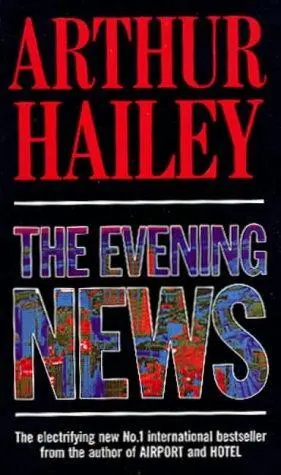
- Название:Evening News
- Автор:
- Жанр:
- Год:неизвестен
- ISBN:нет данных
- Рейтинг книги:3.5 / 5. Голосов: 2
-
Избранное:Добавить в избранное
- Отзывы:
-
Ваша оценка:
Evening News: краткое содержание, описание и аннотация
Предлагаем к чтению аннотацию, описание, краткое содержание или предисловие (зависит от того, что написал сам автор книги «Evening News»). Если вы не нашли необходимую информацию о книге — напишите в комментариях, мы постараемся отыскать её.
Evening News — читать онлайн бесплатно полную книгу (весь текст) целиком
Ниже представлен текст книги, разбитый по страницам. Система сохранения места последней прочитанной страницы, позволяет с удобством читать онлайн бесплатно книгу «Evening News», без необходимости каждый раз заново искать на чём Вы остановились. Поставьте закладку, и сможете в любой момент перейти на страницу, на которой закончили чтение.
Интервал:
Закладка:
Jessica spoke warily.”Thank you. You are good at that. May I ask . . .”
“They are second-degree burns and will heal. I will take the dressings off in several days.”
"Can you do something for the pain?”
"This is not a hospital. He must endure it.” Socorro turned to Nicky, her voice edgy, her face unsmiling.”Lie still today, boy. It will hurt less tomorrow.”
Jessica decided on one more appeal.”Please, may I be with him? He's eleven years old and I'm his mother. Can't we be together, even if only for the next few hours?”
"I asked Miguel. He said no.” Moments later, Socorro was gone.
There was a silence, then Angus said softly, "I wish there were something I could do for you, Nicky. Life isn't fair. You don't deserve any of this.”
A pause. Then, "Gramps.”
"Yes, old son?”
"There is something.”
"That I can do? Tell me.”
"Talk about those old songs. And maybe sing one.”
Angus's eyes moistened. It was a request that did not need explaining.
Anything about songs and music fascinated Nicky, and sometimes on summer evenings at the Sloanes' lakeside cottage near Johnstown in upstate New York, the grandfather and grandson would talk and listen to songs of World War Il which, two generations earlier in other arduous times, had sustained Angus and many like him. Nicky never seemed to tire of those exchanges and Angus struggled now to remember words and phrases he had used before.
”Those of us who were flyboys in the Army Air Forces, Nicky, cherished our collections of seventy-eight r.p.m. records . . . Those seventy-eights disappeared long ago . . . bet you've never seen any . .”
"I did once. The father of one of my friends had some.”
Angus smiled. As Nicky knew too, an identical dialog had taken place a few months earlier.
”Anyway, we carried those records personally from air base to air base and because they were so breakable, no one would trust anyone else with transporting them. And every BOQ—that's Bachelor Officers Quarters—was alive with music of the big bands: Benny Goodman, Tommy Dorsey, Glenn Miller. And the singers were young Frank Sinatra, Ray Eberle, Dick Haymes. We'd hear their songs and sing them ourselves in the shower.”
"Sing one now, Gramps.”
"My goodness, I'm not sure. My voice is getting old.”
"Try, Angus!” Jessica urged.”If I can, I'll join you.”
He groped in memory. When they had done this before was there a special song Nicky liked? He remembered—yes, there was. Steadying his breathing he began, though glancing first toward the guard, wondering if he would enforce the oppressive silence rule. But the man seemed not to mind them talking and was turning pages of his comic book.
Angus had had a good singing voice once; now, like the rest of him, it was weak and quavery. But the words were clear in his mind, their recollection sharp . . .
I'll be seeing you
In all the old familiar places
That this heart of mine embraces all day thru...
Jessica joined in, her memory finding the lyric from somewhere. A moment later, Nicky's young tenor was added.
In that small cafe,
The park across the way,
The children's carousel,
The chestnut trees, the wishing well.
I'll be seeing you
In every lovely summer's day,
In everything that's light and gay,
I'll always think of you that way,
I'll find you in the morning sun;
And when the night is new,
I'll be looking at the moon
But I'll be seeing you!
For Angus, the years fell away. Jessica's spirits lifted. For Nicky, briefly, the anguish from his bums was eased.
13
From the moment on Wednesday afternoon when Harry Partridge announced his decision to leave for Peru early the following day, the CBA News special task force moved feverishly into high gear.
Partridge's accompanying decision—to open the floodgates of information some thirty-six hours after his departure—resulted in meetings and consultations during which a priority program covering the next three days was structured and approved.
Immediately ahead, to be written and partially recorded overnight, was a report anchored by Partridge which would dominate the National Evening News on Friday. This would contain all that was known concerning the Sloane family kidnapping, including the latest information about Peru and Sendero Luniinoso; identification of the terrorist, Ulises Rodriguez alias Miguel; the caskets and the undertaker, Alberto Godoy; Amazonas-American Bank and the alleged murder-suicide, now suspected to have been a double murder, of Jose Antonio Salaverry and Helga Efferen.
However, before any preparations began, Harry Partridge visited Crawford Sloane in the anchorman's office on the fourth floor. Partridge still felt that Sloane should be among the first to be informed of any new development or plan.
Since the kidnapping thirteen days earlier, Crawford Sloane had continued to work, though at times it seemed he was merely filling each day and his heart and mind were not immersed in work at all. Today he appeared more gaunt than ever, his eyes more tired, the lines on his face even deeper than a few days earlier. He was conferring with a woman writer and a male producer and looked up as Partridge appeared.”You need to see me, Harry?”
When Partridge nodded, Sloane asked the other two, "Do you mind leaving? We'll finish later.”
Sloane waved Partridge to a chair.”You look serious. Is it bad news?”
"I'm afraid it is. We've established that your family is out of the country. They're prisoners in Peru.”
Sloane slumped forward, elbows on his desk; he rubbed a hand across his face before responding.”I've been expecting something like this—or rather, dreading it. Do you know who has them?”
"We believe Sendero Luminoso.”
"Oh god! Not those fanatics!”
"I'm leaving for Lima in the morning, Crawf.”
"I'll go with you!”
Partridge shook his head.”We both know you can't, that it wouldn't work. Besides, the network would never allow it.”
Sloane sighed, but didn't argue. He asked, "Do we have any idea what those Sendero jackals want?”
"Not yet. I'm sure we'll hear.” A silence followed, then Partridge said, "I've called a task force meeting for five o'clock. I thought you'd like to be there. After that, most of us will work all night.” He went on to describe developments during the day and the plan to broadcast all information that they had on Friday.
”I'll be at the meeting,” Sloane acknowledged, "and thanks.” Then as Partridge rose to leave, "Do you have to go right now?”
Partridge hesitated. He had a great deal to do and time was short, but he sensed a desire on the other's part to talk. He shrugged.”I guess a few minutes won't make any difference.”
There was a pause before Sloane said awkwardly, "I'm not sure I know how to say this, or even if I should. But at a time like this you get to thinking about all kinds of things.” Partridge waited, curious, as Sloane continued.”Anyway, Harry, I've been wondering what your feelings are about Jessica. After all, years ago you two were pretty close.”
So that was it: A secret thought voiced after all this time. Partridge chose his words carefully, knowing this moment was important.”Yes, I do care about Jessica, in part because we were close—as you put it —years ago. But mostly I care because she's your wife and you're my friend. As for anything that once existed between Jessica and me, it finished the day she married you.”
"I suppose I'm saying this now because of all that's happened, but there were times when I used to wonder about that.”
Читать дальшеИнтервал:
Закладка:
Похожие книги на «Evening News»
Представляем Вашему вниманию похожие книги на «Evening News» списком для выбора. Мы отобрали схожую по названию и смыслу литературу в надежде предоставить читателям больше вариантов отыскать новые, интересные, ещё непрочитанные произведения.







Обсуждение, отзывы о книге «Evening News» и просто собственные мнения читателей. Оставьте ваши комментарии, напишите, что Вы думаете о произведении, его смысле или главных героях. Укажите что конкретно понравилось, а что нет, и почему Вы так считаете.