Gao Xingjian - Soul Mountain
Здесь есть возможность читать онлайн «Gao Xingjian - Soul Mountain» — ознакомительный отрывок электронной книги совершенно бесплатно, а после прочтения отрывка купить полную версию. В некоторых случаях можно слушать аудио, скачать через торрент в формате fb2 и присутствует краткое содержание. Год выпуска: 2001, Издательство: Harper Perennial, Жанр: Современная проза, на английском языке. Описание произведения, (предисловие) а так же отзывы посетителей доступны на портале библиотеки ЛибКат.
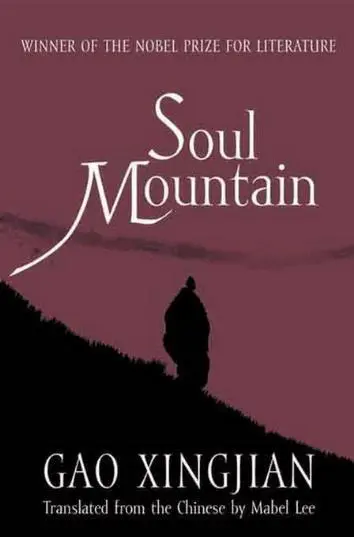
- Название:Soul Mountain
- Автор:
- Издательство:Harper Perennial
- Жанр:
- Год:2001
- ISBN:нет данных
- Рейтинг книги:5 / 5. Голосов: 1
-
Избранное:Добавить в избранное
- Отзывы:
-
Ваша оценка:
Soul Mountain: краткое содержание, описание и аннотация
Предлагаем к чтению аннотацию, описание, краткое содержание или предисловие (зависит от того, что написал сам автор книги «Soul Mountain»). Если вы не нашли необходимую информацию о книге — напишите в комментариях, мы постараемся отыскать её.
.
Bold, lyrical, and prodigious,
probes the human soul with an uncommon directness and candor and delights in the freedom of the imagination to expand the notion of the individual self.
“Chinese literature [of the future] will have to contend with the creative energy and the daring of Gao Xingjian.”
— “It is a relief to come to a book that celebrates the pleasures of literature with such gusto and knowingness.”
— “His largest and perhaps most personal work…Gao has created a sui generis work, one that, in combining story, reminiscence, meditation and journalism, warily comes to terms with the shocks of both Maoism and capitalism.”
—
Soul Mountain — читать онлайн ознакомительный отрывок
Ниже представлен текст книги, разбитый по страницам. Система сохранения места последней прочитанной страницы, позволяет с удобством читать онлайн бесплатно книгу «Soul Mountain», без необходимости каждый раз заново искать на чём Вы остановились. Поставьте закладку, и сможете в любой момент перейти на страницу, на которой закончили чтение.
Интервал:
Закладка:
I find an office with the door open. The cadre, in a singlet with his feet crossed on the table and leaning back in a cane chair, is engrossed reading the news. I ask if this was the institution for the solitary aged during the years my grandmother was in such a place.
He puts down his newspaper and says, “It's all changed again, today there are no institutions for the solitary aged, they are all called homes for the aged.”
I don't question if there are still institutions for the venerable aged but simply ask him to check if such and such an old person who was already dead had once lived here. He is easy to talk to and without asking me for identification papers takes out the register of the deceased, looks up the years, stops at a page, and asks me the name of the deceased again.
“Female?”
“Yes,” I confirm.
He pushes the register over so that I can have a look. It is clearly my maternal grandmother's name, and the age tallies.
“She has been dead for ten years,” he says with a sigh.
“Yes,” I reply. “Have you been working here all this time?”
He nods to affirm that he has and I then ask if he remembers what the deceased looked like.
“Let me think.” He leans back to rest his head on the back of the chair. “Was she a short thin old woman?”
I nod, but then I recall from the old photograph hanging at home that she was a very plump old woman. It was a photograph taken some decades earlier and it showed me by her side playing with a top. After that she probably didn't have any photos taken. With the passing of a few decades people can change completely in appearance even though their bone structure does not change. My mother was quite short so my grandmother couldn't have been very tall.
“When she spoke did she always shout?”
There are few old women of her age who don't shout when they talk but what is important is that the name is correct.
“Did she ever mention she had two maternal grandchildren?” I ask.
“You are her maternal grandson?”
“Yes.”
He nods and says, “I think she mentioned that she had grandchildren.”
“Did she ever say they would come and fetch her?”
“Yes, she did.”
“But at the time I was in the countryside.”
“It was the Cultural Revolution,” he explains on my behalf. “She died of natural causes.”
I do not ask how those who did not die of natural causes died but simply ask where she is buried.
“She was cremated. Everyone is cremated. It's not just the old people in homes for the aged, even when we die we will be cremated.”
“The cities are over-populated, there's no room for the dead,” I bring the conversation to an end for him, then ask, “Have you kept her ashes?”
“It's been dealt with. The people here are all old people without relatives, their ashes are dealt with together.”
“Is there a common grave?”
“Er…” he thinks about how he can reply.
It is this unfilial grandson who is to blame, and not him, the only thing I can do is to thank him.
I come out of the home for the aged, get on my bicycle, and think to myself that even if there is a communal grave it will in future not be of archaeological significance. Nevertheless, I have finally visited my deceased maternal grandmother who once bought me a spinning top.
53
You are always searching for your childhood and it’s becoming an obsession. You want to visit each of the places you stayed during your childhood, the houses, courtyards, streets and lanes of your memory.
Your home was once upstairs in a small solitary building on a vacant lot with a big pile of rubble at the front: the building that once stood there had been destroyed by a bomb or a fire and had never been rebuilt. Green bristlegrass grew in the rubble and broken walls, and crickets could often be found when the broken tiles and bricks were turned over. There was a very clever type of cricket called Black Satin Cream and when their shiny ink-black wings vibrated they made a clear, resonating sound. There was also another kind called Locust which had a big body and a big mouth and was good at fighting. As a child you had a wonderful time on that rubble heap.
You also recall that you once lived in a courtyard compound which went a long way inside. It had a big heavy black door at the entrance and you had to stand on your toes to get to the metal ring-latch. When the door was opened you had to go around a carved screen. The horns and the heads of the stone unicorns on each side of the screen were shiny because children would touch them whenever they came in or out. Behind the carved screen was a damp and mossy courtyard onto which water was regularly thrown out, so if you were not careful you would slip and fall. You had a pair of albino rabbits at the time. One was savaged in the wire cage by a yellow weasel and later on the other one also disappeared. Days later, when you went to play in the back courtyard, you discovered it had drowned in the urine pot and its once white fur was now stained and dirty. You looked at it for a long time but from then on, as far as you can remember, you did not go into the back courtyard again.
You also recall that you once lived in a courtyard complex with a round gateway. Yellow chrysanthemums and crimson cockscombs grew in the courtyard and perhaps because of these flowers it was always bright and sunny. There was a little gate at the back of the courtyard and behind it, at the bottom of the stone steps, was the lake. On the night of the Mid-Autumn Festival the grown-ups opened the gate and laid out a table with moon cakes and melon seeds and, with the lake before them, they admired the moon as they ate and drank. A bright full moon hung in the sky over the deep, serene, far side of the lake while in the lake its elongated reflection wobbled. One night you passed by there on your own and pulled open the bolt: you were terrified by the lonely deep waters of the lake, its beauty was too deep, more than a child could bear, and you ran away as fast as you could. Thereafter, whenever you passed by the gate at night you were always very careful and did not again ever dare to touch the bolt.
You also recall that you once lived in a house with a garden but you can only remember the patterned brick floor of your big downstairs room on which you used to play marbles. Your mother wouldn’t let you play in the garden. You were sick and spent much of your time in bed and could only play in your room with your box of marbles. When your mother wasn’t home you would stand on the bed and, holding onto the windowsill, look at the colourful flags on the steamers and on the wharf. There were always strong winds blowing along the Yangtze.
You revisit these old places but find nothing. The rubble heap in front of the small two-storey building is not there, nor is the heavy black door with the metal ring-latch, nor even the quiet little lane in front of the house, and certainly not the courtyard compound with the carved screen. Probably that place has already been turned into a bitumen road heavy with traffic — trucks with full loads honking their horns and sending up dust and ice-block wrappers, and long distance buses with missing windows carrying on the roof an assortment of bags of local products, clothing and foodstuffs to be resold elsewhere — and itself covered in melon seed husks and chewed up sugar cane spat from bus windows. There is no moss, no round gateway, no yellow chrysanthemums or crimson cockscombs, no elongated moon in the lake, nor terrifying stillness and loneliness. Instead, there are only the same standard red brick buildings with economy-coke stoves lining narrow corridors like sentries at the door of each apartment. Along the banks of the Yangtze the noisy flapping of flags in the wind can no longer be heard. Instead there are only warehouses, warehouses, warehouses, silos, warehouses, silos, cement in tough paper bags, chemical fertilizer in thick plastic bags and loud shouting or singing blaring from speakers.
Читать дальшеИнтервал:
Закладка:
Похожие книги на «Soul Mountain»
Представляем Вашему вниманию похожие книги на «Soul Mountain» списком для выбора. Мы отобрали схожую по названию и смыслу литературу в надежде предоставить читателям больше вариантов отыскать новые, интересные, ещё непрочитанные произведения.


Обсуждение, отзывы о книге «Soul Mountain» и просто собственные мнения читателей. Оставьте ваши комментарии, напишите, что Вы думаете о произведении, его смысле или главных героях. Укажите что конкретно понравилось, а что нет, и почему Вы так считаете.