Gao Xingjian - Soul Mountain
Здесь есть возможность читать онлайн «Gao Xingjian - Soul Mountain» — ознакомительный отрывок электронной книги совершенно бесплатно, а после прочтения отрывка купить полную версию. В некоторых случаях можно слушать аудио, скачать через торрент в формате fb2 и присутствует краткое содержание. Год выпуска: 2001, Издательство: Harper Perennial, Жанр: Современная проза, на английском языке. Описание произведения, (предисловие) а так же отзывы посетителей доступны на портале библиотеки ЛибКат.
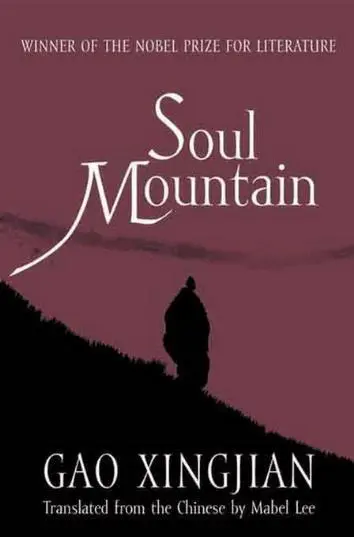
- Название:Soul Mountain
- Автор:
- Издательство:Harper Perennial
- Жанр:
- Год:2001
- ISBN:нет данных
- Рейтинг книги:5 / 5. Голосов: 1
-
Избранное:Добавить в избранное
- Отзывы:
-
Ваша оценка:
Soul Mountain: краткое содержание, описание и аннотация
Предлагаем к чтению аннотацию, описание, краткое содержание или предисловие (зависит от того, что написал сам автор книги «Soul Mountain»). Если вы не нашли необходимую информацию о книге — напишите в комментариях, мы постараемся отыскать её.
.
Bold, lyrical, and prodigious,
probes the human soul with an uncommon directness and candor and delights in the freedom of the imagination to expand the notion of the individual self.
“Chinese literature [of the future] will have to contend with the creative energy and the daring of Gao Xingjian.”
— “It is a relief to come to a book that celebrates the pleasures of literature with such gusto and knowingness.”
— “His largest and perhaps most personal work…Gao has created a sui generis work, one that, in combining story, reminiscence, meditation and journalism, warily comes to terms with the shocks of both Maoism and capitalism.”
—
Soul Mountain — читать онлайн ознакомительный отрывок
Ниже представлен текст книги, разбитый по страницам. Система сохранения места последней прочитанной страницы, позволяет с удобством читать онлайн бесплатно книгу «Soul Mountain», без необходимости каждый раз заново искать на чём Вы остановились. Поставьте закладку, и сможете в любой момент перейти на страницу, на которой закончили чтение.
Интервал:
Закладка:
I don’t know if God and the Devil in fact exist but both were invoked by you who are the embodiment of both my good fortune and my misfortune. When you vanish, God and the Devil will in the same instant disappear.
It is only by getting rid of you that I can get rid of myself. However having invoked you, it is impossible to get rid of you. I’ve thought of an idea. What would happen if you and I were to change places? In other words I would be your image and you instead would be the concrete form of me — this would be an interesting game. If you listen carefully to me from my position I would then become the concrete expression of your desires, it would be a lot of fun. It would also be yet another school of philosophy and the writing would have to start from the beginning again.
Philosophy in the end is an intellectual game. At limits unattainable by mathematics and the empirical sciences, it constructs all sorts of intricate structures. And as a structure is completed, the game ends.
Fiction is different from philosophy because it is the product of sensory perceptions. If a futile self-made signifier is saturated in a solution of lust and at a particular time transforms into a living cell capable of multiplying and growing, it is much more interesting than games of the intellect. Furthermore, it is the same as life and does not have an ultimate goal.
52
I am riding a hired bicycle. At noon in the height of summer the temperature is over forty degrees and the freshly repaired bitumen road to the ancient city in Jiangling has begun to go soft. The wind passing through the city gate archway of the ancient Three Kingdoms city of Jingzhou is also hot. An old woman is stretched out dozing on a cane chair behind a tea and drinks stall. Unabashed, her hemp jacket, thin and frayed from washing, is unbuttoned, and exposes the sagging skin of her sunken breasts. I drink a bottle of soft drink which gives off heat in my hand. She doesn't even bother to look if I've paid enough. At the end of the archway a dog is sprawled with its tongue hanging out, panting and dribbling.
Beyond the city wall are paddy fields with patches of unharvested rice which are bright yellow and heavy with ripe grain. In the harvested fields the new seedlings of late crop are lush green. The road and the fields are empty, everyone is at home resting and cooling off.
I am cycling down the middle of the highway and the surface of the road is steaming with waves of air like transparent flames. Sweat is running down my back so I strip off my polo-neck sweater and tie it around my head to block off some of the sun. As I cycle faster my T-shirt flaps up so there is a bit of a damp breeze around my ears.
In these dry areas the cotton plants have big red and yellow flowers, and the plants with strings of white flowers are sesame. Beneath the brilliant sun is an eerie loneliness and, strangely, no cicadas or frogs are to be heard.
As I cycle on my shorts become soaked through and cling to my thighs, it would be good to cycle with them off. I can't help recalling the peasants I saw as a child working naked on the waterwheels, plying the big poles with their sun-tanned arms. When women passed by in the fields they would start singing ribald ditties but without bad intent, and when the women heard them they would just smile. The men sang simply to relieve themselves of their weariness, isn't this precisely the origin of such folk songs? This entire area is the home of work songs known as “gongs and drums in the reeds”. However waterwheels aren't used today and the irrigation machines are driven by electricity, so such sights are no longer to be seen.
Although I know there is nothing to see at the site of the ancient capital of the Chu Kingdom, and that it will be a waste of time going, it is just a twenty kilometre return trip and I would regret not making a visit before leaving Jiangling. I disturb the afternoon nap of the young couple in charge of the archaeological station. They graduated just a year ago from university and have come here as wardens to keep watch over the expanse of ruins sleeping underground. It is not known when the excavation work is to commence. Perhaps it is because they have recently married and have never experienced such loneliness that they are so hospitable. The young wife pours me two bowls of a slightly bitter herbal infusion to dissipate the effects of the heat and the young man takes me onto a hill and points to a paddy field which has already been harvested and a high stretch of land at the side of the hill covered with cotton and sesame.
“After Qin conquered the Kingdom of Chu,” the young man says, “no-one lived in the city of Ji'nan. No artefacts from after the Warring States period have been found, although tombs from the Warring States have been excavated in the city. The city would have been built in the middle period of the Warring States. Historical documents record that the capital had moved to Ying prior to the time of King Huai of Chu, so calculating from the time of King Huai of Chu, Ying was the capital of Chu for four hundred years. Of course some historians have a different view and argue that Ying was not located here. Whatever the case, our starting point is archaeological — while ploughing here peasants time and again have found numerous relics of pottery and bronze vessels dating from the Warring States period. If the site is excavated, it will really be quite spectacular.” He points in one direction. “When the great generals of Qin left Ying without any booty, they released the river waters into the capital. The capital had dams on three sides and the Zhu River flowed eastwards from the South Gate to the North Gate. On the east, this hill right underfoot was a lake extending to the Yangtze River. The Yangtze at the time was in the vicinity of Jingzhou city but now it has moved south almost two kilometres. On Ji Mountain up ahead are the graves of the Chu aristocracy. The Baling Mountains on the south contain the graves of successive generations of Chu kings but they have all been looted.”
In the distance are some small undulating mounds, they are referred to as mountains in documents, so probably they once were.
“This was originally the tower of the city gate,” he says pointing again to the stretch of paddy field by our feet. “When the river floods, there is a build up of at least ten millimetres of silt.”
Quite right, because judging by the lie of the land, to borrow the archaeological term, the area underfoot is slightly higher than the fields stretching into the distance, if one doesn't count the earthen dykes in between them.
“The south-east section had the palaces, the north was the market district, and the remains of smelting furnaces have been discovered in the south-west district. The positioning of the aqueducts in the south was high but these haven't been preserved as well as the ones in the north.”
I nod in agreement and can roughly make out the outer city walls. If there was not this harsh glare of the noon sun and all the ghosts had crawled out, the night markets would no doubt be very lively.
As we come down the slope he says we have just left the city. The lake of those times is now a small pond but lotus is growing in it and their pink flowers have emerged from the water in full bloom. When the Officer of the Three Wards, Qu Yuan, was driven from the palace gates he probably passed along the bottom of this slope and certainly would have plucked a lotus to wear in his belt. Before the lake shrank to this small pond the banks were covered with fragrant plants which he would have used to weave a hat. It was here, in this fertile water-rich land, that he gave vent to loud singing and left to posterity his peerless songs. Had he not been driven from the palace gates perhaps he might not have become the great poet.
Читать дальшеИнтервал:
Закладка:
Похожие книги на «Soul Mountain»
Представляем Вашему вниманию похожие книги на «Soul Mountain» списком для выбора. Мы отобрали схожую по названию и смыслу литературу в надежде предоставить читателям больше вариантов отыскать новые, интересные, ещё непрочитанные произведения.


Обсуждение, отзывы о книге «Soul Mountain» и просто собственные мнения читателей. Оставьте ваши комментарии, напишите, что Вы думаете о произведении, его смысле или главных героях. Укажите что конкретно понравилось, а что нет, и почему Вы так считаете.