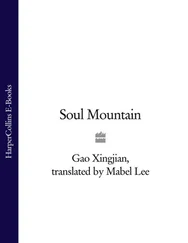
Gao Xingjian - Soul Mountain
Здесь есть возможность читать онлайн «Gao Xingjian - Soul Mountain» — ознакомительный отрывок электронной книги совершенно бесплатно, а после прочтения отрывка купить полную версию. В некоторых случаях можно слушать аудио, скачать через торрент в формате fb2 и присутствует краткое содержание. Год выпуска: 2001, Издательство: Harper Perennial, Жанр: Современная проза, на английском языке. Описание произведения, (предисловие) а так же отзывы посетителей доступны на портале библиотеки ЛибКат.
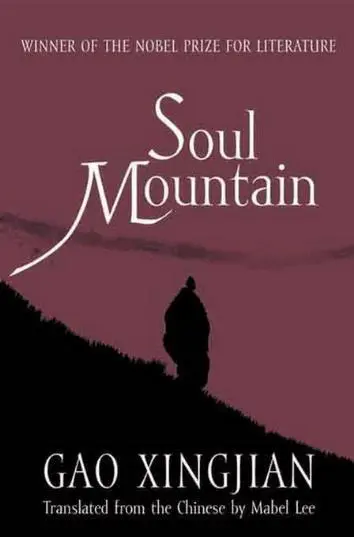
- Название:Soul Mountain
- Автор:
- Издательство:Harper Perennial
- Жанр:
- Год:2001
- ISBN:нет данных
- Рейтинг книги:5 / 5. Голосов: 1
-
Избранное:Добавить в избранное
- Отзывы:
-
Ваша оценка:
Soul Mountain: краткое содержание, описание и аннотация
Предлагаем к чтению аннотацию, описание, краткое содержание или предисловие (зависит от того, что написал сам автор книги «Soul Mountain»). Если вы не нашли необходимую информацию о книге — напишите в комментариях, мы постараемся отыскать её.
.
Bold, lyrical, and prodigious,
probes the human soul with an uncommon directness and candor and delights in the freedom of the imagination to expand the notion of the individual self.
“Chinese literature [of the future] will have to contend with the creative energy and the daring of Gao Xingjian.”
— “It is a relief to come to a book that celebrates the pleasures of literature with such gusto and knowingness.”
— “His largest and perhaps most personal work…Gao has created a sui generis work, one that, in combining story, reminiscence, meditation and journalism, warily comes to terms with the shocks of both Maoism and capitalism.”
—
Soul Mountain — читать онлайн ознакомительный отрывок
Ниже представлен текст книги, разбитый по страницам. Система сохранения места последней прочитанной страницы, позволяет с удобством читать онлайн бесплатно книгу «Soul Mountain», без необходимости каждый раз заново искать на чём Вы остановились. Поставьте закладку, и сможете в любой момент перейти на страницу, на которой закончили чтение.
Интервал:
Закладка:
Shang Dynasty. In “Jiu you jiu wei” of the Shang Songs is the annotation: “Wu Mountain continued to be administered as during the Xia Dynasty.”
Zhou Dynasty. Wu was Yong Kingdom, then in the Spring and Autumn period became the territory of Kuizi Kingdom. In autumn of the thirty-sixth year of Duke Xi, the Chu people subjugated Kui and absorbed it into Chu. Wu thereupon belonged to Chu.
Warring States period. There was a Wu Commandery in Chu. The Zhanguo ce says: “Su Qin told King Wei of Chu: ‘In the south there is Wu Commandery.’” The Kuodi zhi says: “The commandery lies one hundred li east of Kui, later it became Southern Commandery.”
Qin Dynasty. The “Record of Qin” in the Shiji says: “In the thirtieth year of King Zhaorang, Wu Commandery of Chu Kingdom was changed to Wu County under the administration of Southern Commandery.”
Han Dynasty. As in the Qin Dynasty, it continued to be called Wu County and was administered by Southern Commandery.
Later Han Dynasty. During the Jian’an period, the early rulers placed it under the administration of Yidu Commandery. In the twenty-fifth year, Sun Quan placed it under Guling Commandery, then Wu Sunxiu placed it under Jianping Commandery.
Jin Dynasty. First, as Wu County lay at the border of Wu and Shu it was administered by the Jianping Commandery Military Command, and established as Beijing County. In the fourth year of Xianhe, the military command changed to Jianping Commandery, and it was established as Nanling County.
The dynasties of Sung, Qi and Liang continued this.
Later Zhou. In the first year of Tianhe, Wu County was administered by Jianping Commandery, and established as Jiangyin County.
Sui Dynasty. At the beginning of the Kaihuang period, Jianping Commandery was abolished, renamed Wu Mountain County, and administered by Badong Commandery.
Tang and Five Dynasties. Administered by Kuizhou Prefecture.
Song Dynasty. Administered by Kuizhou Prefecture.
Yuan Dynasty. As before.
Ming Dynasty. Administered by Kuizhou Prefecture.
Qing Dynasty. In the ninth year of Kangxi, Dachang was incorporated into Wu Mountain County…
The ruins are located 50 li to the south.
The Wheat Bran Monk’s name was Wenkong and his style name Yuanyuan. A native of Ji’an Prefecture in Jiangxi Province, he built a temple on the northern cliff of Jidong Mountain where he sat in meditation. After forty years he attained enlightenment. He ate only bran and hence his name. Many years later when the monk died and there was no-one in the temple, for three years people living on the opposite mountain saw lamps burning there at night.
Legend says that the Red Emperor’s daughter Yaoji drowned when travelling on the river. She was buried on the south side of this mountain and a temple erected. Shamans dance to summon her spirit.
Anping town is ninety li southeast of the county… .. (text missing) the above towns are now wasteland. After the ravages of troops in the late-Ming period, the villages and towns became deserted. Most of the people have settled here from other provinces and the name is constantly changing…
Do these villages and towns still exist?
21
You know that I am just talking to myself to alleviate my loneliness. You know that this loneliness of mine is incurable, that no-one can save me and that I can only talk with myself as the partner of my conversation.
In this lengthy soliloquy you are the object of what I relate, a myself who listens intently to me — you are simply my shadow.
As I listen to myself and you, I let you create a she, because you are like me and also cannot bear the loneliness and have to find a partner for your conversation.
So you talk with her, just like I talk with you.
She was born of you, yet is an affirmation of myself.
You who are the partner of my conversation transform my experiences and imagination into your relationship with her, and it is impossible to disentangle imagination from experience.
Even I can’t distinguish how much is experience and how much is dream within my memories and impressions, so how can you distinguish between what I have experienced and what are figments of my imagination? And in the end is it necessary to make such distinctions? In any case, they aren’t of any significance whatsoever.
She who is the creation of experience and imagination transforms into various images which beckon and seduce you, because you who are my creation also want to seduce her. Neither of you want the loneliness of your selves.
I am on a journey — life. Life, good or bad, is a journey and wallowing in my imagination I travel into my inner mind with you who are my reflection. The perennial and perplexing question of what is most important can be changed to a discussion of what is most authentic and at times can constitute what is known as debate. But let others discuss or debate such matters, they are of no consequence for I who am engrossed in my journey or you who are on your spiritual journey.
Like me, you wander wherever you like. As the distance increases there is a converging of the two until unavoidably you and I merge and are inseparable. At this point there is a need to step back and to create space. That space is he. He is the back of you after you have turned around and left me.
Neither I nor my image can see his face, it is enough to know that he is someone’s back.
You who are my creation, created her and her face naturally would have to be imagined, but why must one insist on describing the face? She is a hazy image of associations induced by memories and is therefore indefinite, so let her remain indistinct. Moreover, her image is forever changing.
For you and me, the women who constitute they are simply a composite image of her.
And the men who constitute they are also a composite image of him. In the boundless world, there are all sorts of mysteries external to you and me. In other words, they are all projections of my back which I can’t get rid of. If I can’t get rid of them, why try?
I don’t know whether or not you’ve noticed but when I speak of me and you, and she, him, feminine they and masculine they, I never speak of we or us. I believe that this is much more concrete than the sham we which is totally meaningless.
Even if you and she and he and masculine they and feminine they are images of the imagination, for me they are all more substantial than what is known as we. As soon as I refer to we I am immediately uncertain, how many of me are in fact implicated? Or how many of you who are the image of me, or he who is the back of you and me, or the illusion of she who was borne of you and me, or the composite image they of she or he? There is nothing more false than this we.
However I can use a plural you when I confront many people. Whether I am trying to please or criticize, am angry with, happy with, or scornful of, I am occupying a definite position and I am more substantial at such times than at any other time. What does we imply except for that incurable affectation? So I always avoid this bloated sham affectation of we. Should at any time I use the word we it is when I am being extremely hypocritical and cowardly.
I have established for myself this way of sequencing which can be thought of as a sort of logic or karma. Ways of sequencing, logic or karma, have been established by people in this vast unordered world in order to affirm oneself, so why shouldn’t I invent my own sequencing, logic or karma? I can then take refuge in this way of sequencing, logic or karma, and be secure in my own actions and have peace of mind.
However the totality of my misfortunes also exist within you, the unlucky demon I have invoked. Actually, you are not unlucky for all your misfortunes have been conferred upon you by me, they are all derived from my self love — this damned I loves only himself!
Читать дальшеИнтервал:
Закладка:
Похожие книги на «Soul Mountain»
Представляем Вашему вниманию похожие книги на «Soul Mountain» списком для выбора. Мы отобрали схожую по названию и смыслу литературу в надежде предоставить читателям больше вариантов отыскать новые, интересные, ещё непрочитанные произведения.



Обсуждение, отзывы о книге «Soul Mountain» и просто собственные мнения читателей. Оставьте ваши комментарии, напишите, что Вы думаете о произведении, его смысле или главных героях. Укажите что конкретно понравилось, а что нет, и почему Вы так считаете.