Gao Xingjian - Soul Mountain
Здесь есть возможность читать онлайн «Gao Xingjian - Soul Mountain» — ознакомительный отрывок электронной книги совершенно бесплатно, а после прочтения отрывка купить полную версию. В некоторых случаях можно слушать аудио, скачать через торрент в формате fb2 и присутствует краткое содержание. Год выпуска: 2001, Издательство: Harper Perennial, Жанр: Современная проза, на английском языке. Описание произведения, (предисловие) а так же отзывы посетителей доступны на портале библиотеки ЛибКат.
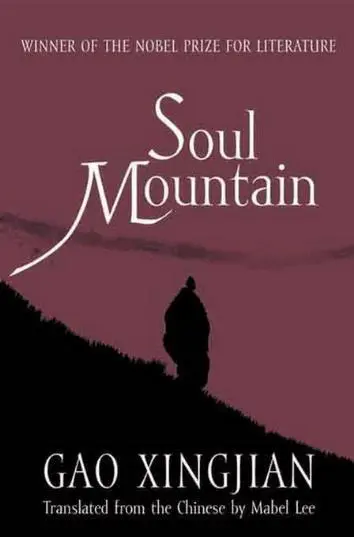
- Название:Soul Mountain
- Автор:
- Издательство:Harper Perennial
- Жанр:
- Год:2001
- ISBN:нет данных
- Рейтинг книги:5 / 5. Голосов: 1
-
Избранное:Добавить в избранное
- Отзывы:
-
Ваша оценка:
Soul Mountain: краткое содержание, описание и аннотация
Предлагаем к чтению аннотацию, описание, краткое содержание или предисловие (зависит от того, что написал сам автор книги «Soul Mountain»). Если вы не нашли необходимую информацию о книге — напишите в комментариях, мы постараемся отыскать её.
.
Bold, lyrical, and prodigious,
probes the human soul with an uncommon directness and candor and delights in the freedom of the imagination to expand the notion of the individual self.
“Chinese literature [of the future] will have to contend with the creative energy and the daring of Gao Xingjian.”
— “It is a relief to come to a book that celebrates the pleasures of literature with such gusto and knowingness.”
— “His largest and perhaps most personal work…Gao has created a sui generis work, one that, in combining story, reminiscence, meditation and journalism, warily comes to terms with the shocks of both Maoism and capitalism.”
—
Soul Mountain — читать онлайн ознакомительный отрывок
Ниже представлен текст книги, разбитый по страницам. Система сохранения места последней прочитанной страницы, позволяет с удобством читать онлайн бесплатно книгу «Soul Mountain», без необходимости каждый раз заново искать на чём Вы остановились. Поставьте закладку, и сможете в любой момент перейти на страницу, на которой закончили чтение.
Интервал:
Закладка:
In the Temple of the White Emperor, the smashed altars have been replaced with brightly painted clay figures modelled on new versions of the historical opera so that the place looks like an opera, theatre instead of a temple.
I go around the front of this ancient temple and discover a fairly new hostel. The landscape here is rough and barren with just a few bushes, but halfway up the mountain are the ruins of a large semi-circular Han Dynasty city wall. It can only be seen here and there but it stretches for several kilometres. The director of the local cultural office points it out to me, he’s an archaeologist and is passionate about his work. He tells me he submitted a report asking the relevant government department to allocate funds for preserving the wall. I think it’s better in its present state — if funds are allocated, they’re sure to put up a gaudy building, then a restaurant, and the scenic beauty of the place will be utterly destroyed.
He shows me a four-thousand-year-old stone dagger, ground and polished to a jade-like sheen, which was unearthed in the area. The hole drilled through the handle suggests it probably hung from a belt. Along both banks of the Yangtze they have excavated many beautifully crafted stone implements as well as red pottery from the latter period of the Neolithic Age. In a cave at one site on the bank, a cache of bronze weapons has been found. He tells me that straight ahead, just a little way into Kuimen, in the cliff caves where legend says that Zhuge Liang had hidden his books on military strategy, the last hanging coffin was pulled down on ropes and smashed up by a deaf-mute and a hunchback a few months ago. They sold the wind-dried bones as dragon bones to a Chinese medicine shop and when the shop owner was asked for authentication, the matter was reported to the public security office. The police tracked down the deaf-mute but after spending a long time interrogating him, they were none the wiser. It was only after they slapped him a few times that he took them there. He rowed out in a small boat to the bottom of the cliff and demonstrated his skill in scaling cliffs. Wind-dried slivers of wood were found at the site which was ascertained to be a tomb of the Warring States period. The coffin must also have contained bronze relics which hadn’t been smashed but it was impossible to find out from the deaf-mute what had happened to these.
There are a large number of earthenware spinning wheels in the display room of the cultural office. They are painted with red and black swirling patterns and are probably from the same period as the four-thousand-year-old earthenware spinning wheels unearthed at Qujialing in the lower reaches of the Yangtze in Hubei province. In both cases there is a close resemblance to the Yin-Yang fish design. When the wheel turns emptiness and fullness diminish and grow in the one rotation then return to the beginning again. It has the same source as the Daoist Taiji Chart. My guess is that these are the earliest origins of the Taiji Chart, and also the origins of the complementarity of the Yin and the Yang, the alternation of good fortune and bad fortune, and the concepts of natural philosophy dating from the The Book of Changes to the Daoists. Mankind’s earliest concepts are derived from totems, afterwards these came to be linked with sounds to form speech and meanings.
Initially, the kiln stokers firing the spinning wheels had inadvertently added some extraneous material to the clay, but it was the women using the spindles who discovered that after one rotation there was a return to the beginning. The man who gave this meaning was called Fuxi. However the bestowal of life and intelligence to Fuxi must be attributed to a woman. The general name for the woman who created man’s intelligence is Nüwa. The first named woman, Nüwa, and the first named man, Fuxi, constitute the collective consciousness of men and women.
The depiction on Han Dynasty tiles of the mythical union of Fuxi and Nüwa, both with the bodies of snakes but human heads, is derived from the sexual impulses of primitive humans. The animals subsequently became spiritual beings, and then ancestral divinities. Surely these all embody the basic instincts to sexual lust and lust for life?
At that time the individual did not exist. There was not an awareness of a distinction between “I” and “you”. The birth of I derived from fear of death, and only afterwards an entity which was not I came to constitute you. At that time people did not have an awareness of fearing oneself, knowledge of the self came from an other and was affirmed by possessing and being possessed, and by conquering and being conquered. He, the third person who is not directly relevant to I and you, was gradually differentiated. After this the I also discovered that he was to be found in large numbers everywhere and was a separate existence from oneself, and it was only then that the consciousness of you and I became secondary. In the individual’s struggle for survival amongst others, the self was gradually forgotten and gradually churned like a grain of sand into the chaos of the boundless universe.
In the quiet of night, listening to the faint lapping of the waves of the Yangtze, I ponder what I might do in the remaining years of my life. Should I continue along the banks of the Yangtze collecting stone fishing net weights used by the Daqi people? I’ve already got one of these rocks with the middle chipped out by a stone hammer — it was given to me the day before yesterday by a friend upstream in Wanxian. He told me you can pick these up all along the riverbed when the river dries up. The silt accumulates and the riverbed gets higher each year and this is why they want to build a dam at the end of the Three Gorges. When this ridiculous dam is built, even this ancient Han Dynasty wall will be submerged so what meaning would there be in collecting the memories of people of remote antiquity?
I am perpetually searching for meaning, but what in fact is meaning? Can I stop people from constructing this big dam as an epitaph for the annihilation of their selves? I can only search for the self of the I who is small and insignificant like a grain of sand. I may as well write a book on the human self without worrying whether it will be published. But then of what consequence is it whether one book more, or one book less, is written? Hasn’t enough culture been destroyed? Does humankind need so much culture? And moreover, what is culture?
I get up early to catch a small steamboat. This sort of boat, with the waterline reaching almost to the top of the sides, is swift in the water. At noon I reach Wu Mountain where King Huai of the state of Chu one night dreamt he and a goddess made love. The Wu women filling the streets of the county town however, are not at all attractive. On the boat are seven or eight jean-clad young women and men with Beijing accents. Carefree and uninhibited, they talk, laugh, romance and squabble over money. It is they, with their kettle drum and electric guitar and a few pop songs and disco (rock’n’roll is banned), who in their own words win hearts on both sides of the Yangtze.
A volume of the county gazette, with the tattered pages mounted onto brown paper, contains the following entries:
During the time of Emperor Yao of the Tang Dynasty, Wu Mountain was so named after Wu Xian who through his knowledge of the occult became physician to Emperor Yao. In life he was an aristocrat and after death a noble spirit. This mountain was his fief, hence its name (See Guo Pu, “Wu Xian Mountain, a Fu Poem”).
Yu Dynasty. The Shundian says: “Wu Mountain is a part of Jingliang.”
Xia Dynasty. The Yugong says: “Nine prefectures were established. Wu Mountain remains within the boundaries of the three prefectures of Jingliang.”
Читать дальшеИнтервал:
Закладка:
Похожие книги на «Soul Mountain»
Представляем Вашему вниманию похожие книги на «Soul Mountain» списком для выбора. Мы отобрали схожую по названию и смыслу литературу в надежде предоставить читателям больше вариантов отыскать новые, интересные, ещё непрочитанные произведения.



Обсуждение, отзывы о книге «Soul Mountain» и просто собственные мнения читателей. Оставьте ваши комментарии, напишите, что Вы думаете о произведении, его смысле или главных героях. Укажите что конкретно понравилось, а что нет, и почему Вы так считаете.