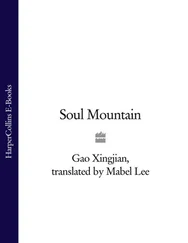
Gao Xingjian - Soul Mountain
Здесь есть возможность читать онлайн «Gao Xingjian - Soul Mountain» — ознакомительный отрывок электронной книги совершенно бесплатно, а после прочтения отрывка купить полную версию. В некоторых случаях можно слушать аудио, скачать через торрент в формате fb2 и присутствует краткое содержание. Год выпуска: 2001, Издательство: Harper Perennial, Жанр: Современная проза, на английском языке. Описание произведения, (предисловие) а так же отзывы посетителей доступны на портале библиотеки ЛибКат.
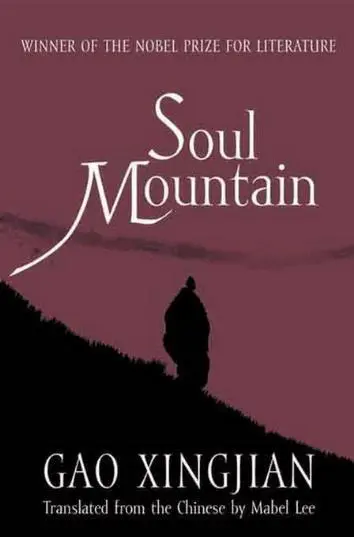
- Название:Soul Mountain
- Автор:
- Издательство:Harper Perennial
- Жанр:
- Год:2001
- ISBN:нет данных
- Рейтинг книги:5 / 5. Голосов: 1
-
Избранное:Добавить в избранное
- Отзывы:
-
Ваша оценка:
Soul Mountain: краткое содержание, описание и аннотация
Предлагаем к чтению аннотацию, описание, краткое содержание или предисловие (зависит от того, что написал сам автор книги «Soul Mountain»). Если вы не нашли необходимую информацию о книге — напишите в комментариях, мы постараемся отыскать её.
.
Bold, lyrical, and prodigious,
probes the human soul with an uncommon directness and candor and delights in the freedom of the imagination to expand the notion of the individual self.
“Chinese literature [of the future] will have to contend with the creative energy and the daring of Gao Xingjian.”
— “It is a relief to come to a book that celebrates the pleasures of literature with such gusto and knowingness.”
— “His largest and perhaps most personal work…Gao has created a sui generis work, one that, in combining story, reminiscence, meditation and journalism, warily comes to terms with the shocks of both Maoism and capitalism.”
—
Soul Mountain — читать онлайн ознакомительный отрывок
Ниже представлен текст книги, разбитый по страницам. Система сохранения места последней прочитанной страницы, позволяет с удобством читать онлайн бесплатно книгу «Soul Mountain», без необходимости каждый раз заново искать на чём Вы остановились. Поставьте закладку, и сможете в любой момент перейти на страницу, на которой закончили чтение.
Интервал:
Закладка:
You wander in a daze like this from city to city, county town to district capital then to provincial capital, then from another provincial capital to another district capital, then one county town after another. Afterwards you pass through a certain district capital then return to a particular provincial capital. Sometimes, in some small lane which city planners had missed, or couldn’t be bothered with, or had no intention of doing anything about, or which they couldn’t do anything about even if they wanted to, you suddenly see an old house with the door open, and you stop there and to look into the courtyard where clothes are drying on bamboo poles. It is as if you have only to enter and you will return to your childhood and those dim memories will be resurrected.
When you go in you discover that wherever you go it is possible to find remnants of your childhood. Ponds with floating duckweed, small town wineshops, windows of upstairs rooms overhanging the street, arched stone bridges, canopied boats passing under arched bridges, stone steps at back doors of houses leading to a river, and a dried up old well are all linked to your childhood memories and evoke irrepressible sadness, and it doesn’t matter whether or not you had actually stayed in these places as a child. The old slate-roof houses in a small seaside town and the little square tables outside where people sit drinking cold tea arouses this homesickness of yours. The tomb of Lu Guimeng of the Tang Dynasty, probably containing nothing but his clothes and headwear, is a grave covered with creepers and wild hemp in the back courtyard of some anonymous old school next to fields and a few old trees, yet the slanting rays of the afternoon sun are stained with your inexplicable grief. The lonely compounds in the Yi districts and the wooden houses on pylons of the remote Miao stockades halfway up mountains, which you had never dreamed about, are telling you something. You can’t help wondering whether you have another life, that you have retained some memories of a previous existence, or that these places will be your refuge in a future existence. Could it be that these memories are like liquor and after fermentation will produce a pure and fragrant concoction which will intoxicate you again?
What in fact are childhood memories? How can they be verified? Just keep them in your heart, why do you insist on verifying them?
You realize that the childhood you have been searching for doesn’t necessarily have a definite location. And isn’t it the same with one’s so-called hometown? It’s no wonder that blue chimney smoke drifting over roof-tiles of houses in little towns, bellows groaning in front of wood stoves, those translucent rice-coloured little insects with short forelegs and long hind-legs, the campfires and the mud-sealed wood-pail beehives hanging on the walls of the houses of mountain people, all evoke this homesickness of yours and have become the hometown of your dreams.
Although you were born in the city, grew up in cities and spent the larger part of your life in some huge urban metropolis, you can’t make that huge urban metropolis the hometown of your heart. Perhaps, because it is so huge that within it at most you can only find in a particular place, in a particular corner, in a particular room, in a particular instant, some memories which belong purely to yourself, and it is only in such memories that you can preserve yourself fully. In the end, in this vast ocean of humanity you are at most only a spoonful of green seawater, insignificant and fragile.
You should know that there is little you can seek in this world, that there is no need for you to be so greedy, in the end all you can achieve are memories, hazy, intangible, dreamlike memories which are impossible to articulate. When you try to relate them, there are only sentences, the dregs left from the filter of linguistic structures.
54
I arrive in this bustling city ablaze with lights, streets full of pedestrians and an endless stream of traffic. At the change of traffic signals, like sluice gates opening, there is a surging tide of bicycles. And there are also the T-shirts, neon lights, and advertisements sporting beautiful women.
I had planned to find myself a reasonable hotel near the train station so that I could have a hot bath, eat a decent meal, spoil myself a bit and then have a good sleep to recover from the accumulated weariness of the past ten days. I go from street to street but all the single rooms of the hotels are taken: it seems people are better off and are intent on having a room to themselves. As I have made up my mind to be extravagant tonight and refuse to sleep in a big shared room stinking of sweat or in a corridor with an added bed which must be vacated and dismantled at daybreak, I have no choice but to wait in a hotel lobby for people catching the night train to vacate their rooms. It is all very annoying. I suddenly remember I’ve got a phone number of a good friend of an old friend in Beijing who said that if I passed through I should feel free to contact this person.
I decide to give it a try. The person who answers is curt and tells me to wait. I never like making phone calls, first I don’t have my own private phone and second I know that some people in positions which entitle them to have a phone installed at home often use this tactic on strangers who phone up, then when the other party gets impatient they say the person’s not in or just hang up. Only a few of my friends have their own telephones, so this friend of my friend must be an official. I’m not prejudiced against all officials, I haven’t got to the stage of giving up on human society but for me the phone lacks human feeling and I wouldn’t use it except under exceptional circumstances. I’m still waiting. Even if I hang up I’ll still have to go on waiting in the hotel lobby so I may as well keep listening. Whatever the outcome it’s one way of passing time.
A unfriendly voice eventually answers, questions me, then calls out in surprise and asks where I am. He says he will come right away to fetch me. He is indeed the good friend of my old friend who didn’t know me before but indeed acknowledges this friendship anyway. I instantly give up the idea of staying at the hotel, ask him what number bus to take, pick up my bag and leave.
As I knock on the door I feel a bit anxious. The owner of the house opens the door, relieves me of my bags and, without shaking my hand or showing any formality, leads me in with his arm around my shoulders.
What a comfortable house it is. The hallway leads on to two rooms which are arranged elegantly with cane chairs, glass-block coffee tables and a display cabinet with antiques and foreign ornaments. Painted porcelain plates hang on the walls and the brown-lacquered floors are so clean and shiny that I don’t know where to put my feet. I first become aware of my filthy shoes then in the mirror I see my messy hair and dirty face. I haven’t had a haircut for months and it is hard even for me to recognize myself.
“I’ve come out of the mountains and look like a Wild Man,” I say, embarrassed about my grubby appearance.
“If it wasn’t for this chance, it would be hard getting you to come,” my host says.
His wife shakes my hand and busies herself getting cups of tea. His daughter, who is not yet ten, greets me with “hello uncle” from the door and looks at me with a hesitant smile.
My host says his friend in Beijing had written so he knew I was wandering everywhere and he has been looking forward to seeing me for some time. He tells me all the news about the political and literary world — this person has reappeared and that person has fallen from power, who has given such and such a speech and who has put forward such and such a theory. There has also been an article referring to me by name and saying that this writer’s works are problematical but that it is wrong to beat him to death. I say that I am no longer interested in these things, what I need is life, for example, at this moment what I need is to be able to have a hot bath. His wife bursts out laughing and says she will heat some water right away.
Читать дальшеИнтервал:
Закладка:
Похожие книги на «Soul Mountain»
Представляем Вашему вниманию похожие книги на «Soul Mountain» списком для выбора. Мы отобрали схожую по названию и смыслу литературу в надежде предоставить читателям больше вариантов отыскать новые, интересные, ещё непрочитанные произведения.




Обсуждение, отзывы о книге «Soul Mountain» и просто собственные мнения читателей. Оставьте ваши комментарии, напишите, что Вы думаете о произведении, его смысле или главных героях. Укажите что конкретно понравилось, а что нет, и почему Вы так считаете.