Péter Nádas - Parallel Stories
Здесь есть возможность читать онлайн «Péter Nádas - Parallel Stories» весь текст электронной книги совершенно бесплатно (целиком полную версию без сокращений). В некоторых случаях можно слушать аудио, скачать через торрент в формате fb2 и присутствует краткое содержание. Год выпуска: 2011, Издательство: Farrar, Straus and Giroux, Жанр: Современная проза, на английском языке. Описание произведения, (предисловие) а так же отзывы посетителей доступны на портале библиотеки ЛибКат.
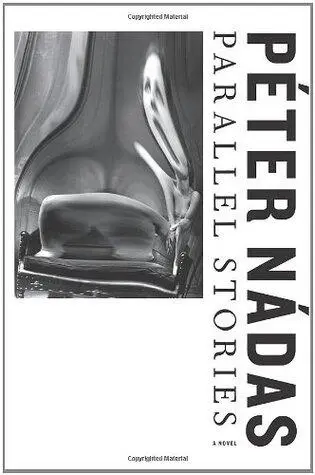
- Название:Parallel Stories
- Автор:
- Издательство:Farrar, Straus and Giroux
- Жанр:
- Год:2011
- ISBN:нет данных
- Рейтинг книги:5 / 5. Голосов: 1
-
Избранное:Добавить в избранное
- Отзывы:
-
Ваша оценка:
Parallel Stories: краткое содержание, описание и аннотация
Предлагаем к чтению аннотацию, описание, краткое содержание или предисловие (зависит от того, что написал сам автор книги «Parallel Stories»). Если вы не нашли необходимую информацию о книге — напишите в комментариях, мы постараемся отыскать её.
Three unusual men are at the heart of
: Hans von Wolkenstein, whose German mother is linked to secrets of fascist-Nazi collaboration during the 1940s; Ágost Lippay Lehr, whose influential father has served Hungary’s different political regimes for decades; and András Rott, who has his own dark record of mysterious activities abroad. The web of extended and interconnected dramas reaches from 1989 back to the spring of 1939, when Europe trembled on the edge of war, and extends to the bestial times of 1944–45, when Budapest was besieged, the Final Solution devastated Hungary’s Jews, and the war came to an end, and on to the cataclysmic Hungarian Revolution of October 1956. We follow these men from Berlin and Moscow to Switzerland and Holland, from the Mediterranean to the North Sea, and of course, from village to city in Hungary. The social and political circumstances of their lives may vary greatly, their sexual and spiritual longings may seem to each of them entirely unique, yet Péter Nádas’s magnificent tapestry unveils uncanny reverberating parallels that link them across time and space.This is Péter Nádas’s masterpiece — eighteen years in the writing, a sensation in Hungary even before it was published, and almost four years in the translating.
is the first foreign translation of this daring, demanding, and momentous novel, and it confirms for an even larger audience what Hungary already knows: that it is the author’s greatest work.
Parallel Stories — читать онлайн бесплатно полную книгу (весь текст) целиком
Ниже представлен текст книги, разбитый по страницам. Система сохранения места последней прочитанной страницы, позволяет с удобством читать онлайн бесплатно книгу «Parallel Stories», без необходимости каждый раз заново искать на чём Вы остановились. Поставьте закладку, и сможете в любой момент перейти на страницу, на которой закончили чтение.
Интервал:
Закладка:
Once they were off the bridge and in between the high apartment buildings, the taxi was no longer exposed to the raw, strong squalls, but on Margit Boulevard, now muddy and broken up for road repair, the cobblestones began to shake it, toss it about. Piles of stones and sand towered on either side, pipes and cables were strewn everywhere. The wind whistled, boomed, at times screamed down at them as it swept off the roofs and around the chimneys; the windshield wipers creaked, now smearing, now wiping away the splashing dirt.
The roadway had been dug up, revealing a long, winding wound; supposedly the city had been replacing gas pipes for weeks, but nobody was working at the bottom of the soaked ditches now, and the spring hurricane had toppled all the safety barriers and their paraffin lamps.
If these women don’t understand why he’s dodging them, why he’s let their importunate questions go by, then fine, let them not understand.
Contempt did not show on his face; rather, a pale and indulgent smile crinkled the thick lines around his eyes.
With people of his own rank, he never let himself get into an embarrassing situation in which somebody might inquire about his name. After all, a conversation is not made merely of questions or answers. The purpose of a conversation is to maintain, by musical means as it were, a noncommittal flow of chatter; what could be simpler or clearer than that. While he was driving the car between the gaping ditch and the curb at the first big turn of Margit Boulevard, he grasped the steering wheel firmly with his left hand and reached across the front seat to pick up Lady Erna’s beribboned hat from the ribbed rubber mat where it had fallen.
In the rearview mirror, in less than a second, they mutually traversed the areas around each other’s eyes, replete with wrinkles and shadows.
The driver had well-shaped, full lips; the short-cropped mustache above them, which he had sported since his early youth, was full of shimmering gray bristles.
My son’s name is the same as mine, László, he finally answered reluctantly, and to make his yielding to Lady Erna’s prying a little easier he said it as if letting his words out through his nose.
Nevertheless, his arm made a very strong impression on Lady Erna.
The way he was safely navigating the car across impossible terrain with that backhanded grip on the steering wheel. She did not resist acknowledging the impression. The movement swept even Geerte’s lips out of her memory. Only the feeling coursing through her nervous system kept the recollection alive.
At this moment, she did not understand why she’d been attracted all her life more to the beauty of men. What Geerte’s lips had done to her and what she had done to Geerte was something no other sensual experience could even approach.
The reality of her memory touched the reality of the sight before her.
In a certain sense unfairly, since Geerte and the driver made contact in her consciousness without her gaining any moral insight. This was so beyond anything acceptable that fortunately she could find no words for it. Sometimes, such little things, at times little lapses of memory and short circuits, can make one free.
She clicked her tongue. László, is it, she cried, well, what do you know. She did not let the reluctant man complete his sentence, because she was taken aback and amazed by the unfair contact; that at such an advanced age I should still feel something like this. She shuddered; really wonderful, she cried, to distract her mind from the intimate sensations within her. This is ridiculous; I am ridiculous.
In vain she rifled through the many drawers and cubbyholes of her memory, but among the professor’s favorite students she could not find one named László.
There must be some misunderstanding.
That means his name is the same as that of the charming hero of Casablanca , and to gain some time for her ridiculous sensation she politely leaned forward and laughed amiably, isn’t that right.
To which the driver responded by raising his leather-capped head, self-consciously and demonstratively, as if alarmed; the conversation could not continue like this. He truly did not understand what his passenger was talking about or what she was trying to achieve. What hero, what Casablanca was she talking about, but no matter what, she should not be using this tone.
He was probably disturbed by the secret current within him. It just could not be that without any transition he should suddenly desire this chattering old woman.
I beg your pardon, he responded coldly, though in a tone that was a shade more refined than one might expect from an ordinary cab driver; and to forestall further Jewish impertinence that such a Jewess von Haus aus might permit herself, he very slowly and deliberately returned his look to the rearview mirror.
Gyöngyvér sat sunken into herself, pale and motionless.
When, lounging in each other’s arms, they were startled into wakefulness that morning on the narrow bed in the maid’s room, she could think of nothing else.
No, they were not lounging; rather, they’d held each other tight all night long when she could think of nothing else. Not all night, since she’d slipped back to him only at dawn, when they could hear on the other side of the thin wall the foyer door closing above them, which meant that Mrs. Szemző had come back after all. But she could think of nothing else. The sensation of their own bodies dissolved in the sensation of the other’s body; that was what she was thinking about, and she could not retreat far enough into the corner of the backseat not to feel a similar sensation emanating from the man’s mother, a sensation out of which the man appeared and refused to leave. Even though she was here, in the taxi taking them somewhere, along with all her feelings and sensations. They held on to each other so they wouldn’t roll off the cot or slip out of each other.
She would have loved to do it, just once the good Lord should grant her this, so that Ágó wouldn’t take it out on her.
Never.
This morning, it would have made no sense for them to go on making love.
The sense of desire awakened with them — it always awakens in the man, or anyway is more unequivocal with him — but they could not tell which limb belonged to whom, whether they were feeling and sensing the other’s body or soul, and whether their own spirits had any boundaries.
The current of air kept moving the open window above them as it had throughout the night.
The summer morning breathed on them its coolness filled with birdsong.
Never more beautiful and dangerous.
With her power of imagination she would not accept the notion that that’s not how it should be, that nothing like this can ever happen again; she did not see the never-again standing before them as a gaping abyss, that this would never again happen to them.
She was already falling fast through the endless time of never-again, and she had to get used to the pain, otherwise she couldn’t bear it. She must anneal herself. It cannot be that there will never be mornings like this, never, never.
Each time anew, the image hit her like a blow to her head, this never-again. Not even a year had gone by and it was already over. And when she told herself that her heart would break and her head would split, she did not mean it metaphorically. The veins along the wall of her heart’s aortic arch trembled from this knotty tension of never-again, her skull throbbed with a migraine. Or she told herself that she would forget him.
Never. I will forget him. Never.
The meaning of the sentence was weak, its exhortation strong. Her consciousness was reminding her of the delicate border between physical and mental abilities. That somehow she should release her accumulated fear, regulate it, divert it in other directions, for it was threatening to burst its dam, her sensual energies were ready to rage, and they were naturally linked to blood pressure, pulse, and breathing rhythm.
Читать дальшеИнтервал:
Закладка:
Похожие книги на «Parallel Stories»
Представляем Вашему вниманию похожие книги на «Parallel Stories» списком для выбора. Мы отобрали схожую по названию и смыслу литературу в надежде предоставить читателям больше вариантов отыскать новые, интересные, ещё непрочитанные произведения.










Обсуждение, отзывы о книге «Parallel Stories» и просто собственные мнения читателей. Оставьте ваши комментарии, напишите, что Вы думаете о произведении, его смысле или главных героях. Укажите что конкретно понравилось, а что нет, и почему Вы так считаете.