Péter Nádas - Parallel Stories
Здесь есть возможность читать онлайн «Péter Nádas - Parallel Stories» весь текст электронной книги совершенно бесплатно (целиком полную версию без сокращений). В некоторых случаях можно слушать аудио, скачать через торрент в формате fb2 и присутствует краткое содержание. Год выпуска: 2011, Издательство: Farrar, Straus and Giroux, Жанр: Современная проза, на английском языке. Описание произведения, (предисловие) а так же отзывы посетителей доступны на портале библиотеки ЛибКат.
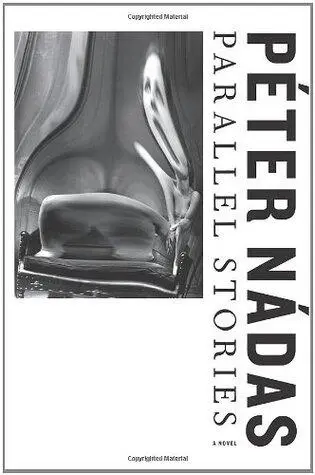
- Название:Parallel Stories
- Автор:
- Издательство:Farrar, Straus and Giroux
- Жанр:
- Год:2011
- ISBN:нет данных
- Рейтинг книги:5 / 5. Голосов: 1
-
Избранное:Добавить в избранное
- Отзывы:
-
Ваша оценка:
Parallel Stories: краткое содержание, описание и аннотация
Предлагаем к чтению аннотацию, описание, краткое содержание или предисловие (зависит от того, что написал сам автор книги «Parallel Stories»). Если вы не нашли необходимую информацию о книге — напишите в комментариях, мы постараемся отыскать её.
Three unusual men are at the heart of
: Hans von Wolkenstein, whose German mother is linked to secrets of fascist-Nazi collaboration during the 1940s; Ágost Lippay Lehr, whose influential father has served Hungary’s different political regimes for decades; and András Rott, who has his own dark record of mysterious activities abroad. The web of extended and interconnected dramas reaches from 1989 back to the spring of 1939, when Europe trembled on the edge of war, and extends to the bestial times of 1944–45, when Budapest was besieged, the Final Solution devastated Hungary’s Jews, and the war came to an end, and on to the cataclysmic Hungarian Revolution of October 1956. We follow these men from Berlin and Moscow to Switzerland and Holland, from the Mediterranean to the North Sea, and of course, from village to city in Hungary. The social and political circumstances of their lives may vary greatly, their sexual and spiritual longings may seem to each of them entirely unique, yet Péter Nádas’s magnificent tapestry unveils uncanny reverberating parallels that link them across time and space.This is Péter Nádas’s masterpiece — eighteen years in the writing, a sensation in Hungary even before it was published, and almost four years in the translating.
is the first foreign translation of this daring, demanding, and momentous novel, and it confirms for an even larger audience what Hungary already knows: that it is the author’s greatest work.
Parallel Stories — читать онлайн бесплатно полную книгу (весь текст) целиком
Ниже представлен текст книги, разбитый по страницам. Система сохранения места последней прочитанной страницы, позволяет с удобством читать онлайн бесплатно книгу «Parallel Stories», без необходимости каждый раз заново искать на чём Вы остановились. Поставьте закладку, и сможете в любой момент перейти на страницу, на которой закончили чтение.
Интервал:
Закладка:
Intellectually, Nínó on Teréz Boulevard had a very classy position in the family hierarchy while my aunt Irén in Damjanich Street, by dint of her person, as it were, also enjoyed a high position, since her beauty unfortunately swept everybody off their feet; yet because of her husband, she was not considered one of the refined or truly grand members of the family. Her husband was fabulously rich, people never stopped talking about it because somehow he could not get used to being rich or preserve his affluence; he was a common, uncouth man. On his hairy fingers he wore several jeweled rings and one particularly ugly signet ring of which his daughters were very afraid. He would slap them in the mouth with those ringed fingers. And the girls were no less ill-mannered. My grandmother said that my aunt Irén paid no heed to their upbringing. It would have been hard to say exactly what my aunt Irén did pay attention to. She picked the objects of her attention capriciously, making everything around her constantly move and change. The disorder in their apartment was always great; one had the impression that they were about to move out or had just moved in and had had no time to unpack. A radio was always blasting somewhere; they had several of them; they did not disturb the girls listening to the gramophone or whistling or even playing the violin at the same time.
When visiting them, Grandmother preferred to keep her gloves on and always made sure the taxi waited for her; thank you, my dears, but I’m staying only another moment.
I thought my mother was the classiest of them all, because she was the only one among us who dared openly to betray everyone, to just up and leave; she had no problem betraying the entire family, and she abandoned me without a word. I have almost no memories of her. More like a few sentences that others whispered in my presence in a way that I couldn’t understand. Regarding my mother, I can’t separate my real memories from my desires and imagination. Not only did she settle in Paris — this would not have been startling, considering her personality — but she lived in the woods of Vincennes, where the window of her bedroom gave on a lake with the fortified castle of the French kings on the far side. I knew these kings had been beheaded. I also knew that except for her name, Mother had nothing, and I mean absolutely nothing. People spoke of her with trepidation, about how she was impoverished and, save for that certain woman, had nobody and nothing, but absolutely nothing. I imagined her still wearing the same white linen dress with the red leather belt in which she had escaped on the last train. It was in the summer, a very hot summer. I knew her shoes and her bag had been red.
That certain communist woman with whom she left had come to Budapest for the World Youth Festival.
I understood the essence of these things, no matter how much they tried to hide them from me; she had run away because of the woman and she lived in this communist woman’s house at the edge of the Forest of Vincennes.
From inadvertently dropped words which I sometimes misinterpreted, I formed a picture of her in which everything had to be classy.
She was a ruthless mother, not even worthy to be called a mother, but I never believed this, no matter who said it. In classiness and strictness, she resembled my piano teacher. People also said to me, little boy, don’t even think about her, it’s not worth it. She was living in austere grandeur with someone, somewhere in a distant and alluring strange land. They said this was a moral slough. Which made me think of a puddle with pigs wallowing in it, snorting with pleasure. At other times, I imagined classiness as something like the dignity with which my piano teacher endured her lameness; she never complained. Or as the threatening act of destiny that will reach me too with its fury and one fine day strike me down.
In connection with the two women, people repeated a very beautiful word, which I also failed to understand or to remember. It was exactly the sort of word that mezzanine was. Only much later did I realize that I’d known the word for some time; of course, mezzanine meant intermediate floor. If that other beautiful word could reach and touch me, I’d become as classy as my mother was or that certain woman, who was a physician. The women in the family giggled when they talked of this, a woman physician should know what she’s doing, they said, laughing. Whenever they used that word in connection with anyone, they could barely control their squeals and giggles. The word might have referred to a specific pathological condition that the woman physician could treat as she liked. Or that Mother might have contracted this condition because she had left us for that certain woman. I did not understand why this was morally reprehensible if she’d had to do it because of her illness.
And how could she have known that a few weeks later they were going to take away my father and I would be left all alone. She couldn’t have foreseen this when she left, and when she learned of it she could no longer come back, sick as she was, to fetch me.
No matter how beautiful this word sounded, contagion and disease clung to it so strongly that in my fear I was unable to memorize it. Nevertheless, I could not withdraw my dreaded longing for my vanished mother. I kept excusing her any way I could, because I craved a mother of any kind. Sometimes I tried to imagine what if things hadn’t happened as I’d been told; what if nothing had happened, as was the case in most families. My body shuddered at the thought, I cried at the sheer happy thought that I hadn’t lost either of them; I cried a lot, but only in secret. I wanted her to come back one fine day; I even wouldn’t have minded if they’d arrested her and taken her away for what she had done. And I always worked up a fever with my constant shuddering — as I did while searching the streets for my father, whom one day, unexpectedly, I did discover.
I took after strange men on Teréz Boulevard, I walked in front of them, showed myself, maybe they’d recognize me.
The only time that I truly felt I was with my mother, that I was truly hers and nobody could take me from her, was when, to punish me, Grandmother locked me in the winter garden, full of tropical plants, where the smell of wet soil made it hard to breathe. I could endure the punishment without crying, but then I’d develop a temperature. The crying had to do with missing my mother, and it had to remain my deepest secret. I had no greater secret than this longing for my mother — until in this building in Dembinszky Street, because of Ilonka Weisz, fate finally caught up with me.
I had no idea how much time had passed.
It was hard to remember how much time might have passed, and counting from what point.
My last reference point was the bell of the Terézváros church marking eight o’clock. I couldn’t say when I’d come up these six worn steps and how long I’d been standing here, not as a child, in front of the roster of tenants. Pálóczky was gone, but on the second floor I found the name of the piano teacher, or at least her name was still on the list. And on the fourth floor, I could see the Weiszes’ name, and that meant Ilonka Weisz could appear at any moment.
In those years, young men like me tried hard to figure out what they should do to give some meaning to their complete and absolute hopelessness. I, however, was busy with the question of whether my entire life was anything but a peculiar hallucination.
I seem to exist, though in reality I have never existed, nor do I exist now and will exist only if I kill myself.
As if I could decide more reliably, given the positions of the watch hands in relation to the numbers, whether what I judged to be about an hour since the last ringing of the church bell had really and truly elapsed. I could not decide how much of that hour I had spent here, I had no reference point for that. As a saving idea, I remembered that the bus that ran in front of this building had gone past twice. The mind fixes occurrences like this, and one’s ears seem to hear them at will. But I couldn’t be sure whether the bus had really passed twice or I was only thinking it to reassure myself or to figure out what it meant if the bus had indeed gone past two times.
Читать дальшеИнтервал:
Закладка:
Похожие книги на «Parallel Stories»
Представляем Вашему вниманию похожие книги на «Parallel Stories» списком для выбора. Мы отобрали схожую по названию и смыслу литературу в надежде предоставить читателям больше вариантов отыскать новые, интересные, ещё непрочитанные произведения.










Обсуждение, отзывы о книге «Parallel Stories» и просто собственные мнения читателей. Оставьте ваши комментарии, напишите, что Вы думаете о произведении, его смысле или главных героях. Укажите что конкретно понравилось, а что нет, и почему Вы так считаете.