Péter Nádas - Parallel Stories
Здесь есть возможность читать онлайн «Péter Nádas - Parallel Stories» весь текст электронной книги совершенно бесплатно (целиком полную версию без сокращений). В некоторых случаях можно слушать аудио, скачать через торрент в формате fb2 и присутствует краткое содержание. Год выпуска: 2011, Издательство: Farrar, Straus and Giroux, Жанр: Современная проза, на английском языке. Описание произведения, (предисловие) а так же отзывы посетителей доступны на портале библиотеки ЛибКат.
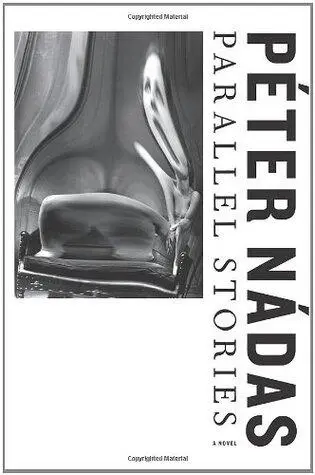
- Название:Parallel Stories
- Автор:
- Издательство:Farrar, Straus and Giroux
- Жанр:
- Год:2011
- ISBN:нет данных
- Рейтинг книги:5 / 5. Голосов: 1
-
Избранное:Добавить в избранное
- Отзывы:
-
Ваша оценка:
Parallel Stories: краткое содержание, описание и аннотация
Предлагаем к чтению аннотацию, описание, краткое содержание или предисловие (зависит от того, что написал сам автор книги «Parallel Stories»). Если вы не нашли необходимую информацию о книге — напишите в комментариях, мы постараемся отыскать её.
Three unusual men are at the heart of
: Hans von Wolkenstein, whose German mother is linked to secrets of fascist-Nazi collaboration during the 1940s; Ágost Lippay Lehr, whose influential father has served Hungary’s different political regimes for decades; and András Rott, who has his own dark record of mysterious activities abroad. The web of extended and interconnected dramas reaches from 1989 back to the spring of 1939, when Europe trembled on the edge of war, and extends to the bestial times of 1944–45, when Budapest was besieged, the Final Solution devastated Hungary’s Jews, and the war came to an end, and on to the cataclysmic Hungarian Revolution of October 1956. We follow these men from Berlin and Moscow to Switzerland and Holland, from the Mediterranean to the North Sea, and of course, from village to city in Hungary. The social and political circumstances of their lives may vary greatly, their sexual and spiritual longings may seem to each of them entirely unique, yet Péter Nádas’s magnificent tapestry unveils uncanny reverberating parallels that link them across time and space.This is Péter Nádas’s masterpiece — eighteen years in the writing, a sensation in Hungary even before it was published, and almost four years in the translating.
is the first foreign translation of this daring, demanding, and momentous novel, and it confirms for an even larger audience what Hungary already knows: that it is the author’s greatest work.
Parallel Stories — читать онлайн бесплатно полную книгу (весь текст) целиком
Ниже представлен текст книги, разбитый по страницам. Система сохранения места последней прочитанной страницы, позволяет с удобством читать онлайн бесплатно книгу «Parallel Stories», без необходимости каждый раз заново искать на чём Вы остановились. Поставьте закладку, и сможете в любой момент перейти на страницу, на которой закончили чтение.
Интервал:
Закладка:
I can’t deny that the beauty of the face surprised me. It probably surprised me with the keenness of its intelligence. Some profiles say nothing; the sudden turning face-to-face is what takes your breath away. Or the other way around: you are disappointed when an impressive profile belongs to an unimpressive face. His beauty looked out at me from the drawn, bony face of a day laborer. As if he were looking at me from the depth of several centuries. He wore a white shirt buttoned to the very top, as road workers on the Great Hungarian Plain do on holidays; he was flaunting his stubbly chin and his gauntness. His features were symmetrical and harmonious; a long face, somewhat oriental, with almost motionless eyes. It was surprising how much undisguised suffering had been carved into his features. He seemed like a reticent man, or at least he wanted to seem like one. And not only the suffering of the soul had been carved undisguised into his features, but also deprivations of the body, penury, his inhibitions, the stifled, freewheeling fury of his possessiveness.
I had not had experiences like that, yet all this was not unknown to me, not distant, because the secret passion of sufferance brought me close to him. To a person who perhaps denied his feelings as passionately as I did. Denial had written horizontal wrinkles into the skin of his forehead. It was enough to raise his eyebrows a bit, as he did just now, looking inquisitive, to have his forehead show a piling up of centuries-old furrows, darkened by the spot of the skin disease. His eyebrows were beautiful, thick, dense, dark, very strong and manly. This man is a wolf. As I searched my mind for the name of the skin disease, I remembered that it had something to do with the wolf or with legends of bloodthirsty wolves.
Denial and experience left nothing distrustful or indistinct on his face; they planted radially expanding dry lines at the corners of his eyes and surrounded his thin lips with two aggressively sharp grooves. The features that denial and experience had drawn on his face did not allow him to hide his emotions or his affections. He must have been too sensitive to be truly reticent and negative. His intentions and his faculties were separate. I wanted to lean closer to him just as he too seemed to be offering himself up; with the flexibility of thin people, and with his openness, he somehow wound up closer to me. I wanted to have a glance between the dark shadows; I put my elbows on the car, with a movement meant to be as effortless as the ones his body had suggested.
He could not have anticipated that my interest in the characteristics of men was so uninhibited; I surprised and astonished him, but he accepted it immediately, with no revulsion. But I felt I was in danger, I’d got myself into danger, now I would abandon my upbringing, give up something to hold on to. It may have seemed to him that I was deliberately imitating his movements when the opposite was the case: I was guided by the raw feeling of attraction as, leaning on my elbows just as he was, I stared into his face or into the core of his soul. The only difference was that I put my chin in the palm of my hand instead of propping it up with my thumb.
He must have enjoyed managing to bend me this way.
That’s how we were staring at each other; the wet car roof glittered dully.
If his skin had not been so translucently tender and at the same time his stubbly cheekbones had not been so strong and wild, if his aggressive chin had not been marked by a charming cleft, if he did not have finely cut eye sockets, if no winding, lumpy, coarse vein ran down from his temple, and if his visage had not been buffeted by contradictory emotions, then he would have remained painfully vulnerable: a face on which every secret feeling and every humiliating experience may be quickly seen. However, as things were, one could see all the things which the man felt but which, in his own well-conceived interest, he deliberately, stubbornly, and brazenly denied.
Raw strength overwhelmed his refinement, responding crudely to his weakness. A born self-destroyer, a cool, clever ignoramus. He was put together well enough so one could not take one’s eyes from him and could not know just where one stood with him.
A dangerously long time passed without either of us saying anything.
The mutually risky game was precisely a challenge to take an open-eyed account of each other’s traits and abilities, not furtively or in secret; we should do it openly, the way animals do. Now I remembered that the oddity on his forehead, lupus in Latin, was called wolf skin in Hungarian. This name summed up my presentiment. He would be the wolf in the tale. For which one instantly feels pangs of conscience. How could I link physical attributes with a moral judgment; how could I be so unfair. The reflection of everything he could see on me quickly showed in his eyes and in the bitter lines framing his mouth. As if the aversion-provoking mark on his body was telling me that I had no chance in the current situation. There was a mildly vibrating mockery at the corner of his eye; still, I didn’t know what he saw or how he judged me. I only sensed he wanted something other than what is usual or acceptable in a relationship between two people. Perhaps his lumpy wolf’s spot filled me with disgust and his look with abject terror. I did not want to acknowledge the delight, the contemptuous satisfaction with which he was watching my face. And if, nevertheless, I opened my mouth, if I couldn’t bear the silence anymore or his supercilious and brazen visage, then the secret game would be over, because I’d refused to take a risk on the next moment, on my future.
I asked him what floor they lived on; in my confusion I looked back at the building and saw a light go out in a room on the second floor and another light go on in an adjacent room. I hated my own hoarse, hesitating voice.
He asked me in return, ready to attack, why I was asking. His glance was distrustful, as if he feared an ulterior motive.
I didn’t understand what he could be afraid of; I didn’t want to understand how I might possibly have offended him. I said, I asked because I’ve been in this building before, which is to say I know it pretty well.
He asked, when, why, how did I know the building. He was not interested in questions, and he would definitely not answer any of mine. As he spoke he pushed himself away from the car, stepping back a little, but did not let go of the open door, didn’t let it slam shut.
As if I had to follow his every move, I straightened up too.
In his leather coat, he became like an experienced interrogating officer.
I said, it was pretty long ago when I was here last, but it wasn’t just once or twice then, because my childhood is connected to this neighborhood. The woman who taught me, my piano teacher used to live here.
I see, the piano teacher, that’s very interesting, he replied sarcastically and aggressively, as if he had to retaliate instantly against my piano lessons. He hoped I’d had nice successes. My childhood must have been very happy.
I hastened to reassure him that that was not at all the case; though I got some idea of the instrument I never really learned to play well; and I didn’t understand why I was making such an effort to keep up this chatter. I said the only reason I asked was that I’d be interested to know if my piano teacher still lived here. She was a very kind, older German lady. More correctly, she was a very strict woman, I was pretty afraid of her. If she still lived here, he might know her. But I didn’t understand why I was making this report; what on earth was I explaining myself for. In Budapest apartment houses people don’t know one another, or they pretend they don’t. It was unpleasant to hear my anxious voice. Perhaps, if he knew the story of my childhood, he might be more forgiving. I won’t tell them the story. But I could not give up my false conversational style completely.
Читать дальшеИнтервал:
Закладка:
Похожие книги на «Parallel Stories»
Представляем Вашему вниманию похожие книги на «Parallel Stories» списком для выбора. Мы отобрали схожую по названию и смыслу литературу в надежде предоставить читателям больше вариантов отыскать новые, интересные, ещё непрочитанные произведения.








Обсуждение, отзывы о книге «Parallel Stories» и просто собственные мнения читателей. Оставьте ваши комментарии, напишите, что Вы думаете о произведении, его смысле или главных героях. Укажите что конкретно понравилось, а что нет, и почему Вы так считаете.