Péter Nádas - Parallel Stories
Здесь есть возможность читать онлайн «Péter Nádas - Parallel Stories» весь текст электронной книги совершенно бесплатно (целиком полную версию без сокращений). В некоторых случаях можно слушать аудио, скачать через торрент в формате fb2 и присутствует краткое содержание. Год выпуска: 2011, Издательство: Farrar, Straus and Giroux, Жанр: Современная проза, на английском языке. Описание произведения, (предисловие) а так же отзывы посетителей доступны на портале библиотеки ЛибКат.
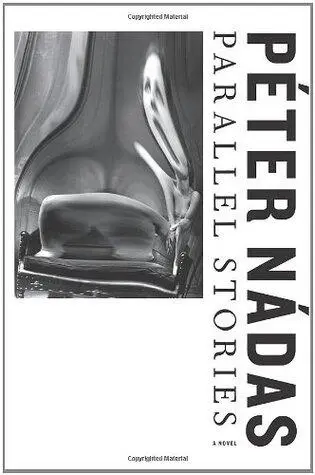
- Название:Parallel Stories
- Автор:
- Издательство:Farrar, Straus and Giroux
- Жанр:
- Год:2011
- ISBN:нет данных
- Рейтинг книги:5 / 5. Голосов: 1
-
Избранное:Добавить в избранное
- Отзывы:
-
Ваша оценка:
Parallel Stories: краткое содержание, описание и аннотация
Предлагаем к чтению аннотацию, описание, краткое содержание или предисловие (зависит от того, что написал сам автор книги «Parallel Stories»). Если вы не нашли необходимую информацию о книге — напишите в комментариях, мы постараемся отыскать её.
Three unusual men are at the heart of
: Hans von Wolkenstein, whose German mother is linked to secrets of fascist-Nazi collaboration during the 1940s; Ágost Lippay Lehr, whose influential father has served Hungary’s different political regimes for decades; and András Rott, who has his own dark record of mysterious activities abroad. The web of extended and interconnected dramas reaches from 1989 back to the spring of 1939, when Europe trembled on the edge of war, and extends to the bestial times of 1944–45, when Budapest was besieged, the Final Solution devastated Hungary’s Jews, and the war came to an end, and on to the cataclysmic Hungarian Revolution of October 1956. We follow these men from Berlin and Moscow to Switzerland and Holland, from the Mediterranean to the North Sea, and of course, from village to city in Hungary. The social and political circumstances of their lives may vary greatly, their sexual and spiritual longings may seem to each of them entirely unique, yet Péter Nádas’s magnificent tapestry unveils uncanny reverberating parallels that link them across time and space.This is Péter Nádas’s masterpiece — eighteen years in the writing, a sensation in Hungary even before it was published, and almost four years in the translating.
is the first foreign translation of this daring, demanding, and momentous novel, and it confirms for an even larger audience what Hungary already knows: that it is the author’s greatest work.
Parallel Stories — читать онлайн бесплатно полную книгу (весь текст) целиком
Ниже представлен текст книги, разбитый по страницам. Система сохранения места последней прочитанной страницы, позволяет с удобством читать онлайн бесплатно книгу «Parallel Stories», без необходимости каждый раз заново искать на чём Вы остановились. Поставьте закладку, и сможете в любой момент перейти на страницу, на которой закончили чтение.
Интервал:
Закладка:
Only ten years have gone by since then.
Or it was as if someone had told me the story of his life, from which I’d know that there was a building like this, with a piano teacher in it, where a little girl, with her little red skirt swishing on her buttocks, lured a little boy to the fourth floor, where that terrible thing happened. Just as the present evening was a useless and unavoidable disgrace. Where ten years ago he first had to pass by the foul-smelling entrance to the basement and no matter how carefully and quietly he came through the main gate, he’d still startle the cats stalking each other just as I saw them now. The red cat wasn’t familiar, but the black one was, as if the Pálóczkys’ black cat were still alive.
Strangely enough, I was the one who had these images, which that other someone hadn’t thought about since then, and if he had, he thought it best to forget them quickly.
Now too I had to reach those six steps that led up to the ground floor. In this building, because of those six steps, the ground floor was not called the ground floor. From the list of tenants, I wanted to ascertain whether my piano teacher still lived there. Or I was deceiving myself with this transparent alibi. As if I had some business there. I shouldn’t be doing this, I’ve no right, I’m ridiculous. Still, I won’t go away, I’ve nothing to fear, nothing to lose, whispered my unappeasable imagination.
One could get to the courtyard, paved with insanely yellow ceramics, from between two squat pilasters, and on one of them, on a white enamel plaque in old-fashioned blue letters, there was my childhood’s most mysterious word: mezzanine .
No doubt about it now, this was the building. A memory of quiet anxiety filled with anticipation was attached to this place.
It became a star-marked building; my piano teacher had to move out of it. When Budapest was liberated, she could move back in because it was no longer star-marked.* I never dared ask anyone what the star mark meant. I sensed from the adults’ voices that this too was part of the profound horror we had just survived and in which many had perished. Just as I didn’t dare ask what mezzanine meant. I wanted to be a famous pianist and did not want to reveal my ignorance to the adults; I was also afraid that because of my awkward question I might hear other terrible things. From certain signs, I concluded that mezzanine did not mean ground floor. Because sometimes my piano teacher asked me to go down to the Pálóczkys’ before we began the lesson and give him the piece of paper on which she had written what she wanted from the Garay Square market. When I cautiously asked her if she wanted me to take the note to the ground floor, she looked at me incredulously, not understanding what I hadn’t grasped, and asked, where else could you possibly take it, my angel, if not to the ground floor. But other times she didn’t say ground floor and didn’t say what was written on the enamel plaque, but something similar; luckily, though, she didn’t notice how bewildered I was. I wanted to learn what mezzanine was but also to be clever about avoiding the great horror.
Before you go, would you drop this key at the Pálóczkys’ on the mezzanine, she asked me once. These Pálóczkys are really angels, just angels. If he’s not there, you’ll be sure to find him in his workshop in the basement, and don’t be afraid of the cats, my angel. This mezzanine sounded almost like what she shouted when she wanted me to play a little stronger, a little softer; listen to me, my angel, this is mezzo forte, listen, this is mezzo piano now, my angel. Or should I have dropped off the key on the pianino. I was constantly looking for some acceptable solution, how to get to know more about the meaning of things without letting the horror — with all its details appearing unexpectedly — touch my skin. Uncle Pálóczky stayed in the star-marked building because concierges had to be real Christians, not converted ones. That I managed to understand from the hints. Another real Christian, my piano teacher, had to move out, but only a real Christian could be concierge, and therefore Uncle Pálóczky had to stay with the Jews. That I didn’t understand. There was this word in the building that almost meant ground floor and yet seemed to refer to the strength of a musical sound or an unknown musical instrument. Uncle Pálóczky, as he himself told it, became a living witness to how the old Weisz couple was taken away. Probably everyone but me understood the connections among these things.
Maybe I thought this building was classy because there was a better chance to see unfamiliar things than in our buildings, and maybe that’s why I didn’t notice how depressingly pathetic a place it was. People living here talked much more than in other buildings, they yelled more freely between floors and in the courtyard. Or perhaps my idea about its being classy was shaky, since I thought classy meant exceptional and alien, mysterious, and not linked to wealth or poverty. Mezzanine seemed grand to me because there was no such thing in any other building I knew. I also had to consider my piano teacher as very classy because she used a beautiful cane and limped a little. People said it was a congenital hip dislocation; this was no less exceptional than the mezzanine. That is how I thought about things. Probably decades must go by before one manages to free up certain concepts from one’s childhood imaginings. Just as I hadn’t noticed poverty, given the sparkling cleanliness and order, I paid no attention to our prosperity either. I did not know what it fed on or how unstable it was. With my grandparents, we lived on Stefánia Boulevard, where no one mentioned such qualifications, much as one speaks of breathing only when one is breathless. Earlier, my parents’ apartment on Aréna Road was no less spacious, calm, or well cared for, and neither was my maternal aunt’s apartment in Damjanich Street or that of my paternal aunt on Teréz Boulevard. Nobody talked about this, because they all considered spiritual values more important than the material world, and even when looking after their finances the reference points were spiritual ones; such allusions were part of the going bon ton. I did not sense the falsity of this for a long time, since I barely knew another world, which is to say I didn’t notice the differences. And because I had no idea about the criteria of wealth or poverty, it didn’t occur to me for the longest time that a place or neighborhood in a city had any particular meaning. And by the time I might have understood the connections among the various quarters and districts in the city of my birth, their social structure and architecture had been so extensively altered that the traditional labels had lost their meaning. There were no fancy or rich sections, and the concepts designating them sank into oblivion too.
Of course, I had a very clear idea of what was not proper.
The concept of good manners, strangely, lasted much longer than the social qualifications for bourgeois life. I could not judge the nature of bon ton, but I was free to decide what was classy. As if, for lack of a better qualified person, I had been entrusted with the decision, and indeed I behaved as a judge. Propriety, however, was set up with geometrical prescriptions coupled with draconian rulings. One had to avoid certain things at all costs, and one had to obey certain rules come hell or high water.
As to the issue of what was classy, one simply had to weigh things; no one hindered one in making the assessment. My mother’s kid sister, for example, in her infinitely large, airy, and sunny apartment looking out on the inner gardens of the always shady Damjanich Street, did not live in less privileged conditions than we did. Her rooms opened into one another and the windows reached down to the floor — French doors. That they were French was very classy too. Streetcars ran on the streets outside, yet I knew that although I lived with my grandparents on Stefánia Boulevard in a kind of provincial seclusion, if the need arose we could get to the city by taxi, and perhaps that was the reason we were exceptional. But for a long time the yellow streetcar was for me much classier than the taxi, though our secluded provincial life was classier than the noisy city. Which meant that sometimes disadvantages made someone classy and sometimes advantages. Or, put the other way around, it’s not advisable to look for the advantageous in everything if one wants to stay classy. It’s also possible that what is disadvantageous today will be very advantageous tomorrow. This was an important rule; no wonder people did not discuss it in public. You had to be two or three steps ahead of your nose to be able to judge your own position. There was some secret instruction by which not only the mere fact but also the degree or temperature of grandeur was determined. It didn’t have to do with the number of rooms, certain objects, or the condition of a given building.
Читать дальшеИнтервал:
Закладка:
Похожие книги на «Parallel Stories»
Представляем Вашему вниманию похожие книги на «Parallel Stories» списком для выбора. Мы отобрали схожую по названию и смыслу литературу в надежде предоставить читателям больше вариантов отыскать новые, интересные, ещё непрочитанные произведения.










Обсуждение, отзывы о книге «Parallel Stories» и просто собственные мнения читателей. Оставьте ваши комментарии, напишите, что Вы думаете о произведении, его смысле или главных героях. Укажите что конкретно понравилось, а что нет, и почему Вы так считаете.