Péter Nádas - Parallel Stories
Здесь есть возможность читать онлайн «Péter Nádas - Parallel Stories» весь текст электронной книги совершенно бесплатно (целиком полную версию без сокращений). В некоторых случаях можно слушать аудио, скачать через торрент в формате fb2 и присутствует краткое содержание. Год выпуска: 2011, Издательство: Farrar, Straus and Giroux, Жанр: Современная проза, на английском языке. Описание произведения, (предисловие) а так же отзывы посетителей доступны на портале библиотеки ЛибКат.
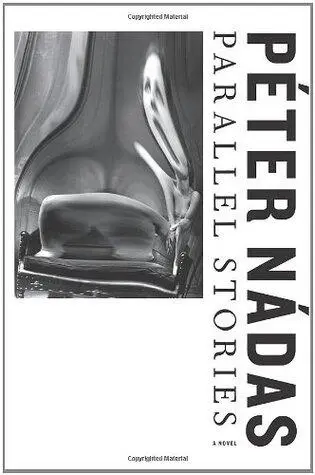
- Название:Parallel Stories
- Автор:
- Издательство:Farrar, Straus and Giroux
- Жанр:
- Год:2011
- ISBN:нет данных
- Рейтинг книги:5 / 5. Голосов: 1
-
Избранное:Добавить в избранное
- Отзывы:
-
Ваша оценка:
Parallel Stories: краткое содержание, описание и аннотация
Предлагаем к чтению аннотацию, описание, краткое содержание или предисловие (зависит от того, что написал сам автор книги «Parallel Stories»). Если вы не нашли необходимую информацию о книге — напишите в комментариях, мы постараемся отыскать её.
Three unusual men are at the heart of
: Hans von Wolkenstein, whose German mother is linked to secrets of fascist-Nazi collaboration during the 1940s; Ágost Lippay Lehr, whose influential father has served Hungary’s different political regimes for decades; and András Rott, who has his own dark record of mysterious activities abroad. The web of extended and interconnected dramas reaches from 1989 back to the spring of 1939, when Europe trembled on the edge of war, and extends to the bestial times of 1944–45, when Budapest was besieged, the Final Solution devastated Hungary’s Jews, and the war came to an end, and on to the cataclysmic Hungarian Revolution of October 1956. We follow these men from Berlin and Moscow to Switzerland and Holland, from the Mediterranean to the North Sea, and of course, from village to city in Hungary. The social and political circumstances of their lives may vary greatly, their sexual and spiritual longings may seem to each of them entirely unique, yet Péter Nádas’s magnificent tapestry unveils uncanny reverberating parallels that link them across time and space.This is Péter Nádas’s masterpiece — eighteen years in the writing, a sensation in Hungary even before it was published, and almost four years in the translating.
is the first foreign translation of this daring, demanding, and momentous novel, and it confirms for an even larger audience what Hungary already knows: that it is the author’s greatest work.
Parallel Stories — читать онлайн бесплатно полную книгу (весь текст) целиком
Ниже представлен текст книги, разбитый по страницам. Система сохранения места последней прочитанной страницы, позволяет с удобством читать онлайн бесплатно книгу «Parallel Stories», без необходимости каждый раз заново искать на чём Вы остановились. Поставьте закладку, и сможете в любой момент перейти на страницу, на которой закончили чтение.
Интервал:
Закладка:
Actually, they were dissatisfied with the results. They could obtain no data on the erect state of individual penises and rarely, mainly by chance, did they receive any of the boys’ sperm smear.
Yet they knew from reliable sources that American researchers had carried out similar examinations among schoolboys.
While lying down, they had to turn on their side. Schultze gave them an injection in their buttocks and within a few minutes they were hovering between sleep and wakefulness. Then he stuck them with another hypodermic, but this they saw only from his movements and could not feel. Because the peculiar feeling of losing a grip on wakefulness and bodily alertness spread quickly. Instead of the usual sense of being alive, only a strange feeling of themselves remained, reminiscent of nausea. Schultze kept guiding them back to wakefulness by telling them to turn this way and that. So it was clear the injection was not fully soporific. Their mental capacity could be awakened, while the brain stem forever swallowed up the pictures that went with the sentences spoken. The boys did what he asked them to do, though they no longer knew what he asked, who was asking, and what they did and how. It was like a severe state of unconsciousness, which is why they had no idea what experiment-related questions they were answering, answers that Schultze, sitting at his desk, carefully wrote down.
But even weeks later they knew that somebody had asked them questions about something, and this knowledge perturbed several of them, as when imagination slides into a sense of reality.
They also had memories of occasionally having to change position. Schultze or somebody helping him, perhaps a woman, would use straps to immobilize their limbs in certain positions, so that they would not move until the plaster had set.
This kind-voiced woman may have mixed the plaster too. They sensed this; they sensed things from behind the nausea but did not remember them the same way.
That somebody was shaving something.
This remained as a strange presentiment, probably near the place where the brain records the pictures of imagination.
They saw but did not feel, or rather they could not comprehend even their own thoughts; and since they did not feel, they continually fell back into the peculiar deep sleep, where awareness shunted their lives onto tracks other than the ones they’d started out on at the urging of their parents, or on which they would have progressed conscientiously despite their parents and superiors.
In Annaberg, the church hill itself was nothing but a massive, extensive block of this rock formation, barely covered with a surface of soil. Gneiss supported the entire small town on its back. A few steps from the church and built of the same stone stood Kirchber 1, the Wolkensteins’ modest town house where, to the great delight of the grown-ups, Hans always played with the housekeeper’s little niece Ingke more peacefully than with anyone else. The adults could safely leave the children to themselves for long periods. Not to mention that through this rock formation the silver mines’ narrow, ever-dripping shafts lowered themselves to the bowels of the earth; an endless labyrinth of narrow horizontal passageways led to yet more darkly gaping shafts from which one could reach still lower galleries. Ingke’s father was a mineworker who had been fired several times; he was always organizing his mates, although his grandfather and even his great-grandfather had also been miners, as was almost every man in the family.
This schist-textured, metamorphic, structurally composite and crystalline stone, whose ingredients include quartz, feldspar, and mica, does not differ from granite in its texture but deviates from it greatly in its fascinating colors. Its dominant color stems from orthoclase, a feldspar that is white, red, and gray, in which quartz forms limpid gray specks.
All this, however, can only be seen close up, preferably under a magnifying glass or microscope.
Keinast’s place remained empty during supper, there was not even a setting for him, from which the other boys deduced exactly what was happening to him upstairs. After hibernation, the boys awakened the following day, at midday or even in the afternoon, not in Schultze’s office but in one of the beds in the convalescence ward. When they came downstairs, everyone could see what they had gone through and was very considerate of them. For a day, they moved about confusedly among the others, like sleepwalkers. Yet it was not so much sleepiness or the leaden fatigue in their limbs that kept them captive, but their peculiar state of consciousness, from which they did not want to return to their frightening, boring everyday existence. Some of them remembered that Schultze threw a sheet over their shoulders and seemed to have told them to hold it tight about them because they had to go across the corridor on their own. Schultze followed them, telling them what to do, which way to turn in the corridor, and then carefully closed the high window in the recovery room and tucked them in, lest they catch cold.
Those who already had pubic hair were surprised to see the next day that it was gone. They’d probably shaved it off, Schultze or the kind-voiced woman who helped him occasionally. They did not talk about this either, not even when in the bathroom they saw what had happened. Residues of plaster revealed something about the nature of the examination; they had to scrape off white bits on the fuzz of their bellies or loins that had been missed by the razor.
A mass of gneiss appearing before us as a rock is wine-red when seen at a distance; from other viewpoints and at different parts of the day, it is more ocher, at times flesh-colored. When broken in pieces, it seems yellowish or grayish brown. The biotite or muscovite micas glitter in it; these micas always arrange themselves parallel to each other inside the stone.
This very prevalent stone, though it is not always easy to notice close to the earth’s surface, can thank its mining and architectural career to the parallels that dominate its structure, which allow it to be split easily along its layers. Several varieties of its texture are known; in veined gneiss, the micas are arranged in ribbons, in layered gneiss the ingredients change with each layer, while in barred gneiss they line up in vertical rows, in slabs.
Whatever the texture, the stone can be split along the parallel lines.
Humans do the least of the splitting. It is mainly wind, frost, and water that do it; one might say that miners merely follow the natural cracks when they split the rock with their chisels to get to the silver in the veining.
Gneiss forms a large thick envelope around the globe. On it rest all sorts of deposits and sediments; when the magma moves underneath it and opens the structural cracks, the eruptive rocks burst to the surface through this three-thousand-meter stone casing.
Gneiss was probably the first crust of the earth to cool off.
I’ve Been in This Building Before
I had no idea what would happen. But I was very familiar with the wind rushing into my face from the dark City Park.
I enjoyed knowing the wind.
I would have liked the love story to be over and just to leave without a word and continue my own doomed life. The street was sparkling wet, but the wind stopped hitting us in the face once the rain let up. I was past something pointless, something completely unacceptable, I should think. If I had to leave, well, let me leave. I must get over my stupid mistake at last. I longed for nothing more than to be able to walk away, without explanation, stroll to the bus terminal, get on the lighted empty bus, let the conductor come so I could buy a ticket from him, see the driver get on in his leisurely way at the starting time, and let the two of them take me away from here. Maybe I could get off at the first stop and, unnoticed, go back to City Park and watch what the men were doing in there.
Читать дальшеИнтервал:
Закладка:
Похожие книги на «Parallel Stories»
Представляем Вашему вниманию похожие книги на «Parallel Stories» списком для выбора. Мы отобрали схожую по названию и смыслу литературу в надежде предоставить читателям больше вариантов отыскать новые, интересные, ещё непрочитанные произведения.








Обсуждение, отзывы о книге «Parallel Stories» и просто собственные мнения читателей. Оставьте ваши комментарии, напишите, что Вы думаете о произведении, его смысле или главных героях. Укажите что конкретно понравилось, а что нет, и почему Вы так считаете.