Péter Nádas - Parallel Stories
Здесь есть возможность читать онлайн «Péter Nádas - Parallel Stories» весь текст электронной книги совершенно бесплатно (целиком полную версию без сокращений). В некоторых случаях можно слушать аудио, скачать через торрент в формате fb2 и присутствует краткое содержание. Год выпуска: 2011, Издательство: Farrar, Straus and Giroux, Жанр: Современная проза, на английском языке. Описание произведения, (предисловие) а так же отзывы посетителей доступны на портале библиотеки ЛибКат.
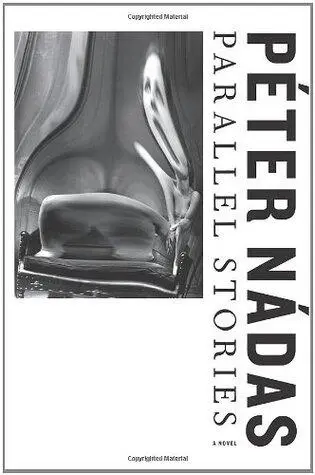
- Название:Parallel Stories
- Автор:
- Издательство:Farrar, Straus and Giroux
- Жанр:
- Год:2011
- ISBN:нет данных
- Рейтинг книги:5 / 5. Голосов: 1
-
Избранное:Добавить в избранное
- Отзывы:
-
Ваша оценка:
Parallel Stories: краткое содержание, описание и аннотация
Предлагаем к чтению аннотацию, описание, краткое содержание или предисловие (зависит от того, что написал сам автор книги «Parallel Stories»). Если вы не нашли необходимую информацию о книге — напишите в комментариях, мы постараемся отыскать её.
Three unusual men are at the heart of
: Hans von Wolkenstein, whose German mother is linked to secrets of fascist-Nazi collaboration during the 1940s; Ágost Lippay Lehr, whose influential father has served Hungary’s different political regimes for decades; and András Rott, who has his own dark record of mysterious activities abroad. The web of extended and interconnected dramas reaches from 1989 back to the spring of 1939, when Europe trembled on the edge of war, and extends to the bestial times of 1944–45, when Budapest was besieged, the Final Solution devastated Hungary’s Jews, and the war came to an end, and on to the cataclysmic Hungarian Revolution of October 1956. We follow these men from Berlin and Moscow to Switzerland and Holland, from the Mediterranean to the North Sea, and of course, from village to city in Hungary. The social and political circumstances of their lives may vary greatly, their sexual and spiritual longings may seem to each of them entirely unique, yet Péter Nádas’s magnificent tapestry unveils uncanny reverberating parallels that link them across time and space.This is Péter Nádas’s masterpiece — eighteen years in the writing, a sensation in Hungary even before it was published, and almost four years in the translating.
is the first foreign translation of this daring, demanding, and momentous novel, and it confirms for an even larger audience what Hungary already knows: that it is the author’s greatest work.
Parallel Stories — читать онлайн бесплатно полную книгу (весь текст) целиком
Ниже представлен текст книги, разбитый по страницам. Система сохранения места последней прочитанной страницы, позволяет с удобством читать онлайн бесплатно книгу «Parallel Stories», без необходимости каждый раз заново искать на чём Вы остановились. Поставьте закладку, и сможете в любой момент перейти на страницу, на которой закончили чтение.
Интервал:
Закладка:
His breath might stop, but he was already in the water and his limbs were bruised on the stones. Without anything to hold on to he might slip, because underwater everything was slipping along with him. As if the mouth of hell had sucked him in and he was about to slide down its gullet. Somebody, someone standing on a dry rock, would reach out and help him, that too had happened, or the current quickly pulled him away. He would still feel how pleasantly warm it was to live inside his flesh, but the cold of the water was already hurting. And to prevent the end, he would have to stay on a dry rock with at least one foot, and cling to it.
But if he had already fallen in, there was no other way to escape except to give in to the insane current, to entrust his helpless body to the elemental force of the water.
Which nobody really likes to do.
He had to be careful not to wind up in the whirlpools at the waterfall or knock against the treacherous boulders. But the force of the current made this almost impossible to avoid. The frigid water had already numbed him, deprived him of his senses. He could not swim more than a few strokes. And it didn’t make any sense to try. At best, he could steer himself, have some control over his direction, to keep the whirlpools from taking him under the waterfall, because whoever was caught there would not be disgorged without serious injuries. And when past this danger, where an increased volume of water widened and deepened the streambed, it was possible to wriggle his way to shore. He could check the blue spots and bruises on his body; hours later, his teeth were still chattering, his body still trembling and shivering.
And the other boys were laughing inside their warm bodies.
And there was no point in answering them, because no sound would come from his mouth and his teeth were chattering.
Ingke was obviously familiar with the rules; she adroitly avoided the underwater boulders. Only when she reached the middle of the stream did one of them wobble under her. This was the moment when Kienast was summoned from the tree nursery, they were about to put the tools away, he should leave everything and report to Schultze’s office.
Kienast was under the boys’ protection, but no power could cross Schultze’s wishes.
There was but a short hour until dinnertime.
And Ingke Einbock had come from Annaberg to see him; she did want to visit him.
She laughed but did not answer questions.
She took a small letter out of her blouse — a calling card in an envelope. And as Hans opened the envelope, which had not been glued shut, he right away recognized his father’s handwriting. His father did not write as Germans did.
The important thing, Ingke Einbock said, is to keep your mouth shut.
We’ll tear it into tiny pieces.
There were altogether three sentences on the card. A peculiar dread seized Hans whenever he had to read his father’s letters written in Hungarian. And when he wrote in German, it was barely understandable because he made so many grammatical mistakes. Hans knew Hungarian, but since he had first learned to read and write in the Slovak school in Fánt, the visual image of Hungarian words remained alien to him. And how glad he had been to have managed to forget his father for good, along with dread of his language.
He should prepare: his father was going to take him away from here.
As soon as he read this first sentence, he was filled with completely unprecedented gratitude and joy — that his father loved him after all, would take him to himself — and at the same time he was also filled with an unspeakable, crushing pain. Because then he’d have to leave Hendrik forever, yes, he knew it would be forever, and would have to leave Kienast at the mercy of the other boys; and leaving would be the most dastardly betrayal possible. He must keep this to himself; he cannot tell them about it.
The first sentence made it clear that the secret Communist organization had made its initial move and, judging by the circumstances, Ingke Einbock’s mother was part of it.
He had not yet read the second sentence when he wavered. It wouldn’t be so painful to give up Ingke Einbock. He wanted to deny having read the first sentence. To reject this little note, to say no. For him, Kienast and Franke were more important than his father, who all his life had done nothing but leave him.
He’d left him.
It will be an escape, wrote his father in the next sentence. He will be notified in advance of the time.
It was good to forget about his father for another reason, which was that Hans was afraid he had inherited his father’s blood. No one has said so, but that seemed to be the examiners’ assumption, based on tests and observation, which by law made sterilization necessary.
Your father, it said at the bottom of the little card.
He wanted to read it again, look at it some more, and he felt the girl’s eyes on him. He knew he was being weak, that he could not abandon them. Yet those last two words were very strong; he also could not say no. So as not to weaken in front of the girl — he had never felt such weakness before, he had never fainted — he sought the warmth of the stone pier at his back.
This stone, gneiss, behaves peculiarly in every life situation. Lukewarm a moment ago from the rays of the sun, it was now ice-cold. Or perhaps he just felt it like that. Gneiss can easily be split, because of its foliation, though one could see no trace of any cracks on the stones in the streambed. Maybe this is the last time he will see these stones in the stream. Because of the constant friction, they had lost their hard edges and lay on one another like stuffed pillows. They deceived the observer with their friendly, fleshlike colors and cushiony forms. Anyone who bumped into gneiss or wished to go at it with a chisel could testify that it was as hard as granite. To which, in its mineral composition, by the way, it is identical.
The area’s characteristic nobiliary nests were all built of this stone, the mountaintop castles of Freiberg, Wolkenstein, Schwarzenberg, Schlettau, Frauenstein, and Hartenstein — fortresses and citadels raised at the end of the Middle Ages to protect the roads along which the silver, precious stones, and valuable industrial ores mined here were transported. He looked at what he had to leave behind, and everything seemed different. They would take him to Moscow. The even older bulwarked fortress churches, sacrificial chapels, bridges, viaducts, and — grandest and most impressive of all — the church of St. Anne in Annaberg had also been built of this stone. Every window of the Wolkensteins’ house gave on its soaring apse with its arched windows. The fleshlike color of the stone filled the interior spaces in every season and in every part of each day. A veritable cathedral that, with its rustic exterior of this cut stone and its interior suffused with light, was considered an exceptional Gothic masterpiece.
And while the two children squatting at the base of the viaduct’s central pier let go the tiny shreds of the torn-up letter, piece by piece, Kienast had to strip naked and lie down on the examination table, which in that first second felt frightfully cold.
This was not the first time it happened to him — something the boys feared so much that even later they wouldn’t talk about it, not even among themselves.
That Hans and Hendrik wanted to find Schultze’s secret notes was not by chance. They knew what they were looking for and which data they wanted to destroy at all cost.
It was a brand-new method and therefore they could not have known what it was, in fact, or what occurred during the specific examination, obviously focused on specific results. In order to make plaster casts of certain sensitive parts of their bodies, Schultze had to put them in a state of hibernation. The casts, in strictly sealed little boxes, were sent by registered mail to the Kaiser Wilhelm Institute for Anthropology, Human Heredity, and Eugenics on Ihne Street, in Berlin. These samples came under the charge not of Baroness Thum but, in a separate unit of the great collection, of Baron Schuer. He prepared the plan for the examination together with directors of other institutes. The Psychological Institute’s director was of the opinion that any other, more legal form of sample-taking would have an unpredictable effect on the pupils’ mental development that might seriously jeopardize the examination itself.
Читать дальшеИнтервал:
Закладка:
Похожие книги на «Parallel Stories»
Представляем Вашему вниманию похожие книги на «Parallel Stories» списком для выбора. Мы отобрали схожую по названию и смыслу литературу в надежде предоставить читателям больше вариантов отыскать новые, интересные, ещё непрочитанные произведения.







Обсуждение, отзывы о книге «Parallel Stories» и просто собственные мнения читателей. Оставьте ваши комментарии, напишите, что Вы думаете о произведении, его смысле или главных героях. Укажите что конкретно понравилось, а что нет, и почему Вы так считаете.