Péter Nádas - Parallel Stories
Здесь есть возможность читать онлайн «Péter Nádas - Parallel Stories» весь текст электронной книги совершенно бесплатно (целиком полную версию без сокращений). В некоторых случаях можно слушать аудио, скачать через торрент в формате fb2 и присутствует краткое содержание. Год выпуска: 2011, Издательство: Farrar, Straus and Giroux, Жанр: Современная проза, на английском языке. Описание произведения, (предисловие) а так же отзывы посетителей доступны на портале библиотеки ЛибКат.
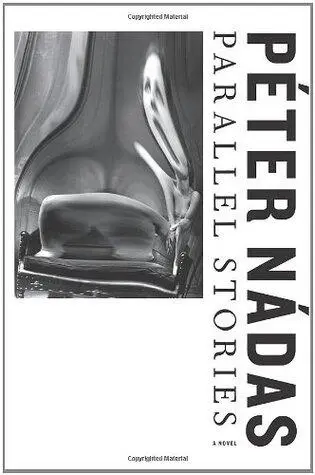
- Название:Parallel Stories
- Автор:
- Издательство:Farrar, Straus and Giroux
- Жанр:
- Год:2011
- ISBN:нет данных
- Рейтинг книги:5 / 5. Голосов: 1
-
Избранное:Добавить в избранное
- Отзывы:
-
Ваша оценка:
Parallel Stories: краткое содержание, описание и аннотация
Предлагаем к чтению аннотацию, описание, краткое содержание или предисловие (зависит от того, что написал сам автор книги «Parallel Stories»). Если вы не нашли необходимую информацию о книге — напишите в комментариях, мы постараемся отыскать её.
Three unusual men are at the heart of
: Hans von Wolkenstein, whose German mother is linked to secrets of fascist-Nazi collaboration during the 1940s; Ágost Lippay Lehr, whose influential father has served Hungary’s different political regimes for decades; and András Rott, who has his own dark record of mysterious activities abroad. The web of extended and interconnected dramas reaches from 1989 back to the spring of 1939, when Europe trembled on the edge of war, and extends to the bestial times of 1944–45, when Budapest was besieged, the Final Solution devastated Hungary’s Jews, and the war came to an end, and on to the cataclysmic Hungarian Revolution of October 1956. We follow these men from Berlin and Moscow to Switzerland and Holland, from the Mediterranean to the North Sea, and of course, from village to city in Hungary. The social and political circumstances of their lives may vary greatly, their sexual and spiritual longings may seem to each of them entirely unique, yet Péter Nádas’s magnificent tapestry unveils uncanny reverberating parallels that link them across time and space.This is Péter Nádas’s masterpiece — eighteen years in the writing, a sensation in Hungary even before it was published, and almost four years in the translating.
is the first foreign translation of this daring, demanding, and momentous novel, and it confirms for an even larger audience what Hungary already knows: that it is the author’s greatest work.
Parallel Stories — читать онлайн бесплатно полную книгу (весь текст) целиком
Ниже представлен текст книги, разбитый по страницам. Система сохранения места последней прочитанной страницы, позволяет с удобством читать онлайн бесплатно книгу «Parallel Stories», без необходимости каждый раз заново искать на чём Вы остановились. Поставьте закладку, и сможете в любой момент перейти на страницу, на которой закончили чтение.
Интервал:
Закладка:
They also understood that a questionable number was nonetheless a number, its symbol x , just as in the periodic table there are empty spaces. But the empty spaces become visible with the filled places; thus it was not unreasonable to look for the latter. Boys considered problematical were not only exposed to merciless repetitions of previously assessed measurements but, in the silent presence of committee members, also subjected to measurements other boys were not. In any case, the boys had to strip naked for the measurements when Schultze measured the distance between chin, Gnathion, and the tip of the sternum, Suprasternale, and again for the supervisions.
If anyone thought of not stripping voluntarily, Schultze would demand it, on every occasion.
Kienast was considered a difficult case.
Let’s take off those shitty little drawers, Schultze sang, come on, get rid of those stinking socks.
The boys in the boarding school changed underwear once a week, and Schultze was particularly sensitive to the inevitable bodily emissions. He could barely forgive the boys when their bodily data were linked to organ functions. Another reason that made it hard to judge one’s own situation by the measurements of others was that not everyone liked to report on what happened to them in Schultze’s office, what irregularity was discovered or which body part was the focus of interest during a certain visit. Many of them tried to make their reports innocuous, which stood to reason, while others exaggerated theirs shamelessly. Even though no one knew what would result from either of these distortions, and it was impossible to gauge which was the better self-defense in the secret war against being scientific.
To keep quiet about the embarrassing experience of being measured, or to brag, exaggerate, and outdo the others.
They were all bastards, that was the truth.
The adults would never have said this aloud about them, and the boys were even less likely to mention it among themselves. They could not help thinking about it, because not only science but also the law declared them bastards. Nevertheless, the education these misbegotten children were given was in accordance with the most progressive, modern pedagogical theories. Most of the boys considered this an illusion intended to deceive them — a correct assumption — but they could not ignore the scientific level or quality of their education.
Fifty-nine boys, the number hardly changed over the years because the suicides were always replaced with others. They studied in small groups, and these groups were divided roughly by age. Mainly they studied classical sciences, mathematics, physics, botany, chemistry, but also ancient languages, Latin and Greek, literature and history, especially ancient history, and subjects such as archaeology and ethnology that were not usually in the curriculum of midrange schools. Their physical achievements and mental capacities were monitored, and they were given the results of this monitoring because they were asked to do achievement-increasing exercises for the proper assessment of which it was required that they strengthen the spirit of competition among them. Their mental capacity and their intelligence were tested, and copious notes were taken of their behavior in many different circumstances.
The boys could not imagine their instructors without their notebooks. They had to feel privileged to be living and studying in such an environment, and they knew that the highest levels of German science would use the data resulting from this. But they were repeatedly told that they were the same kind of person, birds of a feather, all in the same boat, tied by a bond that could never be broken. Whatever might happen, they could not — and they knew this — not even at the cost of their lives could they leave before high-school graduation. This was so far in the future for them that they couldn’t imagine a world with different conditions.
They could not decide what they should be like, since they were already the way they were.
Or how they should behave, so that despite their unfortunate birth, they might seem to be what in all probability they never had been and never could be. Yet in this way, given who they were, it filled them with satisfaction to think they performed a great service to German science. If Schultze were to succeed one day in defining the norms of racial desirability, based on the boys’ data, their stunted racial development would become their merit.
These mainly intellectual broodings touched Hans less than they did the other boys, and they touched Hendrik only for practical reasons. About as much as did the others’ silently endured pain and self-doubts. Tension and anxiety about a lack or an injury that none of them could avoid. But regardless of the effect of these thoughts on them, Hans and Hendrik, for different reasons and in different ways, were able to keep a distance from them, and even physical intimacy could not have brought them closer than this shared ability.
To their great good luck, they also managed to keep the strong physical signs of this feeling at a certain distance. They could not afford to wind up in a situation where they’d have to explain things to their friends or be suspected darkly by their instructors.
The instructors paid special attention to such matters; moreover, they gave the boys the opportunity to observe for themselves the purity of their own inclinations or the nature of their own deviations.
The two boys were especially sensitive to the exceptional atmospheric pressure of the locale, and also to the scientific aims of the place as they understood them, though neither of them had ever shown any touchiness; their reputation was firmly based. Hans always behaved as if he stood above everything that had happened or might happen to him; he was looked upon as privileged in the school, where being privileged was usually considered as being at odds with the communal spirit and the boys were contemptuous of it. The service personnel were forbidden to establish personal relationships with the boys. Any kind of bias or self-consciousness might threaten the accuracy of observation. Yet the men and women on the staff, who came from nearby villages and the little medieval town nearby, could not treat Hans as anyone but the lord and master of the place. Bastard or not, they did not much care.
They tried to please him in small things — even when unnoticed, as it were — and he shared these friendly benefits and advantages fairly with Hendrik. The imperceptibility of these activities was what convinced the others that Hans had real historical prerogatives, which was a good reason they should listen to him. The scientific supervisors of the institute erred, however, in thinking they controlled every aspect of their observations. What is more, not only the kitchen personnel, the stokers and scullery maids, but the teachers and of course the boys all knew that Hans’s mother owned the two ancestral homes, the enormous forests between Thum and Wolkenstein, the lumberyards, and even the small forest train that, with much whistling, ran across the Wiesenbad viaduct every afternoon, and that she was also connected at the highest level to the scientific research being conducted here.
It was naturally humiliating to think they were objects of a scientific experiment, yet all of them went to sleep and awakened with this unpleasant thought.
Knowing they were here at the express wishes of their parents should have made the boys consider the matter settled. Yet it gave them no rest. When they went home for three weeks each summer, they dared not ask if their parents had any knowledge of the experiments or what sort of papers they had signed regarding their sons’ placement in the school and their being subject to hygienic observation. That was the key phrase. The boys searched and several of them found such papers among their parents’ documents; indeed, the parents had signed binding notes that referred to the appropriate law and clearly spelled things out.
Читать дальшеИнтервал:
Закладка:
Похожие книги на «Parallel Stories»
Представляем Вашему вниманию похожие книги на «Parallel Stories» списком для выбора. Мы отобрали схожую по названию и смыслу литературу в надежде предоставить читателям больше вариантов отыскать новые, интересные, ещё непрочитанные произведения.










Обсуждение, отзывы о книге «Parallel Stories» и просто собственные мнения читателей. Оставьте ваши комментарии, напишите, что Вы думаете о произведении, его смысле или главных героях. Укажите что конкретно понравилось, а что нет, и почему Вы так считаете.