Péter Nádas - Parallel Stories
Здесь есть возможность читать онлайн «Péter Nádas - Parallel Stories» весь текст электронной книги совершенно бесплатно (целиком полную версию без сокращений). В некоторых случаях можно слушать аудио, скачать через торрент в формате fb2 и присутствует краткое содержание. Год выпуска: 2011, Издательство: Farrar, Straus and Giroux, Жанр: Современная проза, на английском языке. Описание произведения, (предисловие) а так же отзывы посетителей доступны на портале библиотеки ЛибКат.
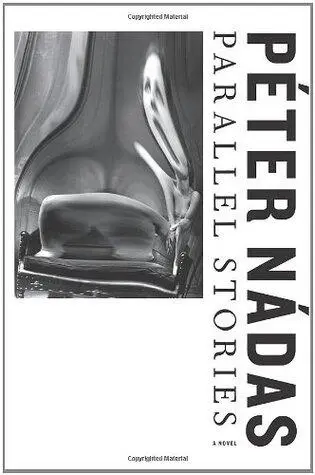
- Название:Parallel Stories
- Автор:
- Издательство:Farrar, Straus and Giroux
- Жанр:
- Год:2011
- ISBN:нет данных
- Рейтинг книги:5 / 5. Голосов: 1
-
Избранное:Добавить в избранное
- Отзывы:
-
Ваша оценка:
Parallel Stories: краткое содержание, описание и аннотация
Предлагаем к чтению аннотацию, описание, краткое содержание или предисловие (зависит от того, что написал сам автор книги «Parallel Stories»). Если вы не нашли необходимую информацию о книге — напишите в комментариях, мы постараемся отыскать её.
Three unusual men are at the heart of
: Hans von Wolkenstein, whose German mother is linked to secrets of fascist-Nazi collaboration during the 1940s; Ágost Lippay Lehr, whose influential father has served Hungary’s different political regimes for decades; and András Rott, who has his own dark record of mysterious activities abroad. The web of extended and interconnected dramas reaches from 1989 back to the spring of 1939, when Europe trembled on the edge of war, and extends to the bestial times of 1944–45, when Budapest was besieged, the Final Solution devastated Hungary’s Jews, and the war came to an end, and on to the cataclysmic Hungarian Revolution of October 1956. We follow these men from Berlin and Moscow to Switzerland and Holland, from the Mediterranean to the North Sea, and of course, from village to city in Hungary. The social and political circumstances of their lives may vary greatly, their sexual and spiritual longings may seem to each of them entirely unique, yet Péter Nádas’s magnificent tapestry unveils uncanny reverberating parallels that link them across time and space.This is Péter Nádas’s masterpiece — eighteen years in the writing, a sensation in Hungary even before it was published, and almost four years in the translating.
is the first foreign translation of this daring, demanding, and momentous novel, and it confirms for an even larger audience what Hungary already knows: that it is the author’s greatest work.
Parallel Stories — читать онлайн бесплатно полную книгу (весь текст) целиком
Ниже представлен текст книги, разбитый по страницам. Система сохранения места последней прочитанной страницы, позволяет с удобством читать онлайн бесплатно книгу «Parallel Stories», без необходимости каждый раз заново искать на чём Вы остановились. Поставьте закладку, и сможете в любой момент перейти на страницу, на которой закончили чтение.
Интервал:
Закладка:
Let us now look at this marvelous distance, O Tibiale, wherefore hast thou receded so from Stylion.
These were not Greek gods but measuring points on the human body.
Or he would sing something like, O Symphyse, tremble not while from on high Omphalion keeps an eye on thee. These musical mutterings meant that the knee joint on a standing person with arms at his side was farther than usual from the wrist joint, or that the skin over the pubic bone should not tremble nervously, since he was doing nothing to it except, with his instrument designed for this sort of measurement, marking its distance from the navel. Not everyone feared him. The instruments were always cold, so even the bravest boys dreaded that first touch. In ordinary Latin dictionaries, the boys did not find the names Schultze used. They also worried that Schultze might touch their naked limbs and other exposed parts. Two life-size drawings of the human skeleton hung on the wall, with the measuring points of the body marked with numbers. One drawing, of the body in profile, had twenty-seven points; the other, a frontal view, showed twenty-eight points, all according to Braus. This mysterious name was written above both drawings in beautiful Gothic letters, but Braus could not be found in any of the encyclopedias.
Schultze looked at the boys’ eyes while he took out the large leather case in which he kept instruments for assessing eye color. But the leather case so alarmed most of them — the imminent danger making their eyes ache in their sockets — that they quickly closed their eyes or buried their faces in their hands.
In four black-velvet-lined cannonlike cases, glass eyes looked up at the ceiling. They were arranged in five rows, eight to a row, in trays that one could lift out of the cabinet. This meant that there were 160 differently colored and differently patterned glass eyeballs; under each eyeball, on a tiny copper plate sunk into the black velvet, the eye color’s number and letter designation was indicated. Schultze unpacked all this, bringing out all the velvet-framed cases and laying them side by side, the better to see his entire holding. At the bottom of the cabinet, on the last removable tray, there lay on the velvet bed a frightening instrument made of silver and resembling candy tongs, and a strong-smelling, hair-thin sandalwood fan.
Schultze made his first determination with the help of the fan. Individual segments of the fan could be cleverly separated from the others and, along with small enamel panels that showed hand-painted images of the many different eyes, be held up to a living eye in order to identify its color correctly. Although he worked with a steady hand, in his professional excitement Schultze sometimes touched a real eyeball with these small panels lifted to the boys’ temples.
Which of course was enough to make the boys wince.
But Schultze would go on singing, don’t be so sensitive, you little fool.
After this crude definition, he would reach for his ominous silver tongs, with which he could not only lift a valuable glass eyeball adroitly from its velvet bed but hold it with total confidence right next to a real eye. Throughout this activity, he shone strong lights into the boys’ eyes from the front and sides. And he preceded everything by dripping something into their eyes to keep them from blinking. If they resisted or blinked involuntarily, Schultze sang out that intrigue and scheming would not destroy the divine design, the gods cannot be tripped up, and the boys would get more drops in their eyes.
For hours after the examination, the boys would wander about with numb eyelids and enlarged pupils or just sit motionless on a bench, heads buried in their hands.
The light hurt.
Or Schultze would sing, hark, hark, I need but a single secundum , lend me thy patience, Prince, I am on the trail.
For the capital offense, the villain will pay forthwith.
Sometimes the boys would keep rubbing their eyes to gain time.
Don’t pick at it, don’t rub it, unless you want me to take it out with my tongs, my boy. What the devil, so it’s tearing, sang Schultze, and then they had to open their eyes obediently to receive the initial drop or the stabilizing drop or the drop against tearing.
It was very quiet on this floor for another reason: right underneath, on the third floor, were the dormitories, two large and three smaller sleeping halls that during the day were off limits to everyone. All their windows had to be kept open regardless of the season. Even in the vaporous winter cold the halls were barely heated but, because of the high humidity, sometimes in the summer months they tried to moderate the temperature in the rather musty dormitories.
On the second floor were classrooms and the so-called great hall with its two enormous stone fireplaces, thick chimneys, and a chandelier made of painted wood. One could still see, on the gilded rims of the small colorful plates at the base of the electric candles, remnants of guttering wax candles of former days. This large space with its coffered ceiling, painted with great artistry, had once been called the knights’ hall because of two full sets of knight’s armor standing at either side of the entrance. Everything here seemed to have been left where the Thum zu Wolkensteins, who had used them for centuries, abandoned them in somewhat poetic disarray, at which point the baroness turned over the building and the part of the estate that went with it for the protracted use of the institute.
She did it mainly for political and scientific considerations.
True, she received a rather high annual rent from the Kaiser Wilhelm Institute, but from the point of view of her career, it was more important that she have a safe place for her son. The part of the estate that officially belonged with the building included the broad valley with its fields in flower from spring to autumn; the watercourse, which at certain sections had been regulated; the loud waterfall and the woodlands of the gorges; and the pine and oak forests all the way up to the ridge from the Ochsensprung to Frauenholz, where only clouds roamed. Over the ridge, the baroness’s ancient estate continued in other forests, pastures, and fields, but in the land registry, this entire section was entered under an independent lot number. Baron Schuer now wanted to obtain ownership of the building for his institute, even if it had to be without the rights to the part of the estate that went along with it.
But he did not talk about this at his first move.
He was afraid that if he failed to take advantage of his situation with proper force and speed, Himmler’s ruthless protégé Wolfram Sievers would beat him to it — he might already have done so — and obtain the house for his own institute for research into Germany’s ancestral heritage, his own efforts on behalf of racial purification.* Several years of Schuer’s preparatory work would come to nothing; his was a scientific plan whose execution required at least another decade of research, if not two. He wanted also to somehow call the Führer’s attention to the fact that it was not propitious to have everything doubled in the Reich, and not only because of its costliness.
After all, two scientific truths could not exist side by side.
In this game of higher stakes, he was forced to enter a great trial of strength, which also promised to be a showdown with the powerful Himmler. Who, at least on the face of it, respected his scientific prestige and achievements. Baron Schuer knew from his own assistant, Mengele, that Sievers had had his eyes on the Wolkenstein house for a good many years and had spoken several times with the baroness about purchasing it. Schuer was no more convinced of Mengele’s loyalty than he was of his scientific abilities, but he needed Mengele now. He was afraid that Sievers would take over the house and simply throw out the research material so diligently collected from the children, who had grown used to continued investigation. The baroness herself was also a source of concern: not only did she want to head the institute in Rome in return for the house, but she also meant to raise the rent on it. For his progeny purification institute Sievers looked for houses that were far from any kind of human settlement. He was a long way from having established his network, but dark folk imagination had already given a name to these institutes. Lebensborn : the word itself contributed to the institute’s dubious reputation. A place where life is created. And the baroness intended to raise the rent by the very amount that, with the budget at his disposal, Baron Schuer could not afford to pay.
Читать дальшеИнтервал:
Закладка:
Похожие книги на «Parallel Stories»
Представляем Вашему вниманию похожие книги на «Parallel Stories» списком для выбора. Мы отобрали схожую по названию и смыслу литературу в надежде предоставить читателям больше вариантов отыскать новые, интересные, ещё непрочитанные произведения.










Обсуждение, отзывы о книге «Parallel Stories» и просто собственные мнения читателей. Оставьте ваши комментарии, напишите, что Вы думаете о произведении, его смысле или главных героях. Укажите что конкретно понравилось, а что нет, и почему Вы так считаете.