Péter Nádas - Parallel Stories
Здесь есть возможность читать онлайн «Péter Nádas - Parallel Stories» весь текст электронной книги совершенно бесплатно (целиком полную версию без сокращений). В некоторых случаях можно слушать аудио, скачать через торрент в формате fb2 и присутствует краткое содержание. Год выпуска: 2011, Издательство: Farrar, Straus and Giroux, Жанр: Современная проза, на английском языке. Описание произведения, (предисловие) а так же отзывы посетителей доступны на портале библиотеки ЛибКат.
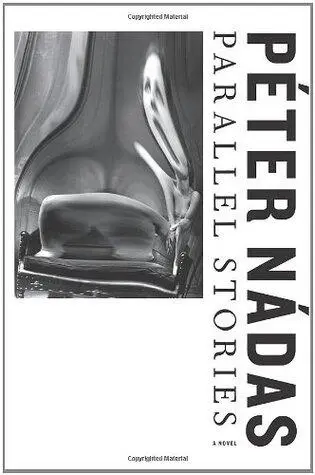
- Название:Parallel Stories
- Автор:
- Издательство:Farrar, Straus and Giroux
- Жанр:
- Год:2011
- ISBN:нет данных
- Рейтинг книги:5 / 5. Голосов: 1
-
Избранное:Добавить в избранное
- Отзывы:
-
Ваша оценка:
Parallel Stories: краткое содержание, описание и аннотация
Предлагаем к чтению аннотацию, описание, краткое содержание или предисловие (зависит от того, что написал сам автор книги «Parallel Stories»). Если вы не нашли необходимую информацию о книге — напишите в комментариях, мы постараемся отыскать её.
Three unusual men are at the heart of
: Hans von Wolkenstein, whose German mother is linked to secrets of fascist-Nazi collaboration during the 1940s; Ágost Lippay Lehr, whose influential father has served Hungary’s different political regimes for decades; and András Rott, who has his own dark record of mysterious activities abroad. The web of extended and interconnected dramas reaches from 1989 back to the spring of 1939, when Europe trembled on the edge of war, and extends to the bestial times of 1944–45, when Budapest was besieged, the Final Solution devastated Hungary’s Jews, and the war came to an end, and on to the cataclysmic Hungarian Revolution of October 1956. We follow these men from Berlin and Moscow to Switzerland and Holland, from the Mediterranean to the North Sea, and of course, from village to city in Hungary. The social and political circumstances of their lives may vary greatly, their sexual and spiritual longings may seem to each of them entirely unique, yet Péter Nádas’s magnificent tapestry unveils uncanny reverberating parallels that link them across time and space.This is Péter Nádas’s masterpiece — eighteen years in the writing, a sensation in Hungary even before it was published, and almost four years in the translating.
is the first foreign translation of this daring, demanding, and momentous novel, and it confirms for an even larger audience what Hungary already knows: that it is the author’s greatest work.
Parallel Stories — читать онлайн бесплатно полную книгу (весь текст) целиком
Ниже представлен текст книги, разбитый по страницам. Система сохранения места последней прочитанной страницы, позволяет с удобством читать онлайн бесплатно книгу «Parallel Stories», без необходимости каждый раз заново искать на чём Вы остановились. Поставьте закладку, и сможете в любой момент перейти на страницу, на которой закончили чтение.
Интервал:
Закладка:
And now another school year was over. During the short summer vacation he had to stay here, could not go to Berlin. And, because of her work, the baroness could not come to Annaberg.
While roaming about alone during these three weeks in the enormous Erzgebirge landscape, he thought a lot about these matters. But even in retrospect it did not occur to him to be horrified, as others were, by the suicides. At most he found it ridiculous that some of the boys miscalculated the direction of their jumps or changed their minds at the last minute and were caught on the first rock and were injured but did not die. Or those whose plans were faulty to begin with. They were ready to throw themselves onto the tracks of the narrow-gauge railway, the idiots, when they knew the train had to slow down before the viaduct and would only cut off an arm or a leg.
Occasionally the feverish desire to free-fall seemed to spread like an epidemic among the boys. It was safest to jump off the viaduct. As if every school year demanded a living sacrifice to frighten the rest of them and make them forget their own attraction to it. As if the suicides were offering up their mangled bodies to their mates. And to have one successful attempt, several boys had to try it; there were always more of them prepared to do so. Whether as dead or as wounded, the boys who made the attempt were never seen again. There were no funeral services or memorials; the counselors conducted no investigations that might have revealed who had assisted the suicides in their preparations.
Alone and unnoticed, it would have been hard to do anything. Obviously everyone had accomplices, and this kind of friendship was no less a threat to society than a collective rebellion. Baron Schuer himself viewed this infectious inclination with some anxiety, but after consultation with pedagogical and psychological workers from sister institutions he concluded that, statistically speaking, the phenomenon was not extraordinary or worrisome. It was necessary to take certain risks in an experiment of such scope.
They did not reprimand the survivors in terms of religious morality either; instead, things continued as if nothing had happened. For the living survivors who had helped other boys to kill themselves, this lack of reprimand, especially the lack of religious reproof, marked a kind of limit on their own impunity.
A certain stillness, an unnamed shame, filled the empty spaces. Among the boys who missed their self-destructive mates, anyway. Being silent made forgetting harder. One of the priests at St. Anne’s should have commemorated the unusual events — at least from the pulpit in Annaberg, when on Sunday morning the counselors accompanied the boys who showed up for early services. Every Sunday, those counselors turned the simple act of preparing to go to church into an elaborate procedure, using it to see who were the believers, who the dissemblers, who might go just for the fun of it and then during the service end up scandalizing the town with their giggling. Hans showed up for services, but not because in his faith he wanted to follow his mother’s example. Yet the priests, whose relationship with the demonstrably pagan counselors was obviously strained, never mentioned the events in any sermon. It was impossible that they did not know of them, but one couldn’t tell this by looking at them. Hans had the impression that the communal silence resembled the behavior of a free valence in a world of chemical compounds, forever dangling in the empty universe in hope of combining with something.
After all, the the ones who had perished were flawed specimens — this must not be forgotten for even a moment. A pagan thought, and Hans did not understand how the priests could approve it.
He imagined that their departed mates had the free arms of the living boys in their grip.
And when it happened again, the physics teacher, Gruber, would take them the next day to the viaduct to explain again the laws of free fall, sometimes several times over. He did this each time a suicide occurred, using the very same expressions on each occasion, yet the boys never tired of his lectures. Whether the act had been successful or not, the poor fool had come to grief forever, Gruber explained as if for the first time. One group of boys was made to stay at the bottom of the viaduct while another group, led by the good-looking young teacher, clambered up to the railway embankment among the pine trees, and from there to the viaduct’s central pier; after they had performed the experiment the groups changed places. The teacher’s opinion was that the boys could understand the dazzling regularity of uniformly accelerating motion and the strictly physical character of human life only if they measured and experienced them from both perspectives. All they needed for the experiment was an authenticated means of measurement, an authenticated lead weight, and two authenticated stopwatches. The measure of uniformly accelerating motion differs only slightly at every geographical location; up to this point, it is easy to understand the premise. At the select location where we live, for example, the contiguous crust of gneiss strongly but uniformly modifies the motion. It is a general rule that the speed of a given body, while falling, changes equally in equal intervals. According to Gruber’s authenticated measurements, in the Wiesenbad gorge the speed was 980,839 centimeters per second. If, therefore, at the dropping of the accurate lead weight, the speed is zero, then in the second second of the fall it will be 980,839 centimeters per second, in the next second 2 x 980,839 centimeters per second, and so on; after t seconds it is t x 980,839 centimeters per second. From here on, only a few could follow the good-looking young teacher’s explanation, according to which, in plain words, speed is proportionate to time and it is therefore easy to figure what sort of resistance the body, falling at the given speed in the given time, will encounter when hitting the ground.
The boys, who did not understand the logic of the calculation and would have liked not to think about the smashed body, about the boy whom they may have loved or sometimes hated, but who still hoped they’d do the measurements rights, at least mechanically right, usually watched the good-looking teacher rummaging with both hands in the pockets of his smock while moving his buttocks in odd ways. Walking back and forth in front of them, what was he looking for and what was he finding. Sometimes he became so involved in the explanation of the physical world that he stopped involuntarily, lifted something from his pocket, and looked at it a long time with innocent eyes, though he probably could not have said why he had taken it out and what it was he was seeing. He had in his pockets pieces of chalk, a pencil sharpener, an eraser, a ball of carefully rolled-up string, and a pendulum; the latter two went together. One could fit the waxed red loop of the string into the hook on the pendulum. Hans, for some inexplicable reason, particularly envied the teacher this clever little instrument. Or, in his absentmindedness, the teacher would reach into the depth of his pocket and at the same time stick his butt out and reach between his legs to scratch. The boys knew perfectly well what he was scratching, and they said he was scratching his balls. They happened to know he suffered from some skin ailment that might have been caused by venereal disease. Occasionally, he’d lift the wings of his smock and, reaching into his pants pocket, rearrange his testicles in a more comfortable position.
He would halt his explanation while his symmetrical face with its handsome little mustache took on a dreamy look.
The crushed bodies were taken not to Chemnitz, nearby, and not even to Dresden, but to distant Leipzig, directly to the university clinic where, after thorough autopsies, the families could receive them in sealed coffins. On this brand-new day, fallen on them from the bright blue sky, their hands messy with fine woodland dirt, the boys were standing in the botanical garden.
Читать дальшеИнтервал:
Закладка:
Похожие книги на «Parallel Stories»
Представляем Вашему вниманию похожие книги на «Parallel Stories» списком для выбора. Мы отобрали схожую по названию и смыслу литературу в надежде предоставить читателям больше вариантов отыскать новые, интересные, ещё непрочитанные произведения.










Обсуждение, отзывы о книге «Parallel Stories» и просто собственные мнения читателей. Оставьте ваши комментарии, напишите, что Вы думаете о произведении, его смысле или главных героях. Укажите что конкретно понравилось, а что нет, и почему Вы так считаете.