Péter Nádas - Parallel Stories
Здесь есть возможность читать онлайн «Péter Nádas - Parallel Stories» весь текст электронной книги совершенно бесплатно (целиком полную версию без сокращений). В некоторых случаях можно слушать аудио, скачать через торрент в формате fb2 и присутствует краткое содержание. Год выпуска: 2011, Издательство: Farrar, Straus and Giroux, Жанр: Современная проза, на английском языке. Описание произведения, (предисловие) а так же отзывы посетителей доступны на портале библиотеки ЛибКат.
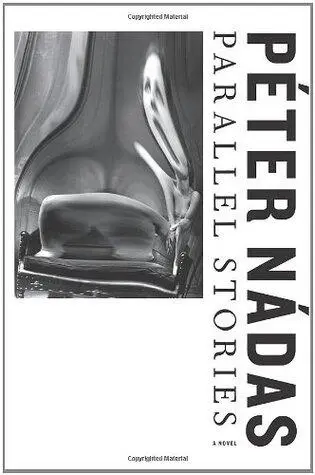
- Название:Parallel Stories
- Автор:
- Издательство:Farrar, Straus and Giroux
- Жанр:
- Год:2011
- ISBN:нет данных
- Рейтинг книги:5 / 5. Голосов: 1
-
Избранное:Добавить в избранное
- Отзывы:
-
Ваша оценка:
Parallel Stories: краткое содержание, описание и аннотация
Предлагаем к чтению аннотацию, описание, краткое содержание или предисловие (зависит от того, что написал сам автор книги «Parallel Stories»). Если вы не нашли необходимую информацию о книге — напишите в комментариях, мы постараемся отыскать её.
Three unusual men are at the heart of
: Hans von Wolkenstein, whose German mother is linked to secrets of fascist-Nazi collaboration during the 1940s; Ágost Lippay Lehr, whose influential father has served Hungary’s different political regimes for decades; and András Rott, who has his own dark record of mysterious activities abroad. The web of extended and interconnected dramas reaches from 1989 back to the spring of 1939, when Europe trembled on the edge of war, and extends to the bestial times of 1944–45, when Budapest was besieged, the Final Solution devastated Hungary’s Jews, and the war came to an end, and on to the cataclysmic Hungarian Revolution of October 1956. We follow these men from Berlin and Moscow to Switzerland and Holland, from the Mediterranean to the North Sea, and of course, from village to city in Hungary. The social and political circumstances of their lives may vary greatly, their sexual and spiritual longings may seem to each of them entirely unique, yet Péter Nádas’s magnificent tapestry unveils uncanny reverberating parallels that link them across time and space.This is Péter Nádas’s masterpiece — eighteen years in the writing, a sensation in Hungary even before it was published, and almost four years in the translating.
is the first foreign translation of this daring, demanding, and momentous novel, and it confirms for an even larger audience what Hungary already knows: that it is the author’s greatest work.
Parallel Stories — читать онлайн бесплатно полную книгу (весь текст) целиком
Ниже представлен текст книги, разбитый по страницам. Система сохранения места последней прочитанной страницы, позволяет с удобством читать онлайн бесплатно книгу «Parallel Stories», без необходимости каждый раз заново искать на чём Вы остановились. Поставьте закладку, и сможете в любой момент перейти на страницу, на которой закончили чтение.
Интервал:
Закладка:
Not a vehicle, not a pedestrian anywhere.
The glimmering cobblestones on the tree-lined street rushed darkly under us. Just before the Körönd rotary I involuntarily yelled, watch out, dog, because a rather large black animal, attracted by the approaching car, was loping toward us from the outer sidewalk. Its surprised master, yelling and gesticulating, was running uselessly after it. The dog galloped at a right angle from him and then was off the sidewalk, across the road, back on the promenade, as if it were planning to hurl himself at us from the flower beds. For some reason it thought better of this, and, with muscles tense and mug thrust forward, it merely barked at the car from among the trees.
But it was not the same dog.
And it did not slow us down. Simon wasn’t driving as if, defying danger or at least taking it into account, he felt free. I’d say, rather, that he was ready for any collision, at whatever cost, and the explanation for his resolve was not to be found in either freedom or servitude. He grasped the wheel tightly, his arm stiffly spread. Nothing had an explanation, really. I certainly had no explanation for why I felt good at last in this anarchy or chaos opening up for me. I was a little embarrassed about my shouting. As if I still had something to lose.
But I preferred that nothing should be the way I’d have wanted it; let everything be the way it happens to be.
Klára’s body did not respond.
True, nobody asked her anything; events as well as the persons participating in them became independent. Ultimately, I gave myself over to the feeling Simon had claimed to himself: I surrendered myself to the mad chase, which covered over all my confused or nice feelings or any other kind of feeling, and which did not even let me know what we were chasing.
Originally, to all indications, he’d planned to drive to Hősök Square, at the end of Andrássy Street.
We’d barely left the infuriated dog behind us when from the Körönd we could see that we might not easily get through what was waiting for us. From afar, it seemed like an inexplicable apparition: somewhere, near or in line with Bajza Street, between the sidewalks lined with gigantic trees, two dark masses were blocking our way; between them lay only a narrow, brilliantly illuminated passage. At first glance, I couldn’t figure out what it was. We could see only a glowing mass of light between two dark masses.
Simon probably saw this first and figured it out before I did. We had already sped through the huge intersection at Körönd. He must have made his decision in a split second; without slackening his stiffened arms, and leaning into the movement with his entire upper body, he yanked the steering wheel to the right and then, amid terrific jolts, creaks, and thuds, gave another yank to the left, which luckily missed running us up onto the promenade and into the trees or flower beds; he managed to find the roadway between the promenade and sidewalk, where he sped through without slowing down at all.
I won’t deny it, I admired him.
And the explanation for the apparition was very simple. To block that part of the road, the police had put two of their assault cars facing each other and turned floodlights on both of them.
It wasn’t easy to understand why they’d done this. Perhaps something else had happened in the city which we hadn’t yet heard about, not just the terrible accident that morning at the site of the official celebration. But none of us asked or said anything. They wanted either to arrest some people or to keep the entire city under control. One left so many things unsaid and stopped doing things at the slightest hint of danger; we kept quiet because we always expected the worst. In the dark, under the trees, the leather-coated fellows stood in groups. They had not erected such a conspicuous roadblock for at least four years. It was also peculiar that they had chosen this street on which to block this quarter of the city. At the corner, behind a heavy wrought-iron fence, stood the Soviet embassy, now darkened; if one strolled farther down these tree-lined streets one could see that all the way to the Epres Gardens every building belonged to the Russians; the area had become a little Moscow. It was not likely that we could get through the cordon even on a secondary road. But Simon was not slowing down; he turned into Bajza Street at a sharp angle, brushing against the curb and honking his horn twice.
The real game was just about to begin, or maybe it wasn’t a game.
Perhaps he wanted to prove something to the woman. Or prove his superiority to me. He was screaming. It would be incorrect to say he was screaming at the top of his lungs, rather I should say he was screaming from the depths of his chest. As if singing a lonely song of self-justification. Now he increased the speed, now just as suddenly reduced it; the car was rocking back and forth. For long spells he’d let go of the wheel or, thrusting his arms against it, would yank it this way and that, making the car dance between the two sidewalks. It was hard to tell what the old jalopy could endure; maybe it was an old Adler. All the while, he honked the horn rhythmically. I couldn’t be sure whether with this weird running amok he was testing his wife, putting on a show for me, or taking his revenge on the cops we’d left standing and befuddled, for having kept him in a constant fear of threats; he was simply thumbing his nose at them.
In those years, one didn’t do things like that.
There were enough other dangers.
Klára cautiously held on to the seat, but her posture revealed no fear or any sign that she had an opinion about what was happening. She retreated, became neutral and did so inconspicuously, which in itself was a weighty opinion. One did not provoke fate if one could help it. With triumphantly sung battle cries and much honking of the horn we drove across Queen Vilma Road, now called Gorky Avenue, and then across Damjanich Street. I thought Simon had indeed gone mad. Might deliberately run into a building. He drove up on the sidewalk. With a terrible racket, we swept away a few garbage cans put out for the morning collection.
Nobody could be sure that some unsuspecting person might not step out on the sidewalk.
I was counting on Klára to figure out a way to restrain him.
But during those few seconds we drove along the sidewalk in Nefelejcs Street, I chose to close my eyes. I had no other way to protect myself against such an enormous attack of senselessness. Perhaps it would have been more dangerous to do something than do nothing. At the corner of Dembinszky Street, we literally fell off the high curb. At least he left off with his screaming, as if he’d bitten his tongue. Then, as if doing the most natural thing in the world, he drove perpendicularly across the street and deliberately braked so sharply that we tumbled forward.
Voilà, c’est tout , he said, here we are, and slapped the wheel with both hands, making the horn screech again.
This is when Klára looked at him again, with yet another profile.
I’ll just change, she said dryly, give me ten minutes.
Five, said the man.
Eight, she said, and before getting out she threw a glance my way.
She wanted to be sure that I’d survived the shock.
For that instant, I could cling to her attention, but this brief encouragement proved inadequate to help me endure the following minutes. She released the car door carefully, it barely clicked shut; with hurrying steps she walked through an open, dark, gaping gate. Leaning across the seat and pushing out the door a little, the man yelled after her to bring some cigarettes. The door clicked closed again, there was silence at last; again an impossible moment. Outside the wind was raging, slamming into the tin gutters. We were out of life-threatening danger. In the rearview mirror he looked at me hostilely, as if he were still preparing something against me or against the world; I looked back at him. It was an unfamiliar look; I couldn’t tell what he might be up to. But I ran out of the reserve of Klára’s encouraging glance. Now I couldn’t have given a good reason for leaving.
Читать дальшеИнтервал:
Закладка:
Похожие книги на «Parallel Stories»
Представляем Вашему вниманию похожие книги на «Parallel Stories» списком для выбора. Мы отобрали схожую по названию и смыслу литературу в надежде предоставить читателям больше вариантов отыскать новые, интересные, ещё непрочитанные произведения.








Обсуждение, отзывы о книге «Parallel Stories» и просто собственные мнения читателей. Оставьте ваши комментарии, напишите, что Вы думаете о произведении, его смысле или главных героях. Укажите что конкретно понравилось, а что нет, и почему Вы так считаете.