Péter Nádas - Parallel Stories
Здесь есть возможность читать онлайн «Péter Nádas - Parallel Stories» весь текст электронной книги совершенно бесплатно (целиком полную версию без сокращений). В некоторых случаях можно слушать аудио, скачать через торрент в формате fb2 и присутствует краткое содержание. Год выпуска: 2011, Издательство: Farrar, Straus and Giroux, Жанр: Современная проза, на английском языке. Описание произведения, (предисловие) а так же отзывы посетителей доступны на портале библиотеки ЛибКат.
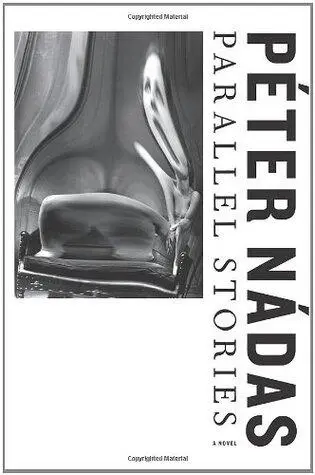
- Название:Parallel Stories
- Автор:
- Издательство:Farrar, Straus and Giroux
- Жанр:
- Год:2011
- ISBN:нет данных
- Рейтинг книги:5 / 5. Голосов: 1
-
Избранное:Добавить в избранное
- Отзывы:
-
Ваша оценка:
Parallel Stories: краткое содержание, описание и аннотация
Предлагаем к чтению аннотацию, описание, краткое содержание или предисловие (зависит от того, что написал сам автор книги «Parallel Stories»). Если вы не нашли необходимую информацию о книге — напишите в комментариях, мы постараемся отыскать её.
Three unusual men are at the heart of
: Hans von Wolkenstein, whose German mother is linked to secrets of fascist-Nazi collaboration during the 1940s; Ágost Lippay Lehr, whose influential father has served Hungary’s different political regimes for decades; and András Rott, who has his own dark record of mysterious activities abroad. The web of extended and interconnected dramas reaches from 1989 back to the spring of 1939, when Europe trembled on the edge of war, and extends to the bestial times of 1944–45, when Budapest was besieged, the Final Solution devastated Hungary’s Jews, and the war came to an end, and on to the cataclysmic Hungarian Revolution of October 1956. We follow these men from Berlin and Moscow to Switzerland and Holland, from the Mediterranean to the North Sea, and of course, from village to city in Hungary. The social and political circumstances of their lives may vary greatly, their sexual and spiritual longings may seem to each of them entirely unique, yet Péter Nádas’s magnificent tapestry unveils uncanny reverberating parallels that link them across time and space.This is Péter Nádas’s masterpiece — eighteen years in the writing, a sensation in Hungary even before it was published, and almost four years in the translating.
is the first foreign translation of this daring, demanding, and momentous novel, and it confirms for an even larger audience what Hungary already knows: that it is the author’s greatest work.
Parallel Stories — читать онлайн бесплатно полную книгу (весь текст) целиком
Ниже представлен текст книги, разбитый по страницам. Система сохранения места последней прочитанной страницы, позволяет с удобством читать онлайн бесплатно книгу «Parallel Stories», без необходимости каждый раз заново искать на чём Вы остановились. Поставьте закладку, и сможете в любой момент перейти на страницу, на которой закончили чтение.
Интервал:
Закладка:
He loved his mother; how could he not, even though it would have been better to hate her since he could not forgive her his birth.
And that she had let these people take him from her.
Or if at least she had chosen another mestizo for her partner and not his father, or stayed in Veracruz so her son would not have been born here, as an epileptic.
And now he had to be ashamed of his mere existence.
And why do their parents pretend that this is a high-class boarding school for boys, as if they knew nothing else about the place.
About what is happening here.
And as if they, the boys, had only to discharge their filial duties. To satisfy their parents by doing well in their studies in all circumstances and by demonstrating exemplary behavior. Everyone knows that parents want to give their children the best of everything.
Children have to be grateful to their parents all their lives.
However, despite its well-kept appearance and exceptional status, there was something ominous and grave about this boarding school.
Hans was glad that at least his father had finally disappeared from his life; at least he wouldn’t be around putting on airs. Sometimes he felt that in this harmlessly desolate landscape and in the rustically styled, bare-walled building there was too much yellow-brown, as if the earth itself had made the building’s substance so heavy; he was disgusted by all the gneiss surfaces glittering with mica. And the surroundings, or his family history, depressed him because here everything was damp, skin-colored, smelling of cold stone. Sometimes his conscience would be gloomy for weeks. He did not understand why he had to be born here or why he was born at all. The rocks, the retaining walls, the northern and western sides of the building wept all day long. At other times, under the influence of other glances, mainly from the eyes of strangers, this was a wonderful, idyllic landscape far from human settlements, a cozy human nest, an old hunting lodge in the primeval forest where everything was well cared for and lived in sensible harmony with nature and with its own nature.
He would marry a blond, blue-eyed, pure Nordic woman and thus he might correct to some extent what his mother had ruined with her careless step.
The others could not have known his family history. It was not clear where he had learned the story himself. The enormous soul-lifting mountain valley, as strangers enthusiastically called it, seemed to hover in a haze even in daytime; it was their family estate. He rarely managed to learn anything about his own history from his mother, but their old servants didn’t give a damn about the laws of inheritance and told him all sorts of things. The haze never left the valley. Outlines dissolved or disappeared completely in the morning or evening fog. One could not tell whether one was seeing mountain peaks or clouds above Frauenholz. At such times everything dripped, as if the plants or objects were weeping. Drops dripped from the leaves, remained poised on the tips of pine needles.
Slowly, quietly, the gutters began to go pit-a-pat and then, as if it were raining, the increasing drops trickled from the wide, high-built roofs and gurgled ever louder.
Scientifically based, vitamin-rich foods awaited the boys; smooth, unadorned raw furniture made of fine German oak and beech, all the furnishings and objects arranged with thrifty good taste; accommodating and friendly service personnel, and a warm pedagogical, educational staff radiating tranquillity, almost a friendly spirit. Teachers of special subjects were brought from Annaberg every morning on a special bus. The boys could choose from various private lessons or play different sports under these teachers’ supervision. They climbed rocks, boxed and wrestled, while others studied musical instruments or various living languages. Or simply sat at the brownish-red kidskin-covered tables in the ground-floor library. On the pretext of checking data for their papers, they sat under the light of the green-shaded lamps and secretly searched in handbooks and encyclopedias for the symptoms of genetic diseases from which they might be suffering.
For some unfathomable reason, up here in the mountains botany became the most widespread passion among the boys. Spores, pistils, pollination, cross-fertilization; the rarely used terms themselves made a strong impression on them, along with dissemination, grafting, rooting, cutting and grafting of buds, the hotbed in the educational orchards, the sowing, dibbling, planting and transplanting in the cold bed, the phrase cold bed itself, the tree nursery, the winter and spring cuttings, the care of the saplings’ nursery, preparation of flower beds, planting on ridges and on hillsides. All these activities were attractive, extremely simple, and time-consuming, sometimes demanding protracted physical effort, at other times deep absorption and concentration. The activities deepened the boys’ patience and confidence regarding nature’s great processes, somehow supplanting religion, because it was from these activities that they had to project their vision not only to the following week but also to the following year or even to the lives of succeeding generations.
Even if they were dealing with annuals.
After a while they became so well versed in the life conditions of plants that at the mere sight of a given sample of a species they could review its entire growth season or even its entire life cycle.
These moments were rewarding because of the weight of their knowledge. Still, their most permanent feeling was one of anxiety and ominous premonition. It sat at the base of their soul like a keel. As if hiding from their own probing looks, they were trying to discover how to satisfy the racial requirements that the accidents of their birth had kept them from fulfilling. And lo, they had barely returned from vacation — not all of them yet, adrift — and already one of them had put an end to it all.
Schultze, one of their teachers, a world-famous expert on racial-biological measurements and measurement techniques, a very proper older gentleman with fuzzy silver-gray hair and cheeks made rosy by burst capillaries, had also come back to the school. A not easily approachable but very musical man, he mainly hummed and whistled to himself. Every month he spent a week, sometimes two, in his separate little room in the attic loft, full of instruments and implements that could be seen nowhere else.
He ordered boys by name up to his office and he himself came downstairs only at mealtimes.
Sometimes his word would tip the final judgment about a boy, but nobody, absolutely nobody, talked about this, not with the other boys and not with any outsider.
They had to go up to him at impossible times.
That is what the instructions were: they had to go to him whenever he called and no matter what activity they were engaged in at the time. There was nothing in the attic but two offices, convalescence rooms, storage rooms, and spaces for various discarded objects, kept in meticulous order behind locked doors and accessible only to the housekeeper.
And to the unusual silence, which surprised everyone and immediately held them captive.
Up here, one could hear, at most, voices or echoes of shouts from the other side of the brook, from the great meadow, or from the sports fields, squeezed in between high retaining walls and glistening with snail trails. Or Schultze’s singing behind closed doors; he often talked to himself in recitative, as if he were performing in an unknown large-cast opera.
The boys would listen to the creaks of the floor or crossbeams while waiting in front of Schultze’s office.
During the examination, Schultze kept his eye on the limb he’d chosen and his ice-cold instruments; nothing else interested him. Occasionally he’d jot something down but hardly ever said anything, preferring to point, indicating that a boy should turn this way or stand over there. Never looked anyone straight in the eye, probably wasn’t curious about the boys. The instruments clinked and clanged. If he especially liked something or was dissatisfied with a result, he would click his tongue.
Читать дальшеИнтервал:
Закладка:
Похожие книги на «Parallel Stories»
Представляем Вашему вниманию похожие книги на «Parallel Stories» списком для выбора. Мы отобрали схожую по названию и смыслу литературу в надежде предоставить читателям больше вариантов отыскать новые, интересные, ещё непрочитанные произведения.









Обсуждение, отзывы о книге «Parallel Stories» и просто собственные мнения читателей. Оставьте ваши комментарии, напишите, что Вы думаете о произведении, его смысле или главных героях. Укажите что конкретно понравилось, а что нет, и почему Вы так считаете.