Péter Nádas - Parallel Stories
Здесь есть возможность читать онлайн «Péter Nádas - Parallel Stories» весь текст электронной книги совершенно бесплатно (целиком полную версию без сокращений). В некоторых случаях можно слушать аудио, скачать через торрент в формате fb2 и присутствует краткое содержание. Год выпуска: 2011, Издательство: Farrar, Straus and Giroux, Жанр: Современная проза, на английском языке. Описание произведения, (предисловие) а так же отзывы посетителей доступны на портале библиотеки ЛибКат.
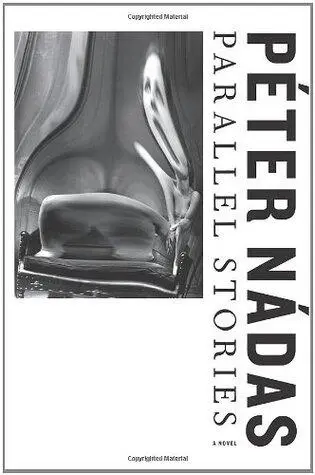
- Название:Parallel Stories
- Автор:
- Издательство:Farrar, Straus and Giroux
- Жанр:
- Год:2011
- ISBN:нет данных
- Рейтинг книги:5 / 5. Голосов: 1
-
Избранное:Добавить в избранное
- Отзывы:
-
Ваша оценка:
Parallel Stories: краткое содержание, описание и аннотация
Предлагаем к чтению аннотацию, описание, краткое содержание или предисловие (зависит от того, что написал сам автор книги «Parallel Stories»). Если вы не нашли необходимую информацию о книге — напишите в комментариях, мы постараемся отыскать её.
Three unusual men are at the heart of
: Hans von Wolkenstein, whose German mother is linked to secrets of fascist-Nazi collaboration during the 1940s; Ágost Lippay Lehr, whose influential father has served Hungary’s different political regimes for decades; and András Rott, who has his own dark record of mysterious activities abroad. The web of extended and interconnected dramas reaches from 1989 back to the spring of 1939, when Europe trembled on the edge of war, and extends to the bestial times of 1944–45, when Budapest was besieged, the Final Solution devastated Hungary’s Jews, and the war came to an end, and on to the cataclysmic Hungarian Revolution of October 1956. We follow these men from Berlin and Moscow to Switzerland and Holland, from the Mediterranean to the North Sea, and of course, from village to city in Hungary. The social and political circumstances of their lives may vary greatly, their sexual and spiritual longings may seem to each of them entirely unique, yet Péter Nádas’s magnificent tapestry unveils uncanny reverberating parallels that link them across time and space.This is Péter Nádas’s masterpiece — eighteen years in the writing, a sensation in Hungary even before it was published, and almost four years in the translating.
is the first foreign translation of this daring, demanding, and momentous novel, and it confirms for an even larger audience what Hungary already knows: that it is the author’s greatest work.
Parallel Stories — читать онлайн бесплатно полную книгу (весь текст) целиком
Ниже представлен текст книги, разбитый по страницам. Система сохранения места последней прочитанной страницы, позволяет с удобством читать онлайн бесплатно книгу «Parallel Stories», без необходимости каждый раз заново искать на чём Вы остановились. Поставьте закладку, и сможете в любой момент перейти на страницу, на которой закончили чтение.
Интервал:
Закладка:
That infamous lesbian chased younger women so tastelessly and aggressively that, soon after she returned to Budapest from abroad, she became the terror of young husbands and mothers of daughters. No matter how exciting events may have become between the two women — and no doubt the story had been exaggerated in social circles at different levels of Buda or Pest — they were not in contact and tracked the other’s love life only from a great distance.
The two of them, Erna and Mária, did not even address each other in the familiar form, though they had been students together at the same school.
Miserable harpy.
In the depressing, tense summer weeks following the disclosure of the conspiracy, people could not predict whether Professor Lehr would be only a witness in the proceedings or whether in a matter of days charges would be laid against him. It was impossible to detect the actual interest of each party concerned in the feverish preparations, where the different interests would clash, and where the associates would draw the borders. Whether the Russians would succeed in eliminating the entire secret organization or were intent only on slicing off the tip of the iceberg. How the national conservative wing of the Communist Party would position itself in the new situation. They were not prepared for this catastrophe. For the time being they had to lie low, safely wedged between the once illegal domestic activists, the slowly returning Western emigrants, and the Muscovites, and to become integrated into existing factions without undue gnashing of teeth.
It did not occur to any of them, thanks to the professor’s untiring inventiveness, to seek an understanding alliance — with the Russians, of all people.
Of course, Professor Lehr was powerful enough on his own to remain a mere witness at war-crimes trials. But only after he found a high-ranking supporter among the Russian nationalists — one might say only after he embedded himself in the heart of the enemy, helped in this by the Muscovites, of course, much more wary than he — on the Stefánia, in the garden of the former Park Club, which for a long time served as the Russian field officers’ casino, could he congenially review every detail of the future with the pathologically obese, wheezing lieutenant general as they strolled on the narrow footpaths covered with fine Danubian pebbles. Only then, thanks to the quick intervention of his high-ranking patron, did the professor become a scientific expert witness and advisor for the People’s Tribunal.
These days, many people condemn the professor for his terrible volte-face. Being familiar with his views, they should have understood that this was not betrayal on his part but rather the most recent manifestation of his profound loyalty to Hungary’s cause. If he had worked for the nation in the highest echelons alongside the Germans, why shouldn’t he work for the same cause alongside the Russians. Lady Erna knew of the fateful meeting in the Park Club garden, and neither she nor her husband doubted that the high-ranking patron was the Budapest representative of Russia’s military counterintelligence. That uniformed person, with his gilded epaulettes, red braids, general’s sword, and a great many decorations, had been introduced to her at the premiere of the new production of Fidelio at the Opera House in Budapest in 1947. On that memorable evening Klemperer conducted with especially enchanting dynamics. Luckily the formidable chorus of released prisoners in the last act is replete with tutti and forte. When the prisoners kept coming out of their dim cells toward the light, bidding one another to keep their voices to a whisper and singing what joy it was to breathe freely in the fresh air, to find peace and tranquillity at last, and they would trust God to guard their freedom, several people in the audience were heard sobbing.
Klemperer had to be careful with his dynamics lest sentimentality flood the orchestra pit and the stage. The strong basic structure of Beethoven’s music allows for this; the sobbing and wailing spread, quick as a plague, among the warm bodies. It swept across the audience, glittering with reflected golden lights; it spread and raced ahead like an unstoppable wave hurling its foam skyward.
At this moment, Klemperer thanked his good fortune and his fate for choosing this opera.
But Lady Erna could not have known what price had been paid for that congenial conversation on the Stefánia.
She did know the basis of the negotiation and careful agreement. Excepting only the highest positions, the Russians wanted as few Jewish elements as possible in the Hungarian government, in parliament and in the leadership of the political parties. The directive stated that the people’s democracy of Hungary needed, first of all, activists from the ranks of common people, and the Communist Party should be filled with them too. And they considered Professor Lehr an eminent guarantee that university and academic life would be steered in the desired direction. The laudatory attention the professor later gave to the young man must also have had its explanation in this weighty bargain. The price was like a poison capsule.
Better not to crack it open, just swallow it quickly.
Except that very often Lady Erna had to absorb with her own body the contempt, anger, and hatred surging toward the professor.
It was not enough that she swallow the poison pill, as she had done three times.
And now she was being taken to her husband’s deathbed by a driver whom the professor, true to form, had betrayed or at best left in the lurch for the sake of the great cause. Which fit nicely into the theory of tactical conformity. You have no other choice but to cooperate, to serve the prevailing conqueror willingly, but you must always remain conscious of what you are doing and why.
And when were you freed, if I may ask, she asked a little later, her voice lower than low.
She meant to express compassion and empathy, which had to function as a clear marker, and thus was part of their secret language.
In the spring of ’fifty-five, answered the driver, in the impersonal tones in which it was possible to speak of such matters during the years when prisons were still full of people.
He wanted to reciprocate Lady Erna’s empathy, would have said that it had been six years now, and thus indicate in their secret language that he understood and appreciated her viewpoint, but he had no idea who the young woman was.
Everyone feared informers. And he didn’t want to become too cozy with Jews anyway.
I certainly don’t envy your poor wife for those terrible years, if I may express myself like that, Lady Erna added, filled with genuine empathy and a mite disturbed by his lack of reciprocity.
She caught herself only after she’d said this — that she’d made a mistake, good Lord.
The instant she said it she knew she had committed one of the worst faux pas of her life.
Bellardi did not reply, not because he didn’t know how to respond to such rudeness but as if he hadn’t heard it. Even though from that moment, like a blow to the back of the neck, he was once again afflicted by the scandalous weeks, months, and years he’d spent at the bottom of the well. The state of feverishness and sleeplessness when he could not understand, during either the day or night, how Elisa could have done this to him. And when despite everything sleep managed to overtake him he would shudder and awaken to the question. Why did she do it. There was nothing to understand. How could she have left him. The person to whom he was more devoted than anyone else; he had never, never before or with anyone else; it was no mistake, neither hallucination nor loss of proportion, that actually they had bestowed on each other nothing less than the enjoyment of hell.
Читать дальшеИнтервал:
Закладка:
Похожие книги на «Parallel Stories»
Представляем Вашему вниманию похожие книги на «Parallel Stories» списком для выбора. Мы отобрали схожую по названию и смыслу литературу в надежде предоставить читателям больше вариантов отыскать новые, интересные, ещё непрочитанные произведения.










Обсуждение, отзывы о книге «Parallel Stories» и просто собственные мнения читателей. Оставьте ваши комментарии, напишите, что Вы думаете о произведении, его смысле или главных героях. Укажите что конкретно понравилось, а что нет, и почему Вы так считаете.