Hwang Sok-Yong - The Shadow of Arms
Здесь есть возможность читать онлайн «Hwang Sok-Yong - The Shadow of Arms» весь текст электронной книги совершенно бесплатно (целиком полную версию без сокращений). В некоторых случаях можно слушать аудио, скачать через торрент в формате fb2 и присутствует краткое содержание. Год выпуска: 2014, ISBN: 2014, Издательство: Seven Stories Press, Жанр: Современная проза, на английском языке. Описание произведения, (предисловие) а так же отзывы посетителей доступны на портале библиотеки ЛибКат.
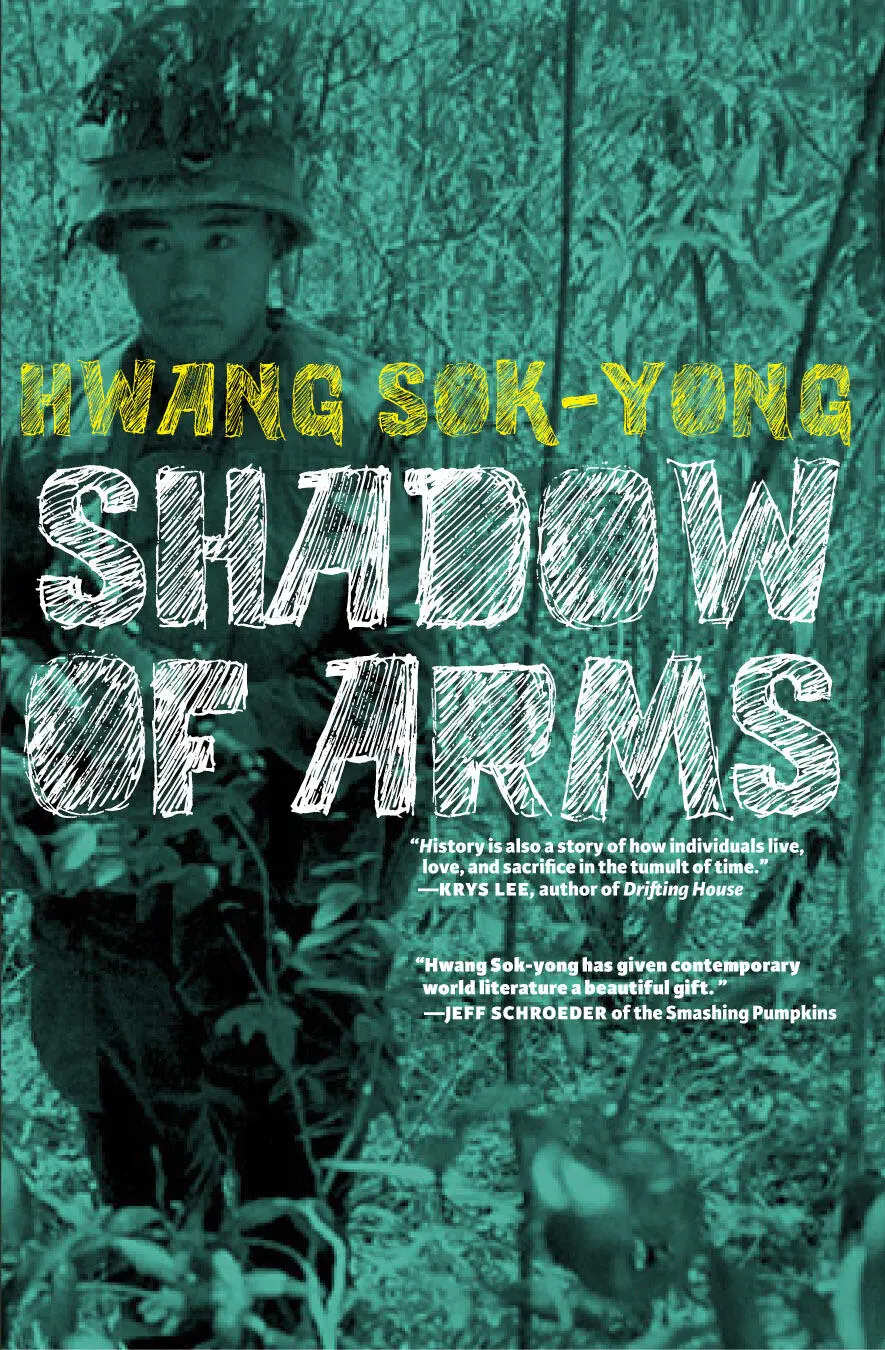
- Название:The Shadow of Arms
- Автор:
- Издательство:Seven Stories Press
- Жанр:
- Год:2014
- ISBN:9781609805081
- Рейтинг книги:5 / 5. Голосов: 1
-
Избранное:Добавить в избранное
- Отзывы:
-
Ваша оценка:
The Shadow of Arms: краткое содержание, описание и аннотация
Предлагаем к чтению аннотацию, описание, краткое содержание или предисловие (зависит от того, что написал сам автор книги «The Shadow of Arms»). Если вы не нашли необходимую информацию о книге — напишите в комментариях, мы постараемся отыскать её.
is a novel of the human condition rather than of the exploits and losses of one side or the other in war.
The Shadow of Arms — читать онлайн бесплатно полную книгу (весь текст) целиком
Ниже представлен текст книги, разбитый по страницам. Система сохранения места последней прочитанной страницы, позволяет с удобством читать онлайн бесплатно книгу «The Shadow of Arms», без необходимости каждый раз заново искать на чём Вы остановились. Поставьте закладку, и сможете в любой момент перейти на страницу, на которой закончили чтение.
Интервал:
Закладка:
“Even if the American government will not let us use dollars to buy the goods from Singapore, they could at least let us buy at a cheaper cost from the west coast. I’m inclined to think we are looking here at the results of manipulations by American businessmen of the US Congress. Problems of this nature should be closely examined when we plan procurements of necessary supplies with aid funds for the phoenix hamlets project.”
Pham Quyen had a feeling that the section chief was trying his best to make a strong impression on the AID mission, hoping the Americans would be favorably impressed with him as a conscientious government official. But Pham Quyen knew very well that neither the Americans nor the Vietnamese would touch on the deeper and more fundamental issues. He cleared his throat and spoke.
“The section chief’s comments are so candid and pertinent that I feel my mind unburdened. I am not sure how many candid opinions must be exchanged and impediments discussed in order to promote the pacification resettlement project. Due to time pressure, in any case, we must move on to the main topic. From now on, please restrict yourselves in your remarks to the phoenix hamlet project. Does the chief of the education section have any other comments to make?”
“Yes, I’d like to reflect on a few points of trial-and-error I observed in the past with the strategic hamlets program. I’m a man who is fond of comedies at the movie theater, but I have no wish to be a fool myself. At the time of the Diem regime, the American secretary of state boasted that seven million Vietnamese people were living in over a thousand strategic hamlets and that his plan was to erect three thousand such villages by the mid-1960s. In reality, not many of the strategic hamlets were of any use. Some were little more than symbols marked on the maps in undefended zones and a great number of the strategic hamlets existed only on paper.
“The resettlement funds that were supposed to be distributed to the farmers disappeared on the way and usually never reached their hands. Sometimes not even the weapons for local militias to be raised in the supposedly self-defending strategic hamlets were supplied. Large quantities of these weapons found their way into the black market.
“When high government officials and their US advisors paid visits to model strategic hamlets, the local authorities would go to another area and dig up lots of orange and papaya trees and bring them back hastily to set up an attractive plantation. As soon as the inspection party was gone, the trees were dug up again and returned to their owners. It was around then that the people in the cities started calling the strategic hamlets ‘America Towns.’
“The US military flew their helicopters in from all directions and dropped all sorts of things. White ceramic toilet bowls, chocolates, and even thousands of condoms to use for birth control. They gave marbles and yoyos to children suffering from nutritional deficiencies, and delivered comic books. . Anyhow, they visited the hamlets to check the results of the advisors’ policies, distributed the fundamental freedoms described in their own informational pamphlets on pacification, then returned and reported to their superiors that they had secured the friendship and goodwill of the villagers and that they were now on the side of America.”
The American military advisor for Quang Nam Province, a lieutenant colonel, interrupted the comments of the education section chief.
“During Pacification Phase 1, which ran from 1962 to 1963, we and USOM concluded a rural revival agreement, and under its terms we promoted the strategic hamlet program. At that time around sixty hamlets in Quang Nam Province had already been inspected and approved by the provincial government. The approval criteria were six: defense facilities; organization of the local militias; training and armaments of the militias; identification and expulsion of Viet Cong elements; administration of elections in the hamlet; and completion of organizing counterinsurgency capability among friendly forces.
“An agreement for support of Quang Nam Province projects was drawn up by the US — Vietnam Joint Investigation Commission who visited here in November 1962. The commission team was composed of the Vietnamese governor, the chief American military advisor, and USOM dispatch personnel. All the plans were reviewed and approved by the governor and his staff, and the American side held a veto right on economic matters. Our objective with the nationwide strategic hamlet program was protective segregation of the farmers from the Viet Cong, but gradually we extended it to other goals. In particular, the An Hoa project was being promoted around the same time.
“The higher goal at the time was to provide better schools, health programs, and agricultural aid on the village level so as to implant a new image of the government in the minds of the people by increasing the government’s welfare activities on a national scale. It was expected that the strategic hamlet program would bring a real change, a revolution, socially as well as politically, in village life. We supplied wire mesh for fencing, pipes and cement, money for training the agents who actually would implement the project on the ground, wages for the farmers working on the construction, and resettlement allowances. The advisory group was also in charge of training allowances for the militia and their weaponry.
“The concentration of the population in these hamlets situated in defensible zones made it very convenient to control the residents. Viet Cong sympathizers were revealed and we generated detailed histories recording which families had ever had members join the Viet Cong in the past. Soon afterwards, however, a problem erupted. The truth was that most residents never received their wages for work on building fences and only half of the cement and piping arrived at the hamlets. The resettlement allowances were never paid, either.
“According to our investigations, most farmers had to borrow money to move their households, and the interest on these loans was as much as five percent per day. The farmers who never received materials to construct fencing and dwellings had to cut bamboo and wood instead, which turned out to have eaten up more than ten dollars of each farmer’s very limited wealth. The provincial government gave some reasons for the suspensions of supply, citing transportation difficulties and incompleteness in claim documents. As for the weapons, as somebody already mentioned, about two-thirds of the guns and ammunition was siphoned off into the black market.”
“I’ll add a comment on that, OK?” piped up the chief of the agricultural section, once more wiping the sweat from his receding hairline.
With a patient smile, the AID mission representative said, “Yes, fine.”
“I had plenty of exposure to these problems in the Philippines and Hawaii. My comments are only intended as self-examination so we can minimize such discrepancies in planning the phoenix hamlet project. In its aid administration, America has always been emphasizing corruption in the recipient countries. Due to poverty and pre-modern political systems, most aid recipient countries are prone to corruption. If so, don’t you think there is also a basic problem on the part of the donor country?
“Even now, under the procurement programs, we’re buying the products of the donor country with aid grants in the form of subsidies. When Vietnamese importers place an order for the needed goods, America pays dollars directly to the American suppliers. Vietnamese importers running normal commercial operations pay for their goods in piasters. These piasters are put into settlement accounts, which the American government then has our government use for paying military and civilian support personnel. As I understand it, eighty percent or more of this money has been used for defense support like the strategic hamlets program.
Читать дальшеИнтервал:
Закладка:
Похожие книги на «The Shadow of Arms»
Представляем Вашему вниманию похожие книги на «The Shadow of Arms» списком для выбора. Мы отобрали схожую по названию и смыслу литературу в надежде предоставить читателям больше вариантов отыскать новые, интересные, ещё непрочитанные произведения.










Обсуждение, отзывы о книге «The Shadow of Arms» и просто собственные мнения читателей. Оставьте ваши комментарии, напишите, что Вы думаете о произведении, его смысле или главных героях. Укажите что конкретно понравилось, а что нет, и почему Вы так считаете.