Hwang Sok-Yong - The Shadow of Arms
Здесь есть возможность читать онлайн «Hwang Sok-Yong - The Shadow of Arms» весь текст электронной книги совершенно бесплатно (целиком полную версию без сокращений). В некоторых случаях можно слушать аудио, скачать через торрент в формате fb2 и присутствует краткое содержание. Год выпуска: 2014, ISBN: 2014, Издательство: Seven Stories Press, Жанр: Современная проза, на английском языке. Описание произведения, (предисловие) а так же отзывы посетителей доступны на портале библиотеки ЛибКат.
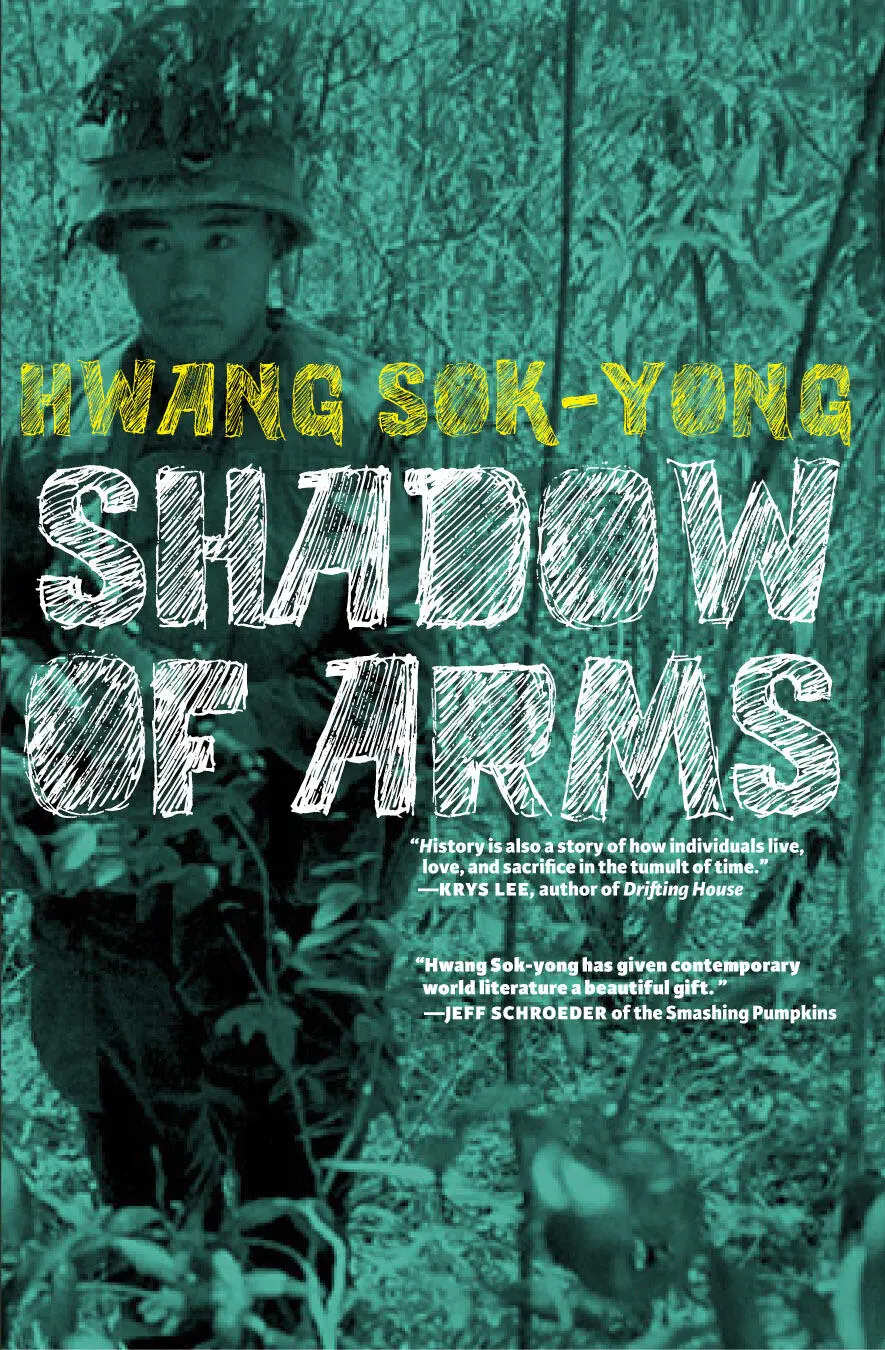
- Название:The Shadow of Arms
- Автор:
- Издательство:Seven Stories Press
- Жанр:
- Год:2014
- ISBN:9781609805081
- Рейтинг книги:5 / 5. Голосов: 1
-
Избранное:Добавить в избранное
- Отзывы:
-
Ваша оценка:
The Shadow of Arms: краткое содержание, описание и аннотация
Предлагаем к чтению аннотацию, описание, краткое содержание или предисловие (зависит от того, что написал сам автор книги «The Shadow of Arms»). Если вы не нашли необходимую информацию о книге — напишите в комментариях, мы постараемся отыскать её.
is a novel of the human condition rather than of the exploits and losses of one side or the other in war.
The Shadow of Arms — читать онлайн бесплатно полную книгу (весь текст) целиком
Ниже представлен текст книги, разбитый по страницам. Система сохранения места последней прочитанной страницы, позволяет с удобством читать онлайн бесплатно книгу «The Shadow of Arms», без необходимости каждый раз заново искать на чём Вы остановились. Поставьте закладку, и сможете в любой момент перейти на страницу, на которой закончили чтение.
Интервал:
Закладка:
“I do not think so, sir. The agriculture section will concern itself with improving agricultural skills, husbandry matters, and the management of the crop loan system. But all of those matters will be parts of programs processed through decisions of the Developmental Revolution Committee and the Autonomous Councils. And, it’s a different issue, but you should not forget that you’re an immediate subordinate of His Excellency, the Governor. Accordingly, I would remind you that your opinions should be expressed within the boundaries of your role as an officer of the provisional government. I ask that you refrain from remarks exceeding that role that involve internal matters or questions of support within the office. I do hope that in the future you will be more interested in agricultural technology and related productivity issues.”
Pham Quyen then looked back at his secretary, Lieutenant Kiem, and added, “Delete the section chief’s last comment later. The old man would be furious.”
“I understand, sir. Look through all of this yourself and then submit it.”
Pham Quyen looked over at the chief of the agriculture section and grinned. “Sir, I have a bit of personal advice. Among us there can be no Jacobins or Girondists. They’re all out there in the jungle.”
The agriculture section chief looked back with a blank stare, saying nothing. Major Pham once again addressed the Americans.
“There’s one last thing the Developmental Revolution Committee would like to suggest. It’s urgent to set up a transportation section to take charge of supervising the storage, distribution, and control of all this great variety of commodities. It will be needing vehicles and warehouse facilities. At a minimum, we estimate that ten large trucks should be available and at least two good-sized warehouses need to be built.”
“You may send up the budget for the warehouse construction. As for the vehicles, give your request to the lieutenant colonel.”
One of the military aides turned to the US military advisor for Quang Nam Province and said, “All right, we’ll send over ten military trucks on indefinite loan to the provincial government office.”
Pham Quyen was quick to follow up.
“And while you’re at it, can you please solve the problem of fuel for the trucks, too?”
“Any vehicle in possession of a permit issued by your office will be eligible to get gasoline at the American fuel warehouses nearby.”
“Thank you. Now the two problems our committee needed to settle have been resolved.”
At those words, the AID mission representative looked around the room, then said, “Ah, now we have guests with us who will put all these discussions in order and very succinctly get us to the heart of the matter. I believe their comments will give us some ideas for creative plans we can implement enthusiastically. Now, we’ll hear from Dr. Geronimo, a community development specialist, and Mr. Richards from the International Support Volunteer Corps.”
Professor Geronimo, a specialist in rural development from the Philippines, had an unhealthy yellowish complexion and was wearing gold-rimmed glasses. The young so-called support volunteer was growing a yellow mustache in an attempt to hide his apparent greenness and bestow a bit of dignity on himself. Major Pham wondered why this Professor Geronimo, who probably could not even speak Tagalong, had left behind the thousand miserable islands of his own backward country and flown to this harassed land. With perfect English diction, Professor Geronimo embarked on an extremely abstract speech:
“Well, Gunnar Myrdal went so far as to say that corruption is an ethnic custom in Asian cultures, however. .”
20
Major Pham sent the car back and headed for the alleys of the old Le Loi market on foot. After passing along the streets in the new market with their colorful window displays and flashy signs, he slowly threaded his way through alleys in which heaps of Chinese medicinal herbs had been piled up alongside fruit, dried seafood, and other edible goods. These narrow alleys, the stained walls and even the graffiti were all extremely familiar to him.
The main avenue through the old market district cut across Doc Lap Boulevard and stretched all the way from the pier at one end to the inter-city bus terminal at the other. Unlike the new market, here were countless narrow walkways and alleys as bewildering as a labyrinth. Less than a block away there was a cluster of cheap whorehouses. In front of one of the bars, teenagers were sitting around a wooden table on the sidewalk, eating shrimp and drinking liquor.
Small buses were busily coming and going in and out of the terminal. In the nearby freight cargo lots, oversized trucks were lined up to unload their heavy cargo. The regular stops on their delivery routes were painted on the trailers. Pham Quyen passed by a chaotic line of peddlers in the freight lot and approached a brick building that had colorful drapes hanging in the windows. As he opened the glass door, an office girl looked up from her abacus and account ledger, then rose and bowed politely. Inside, the air conditioner was running and it was very cool. A man seated at a huge mahogany desk cluttered with papers held out his hand and smiled.
“Welcome, sir.”
“Well, I was wondering if the payment has been completed?”
The man removed some papers from a drawer in the desk.
“Yes, sir. It’s all been paid.”
The two men sat down on black leather chairs facing each other.
“Madame was quite pleased, too. Our staff brought in some laborers and it only took us ten days to finish with all the repairs. This is the lease contract from the realtor, and these are miscellaneous receipts. Have a look for yourself, sir.”
Pham Quyen quickly flipped through the papers handed to him.
“Five hundred thousand piasters. Expensive.”
“Expensive? Not really, sir. The American who was the previous tenant was paying twenty thousand per month. Even if he only stayed there ten months, that was still two hundred thousand down the drain, you see. But since your lease is on a key money basis, after six months you can move out whenever you want and recover the full deposit of five hundred thousand.”
“All the furniture has been moved in?”
“The place was already furnished. There’s a double bed, a dining table, chairs, living room set, a fancy chest, dresser, dish cabinet, and Madame has already purchased the electric appliances herself. .”
“Then the total was. . ”
“All together, the cost was two hundred fifty thousand piasters. Dirt cheap, sir. To tell you the truth, since it was for you, I didn’t have to charge for the work done by the staff. That was debited to your account.”
Cuong, who acted as a dealer for the provincial government office, for practical purposes had been a kind of financial manager for General Liam’s interests in Da Nang. He had no choice under the circumstances except to assist Pham Quyen as well, since he was the primary agent for General Liam’s business operations. Pham Quyen had laid down a general rule regarding the business of the general and himself, a principle of two shares to one: After every two transactions for General Liam, the third one was for himself. The scale of dealings was large enough that a mere division commander could become a millionaire within two or three years on the front lines, so from General Liam’s perspective, as governor and military commander who had a hand in all the business in the province, there was plenty to go around and no reason to object to Pham Quyen’s cut.
“The fertilizer will be flowing in continuously,” said Pham Quyen.
“That’s good news, indeed. The more you supply the more they demand, that’s how it works with fertilizer, you know. No matter how much the supply grows, our margin will be one hundred percent of the original cost. For now it looks like the price of cement won’t be slipping, either. For the strongest demand in the short term rice is still best, though.”
Читать дальшеИнтервал:
Закладка:
Похожие книги на «The Shadow of Arms»
Представляем Вашему вниманию похожие книги на «The Shadow of Arms» списком для выбора. Мы отобрали схожую по названию и смыслу литературу в надежде предоставить читателям больше вариантов отыскать новые, интересные, ещё непрочитанные произведения.











Обсуждение, отзывы о книге «The Shadow of Arms» и просто собственные мнения читателей. Оставьте ваши комментарии, напишите, что Вы думаете о произведении, его смысле или главных героях. Укажите что конкретно понравилось, а что нет, и почему Вы так считаете.