Hwang Sok-Yong - The Shadow of Arms
Здесь есть возможность читать онлайн «Hwang Sok-Yong - The Shadow of Arms» весь текст электронной книги совершенно бесплатно (целиком полную версию без сокращений). В некоторых случаях можно слушать аудио, скачать через торрент в формате fb2 и присутствует краткое содержание. Год выпуска: 2014, ISBN: 2014, Издательство: Seven Stories Press, Жанр: Современная проза, на английском языке. Описание произведения, (предисловие) а так же отзывы посетителей доступны на портале библиотеки ЛибКат.
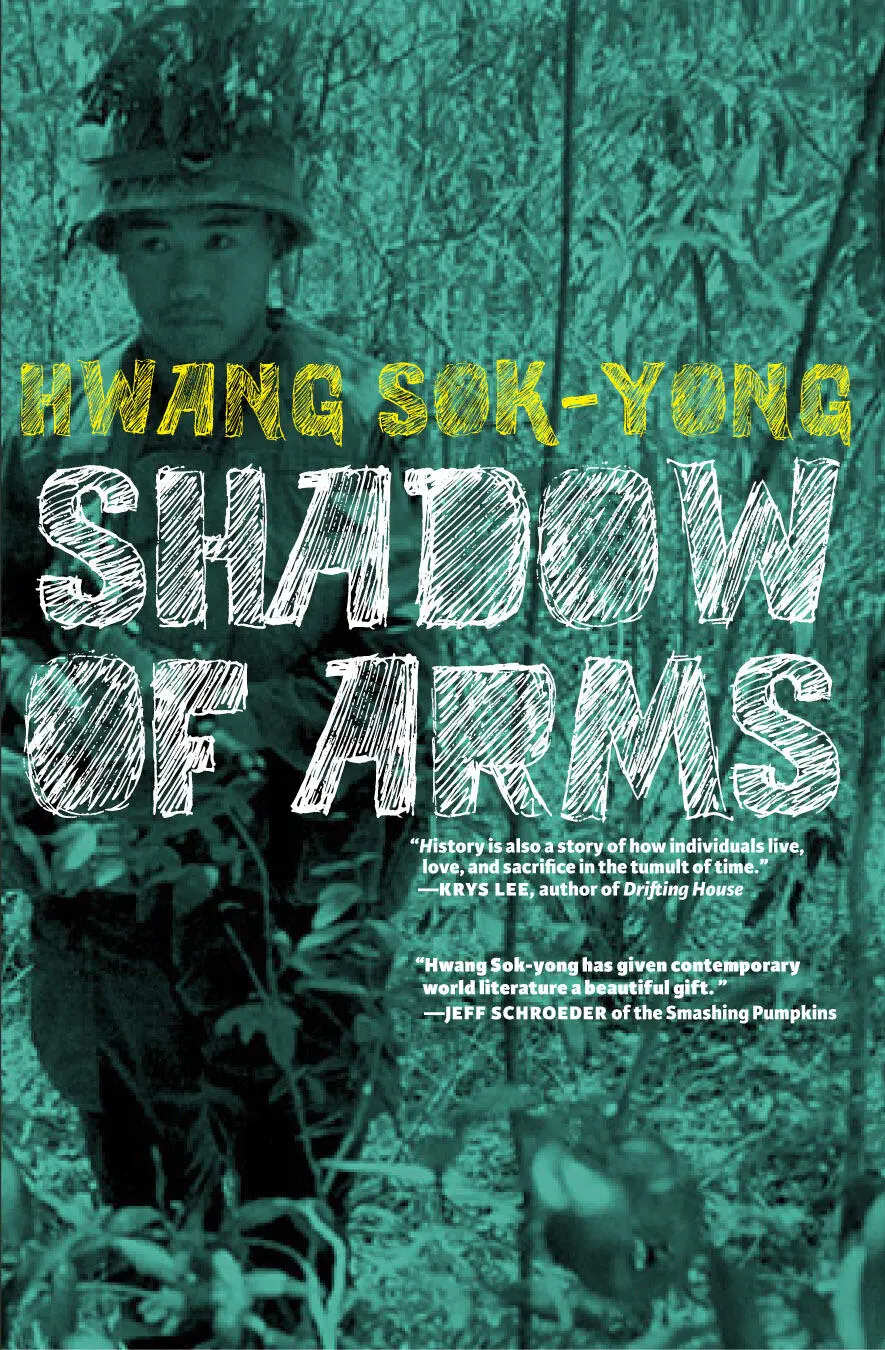
- Название:The Shadow of Arms
- Автор:
- Издательство:Seven Stories Press
- Жанр:
- Год:2014
- ISBN:9781609805081
- Рейтинг книги:5 / 5. Голосов: 1
-
Избранное:Добавить в избранное
- Отзывы:
-
Ваша оценка:
The Shadow of Arms: краткое содержание, описание и аннотация
Предлагаем к чтению аннотацию, описание, краткое содержание или предисловие (зависит от того, что написал сам автор книги «The Shadow of Arms»). Если вы не нашли необходимую информацию о книге — напишите в комментариях, мы постараемся отыскать её.
is a novel of the human condition rather than of the exploits and losses of one side or the other in war.
The Shadow of Arms — читать онлайн бесплатно полную книгу (весь текст) целиком
Ниже представлен текст книги, разбитый по страницам. Система сохранения места последней прочитанной страницы, позволяет с удобством читать онлайн бесплатно книгу «The Shadow of Arms», без необходимости каждый раз заново искать на чём Вы остановились. Поставьте закладку, и сможете в любой момент перейти на страницу, на которой закончили чтение.
Интервал:
Закладка:
“No, not rice.”
Pham Quyen replied with firm resolve. Cuong narrowed his eyes.
“Why not? The police superintendent is even dealing in heroin from Vientiane. His dealers are right out there in the main alley.”
“Listen, Mr. Cuong, I’m still the one who plans the business. With their base in the Mekong Delta, the influential men of Saigon are still holding exclusive rights for rice sales. For a long time we in Quang Nam Province have been buying rice from them.”
“I’m talking about imported American rice, sir. It’s out there on the pier, right?”
“That rice is to be shipped out to the villages to be used as wages and resettlement aid.”
“You don’t get it, do you? You deduct and pay in piasters instead of in kind, sir. That way you can have half of the rice supply fall into your hands, sir.”
Pham Quyen had been mulling over the idea for some time. But he did not want to exploit his access to the rice. It was a staple food and extremely sensitive, so why take the risk of being exposed to a stinking scandal for the slightest mismanagement. If anything like that happened, the general would have to take off his uniform before joining the cabinet, and for Pham, a single blunder of that magnitude would terminate all of his opportunities. Until the general returned to Saigon, he meant to cling tightly to the general’s coattails. Then, like so many other adjutants of generals and admirals, he might later step up into a dream job as a manager of foreign property somewhere like Bangkok, Hong Kong, Singapore, or Taipei.
“What’s the price of cinnamon these days?” Pham asked.
Cuong licked his lips. “Cinnamon, sir? Ah, that reminds me of the good old days. Your late father, sir, would know very well. Da Nang used to be renowned throughout Vietnam for the cinnamon trade. Ships from India and China swarmed in for cinnamon like bees to a flowerbed. Only four or five years back we still had decent cinnamon harvests. Nothing like in the time of Bao Dai, though, of course. And now. . see for yourself, we only have what little the old women in the highlands peel and carry down to us, never anywhere near enough to meet demand. Truly, cinnamon is an item that brings to mind the old days of peace and quiet.”
Befitting a Da Nang merchant, Cuong’s mumbling had acquired a touchingly nostalgic tone. Pham roused him from his reverie.
“So, there are still cinnamon merchants?”
Cuong instinctively lowered his voice.
“Cinnamon and cloves are both highland products, so they are sometimes handled by traders with connections to the Liberation Front, I think. There’s one Indian merchant here, a money-changer, who buys up small lots of spices and ships them overseas.”
Pham Quyen knew better than anyone where cinnamon was to be found. As a boy, he used to accompany his father when he went with his assistants to buy and they traveled days at a stretch through the highlands. The region was now up on the edge of the Second Division defense zone.
“Negotiate with that Indian merchant to see how good a price you can come up with.”
“What, what did you say?”
“I’ll never touch rice trading. Instead, I’ll appoint you as the exclusive cinnamon dealer in Da Nang.”
“Cinnamon these days? Where on earth can you get it, sir?”
“From the upland jungles.”
“No matter how good the price, nobody’s going to want to stick their necks out that far for it.”
Pham Quyen chuckled.
“There are many kinds of business for which people risk their lives. War, for instance, is such a business, don’t you think? I’ll order the soldiers to conduct a cinnamon gathering operation.”
Cuong pounded the table. “Truly, you are your father’s son, sir. That’s something nobody else would have even had the sense to spot. It’s a business of an entirely different order than trading in military goods.”
A stocky man in shorts and a T-shirt walked in and bowed to Cuong. “We finished the job, boss.”
“Ummm, so you’re done with the moving and you’ve helped with the unpacking and arranging, too?”
“Yes, I’ve just come from there, sir. Madame wishes for you to have dinner at home.”
“Well done. Send the boys home and you can call it a day, too.”
The man left and Cuong hurriedly washed his hands at the sink.
“There’s something I’d like to show you, sir.”
After sending the office girl home, Cuong turned off the air conditioner and locked every window before leaving the office. Pham Quyen trailed slowly behind. Cuong walked off in the direction opposite from the parking lot and headed into a narrow pathway, lined on both sides by small shops with bins of goods open beside the walkway. The goods for sale were no more than small bags of American cookies, a few canned goods and jars of instant coffee, but Pham Quyen knew that the owners of these shops were prosperous traders, each owning his own warehouse as big as seventy square yards.
In the alleys of the old market there were hundreds of such small shops, while those down on the pier and in the new marketplace mainly handled necessities and luxury goods. But the merchants themselves could not always say what sorts of business was being transacted in the labyrinth of the old market. Rumor had it that even a tank or a helicopter could be bought and sold disassembled, in pieces. Next to Saigon, Da Nang had the biggest market in the nation. There were products from all over the highlands, from Pleiku, Kon Tum, and Bien Hien, not to mention places like Quang Tri, Hue, Hoi An, Tam Ky, and the coastal towns of Quang Ngai. From the old days Da Nang and Haiphong had been major ports for the Mainland China trade, and under the Hue Dynasty they had greeted merchant ships from the Philippines and Malaysia.
“That is my brother’s business.”
Cuong pointed with his finger toward a cinder block structure at the end of one of the pathways. The signboard said it was an automobile service shop. Through the wide-open gate a storage space and an empty yard could be seen.
“The land is mine and my brother owns a few vehicles.”
Pham Quyen walked into the yard and looked around. They had come in through the back gate and the front door was on the far side of the yard. There were a couple of maintenance bays for vehicles, just a roof set on pillars with pits dug under the wheel rails. A place for washing cars had also been set up. There was one Renault sedan in the yard and a half dozen so-called box cars, which were improvised on the chassis of old American military Jeeps with crude bodies shaped like a box. Then Pham Quyen noticed another vehicle in a corner of the garage. Cuong chortled and followed him over to take a look.
“I knew you’d notice it, sir. A Land Rover is as tough as a water buffalo. You can’t damage it even with a hammer. This one could speed all the way up Route 1 to Hanoi. It’s like brand new, sir, just arrived from Saigon a week ago. We bought it from some foreign consular official who was heading back home.”
“Is it for sale?”
“No. . it was, but now it has an owner.”
As the garrulous Cuong had said, the Land Rover looked as solid as an armored personnel carrier. The shiny khaki-colored paint was enough to make a sheik covet it for his personal war games. The thick canvas cloth covering the cab had a dappled green pattern like the British commando vehicles in Malaysia in the old days. A round hatch plate had been installed that could serve to anchor a machine gun turret.
“Isn’t she a beauty?” someone said from behind them. Pham Quyen turned around to look. A long-haired man in a white shirt with a Chinese collar and black Vietnamese pants was smiling.
“This is my younger brother, Thach,” Cuong said.
The man bowed. He looked to be about the same age as Pham Quyen. Thach looked so good-natured when he smiled that he made a good first impression on almost everyone.
Читать дальшеИнтервал:
Закладка:
Похожие книги на «The Shadow of Arms»
Представляем Вашему вниманию похожие книги на «The Shadow of Arms» списком для выбора. Мы отобрали схожую по названию и смыслу литературу в надежде предоставить читателям больше вариантов отыскать новые, интересные, ещё непрочитанные произведения.








Обсуждение, отзывы о книге «The Shadow of Arms» и просто собственные мнения читателей. Оставьте ваши комментарии, напишите, что Вы думаете о произведении, его смысле или главных героях. Укажите что конкретно понравилось, а что нет, и почему Вы так считаете.