Hwang Sok-Yong - The Shadow of Arms
Здесь есть возможность читать онлайн «Hwang Sok-Yong - The Shadow of Arms» весь текст электронной книги совершенно бесплатно (целиком полную версию без сокращений). В некоторых случаях можно слушать аудио, скачать через торрент в формате fb2 и присутствует краткое содержание. Год выпуска: 2014, ISBN: 2014, Издательство: Seven Stories Press, Жанр: Современная проза, на английском языке. Описание произведения, (предисловие) а так же отзывы посетителей доступны на портале библиотеки ЛибКат.
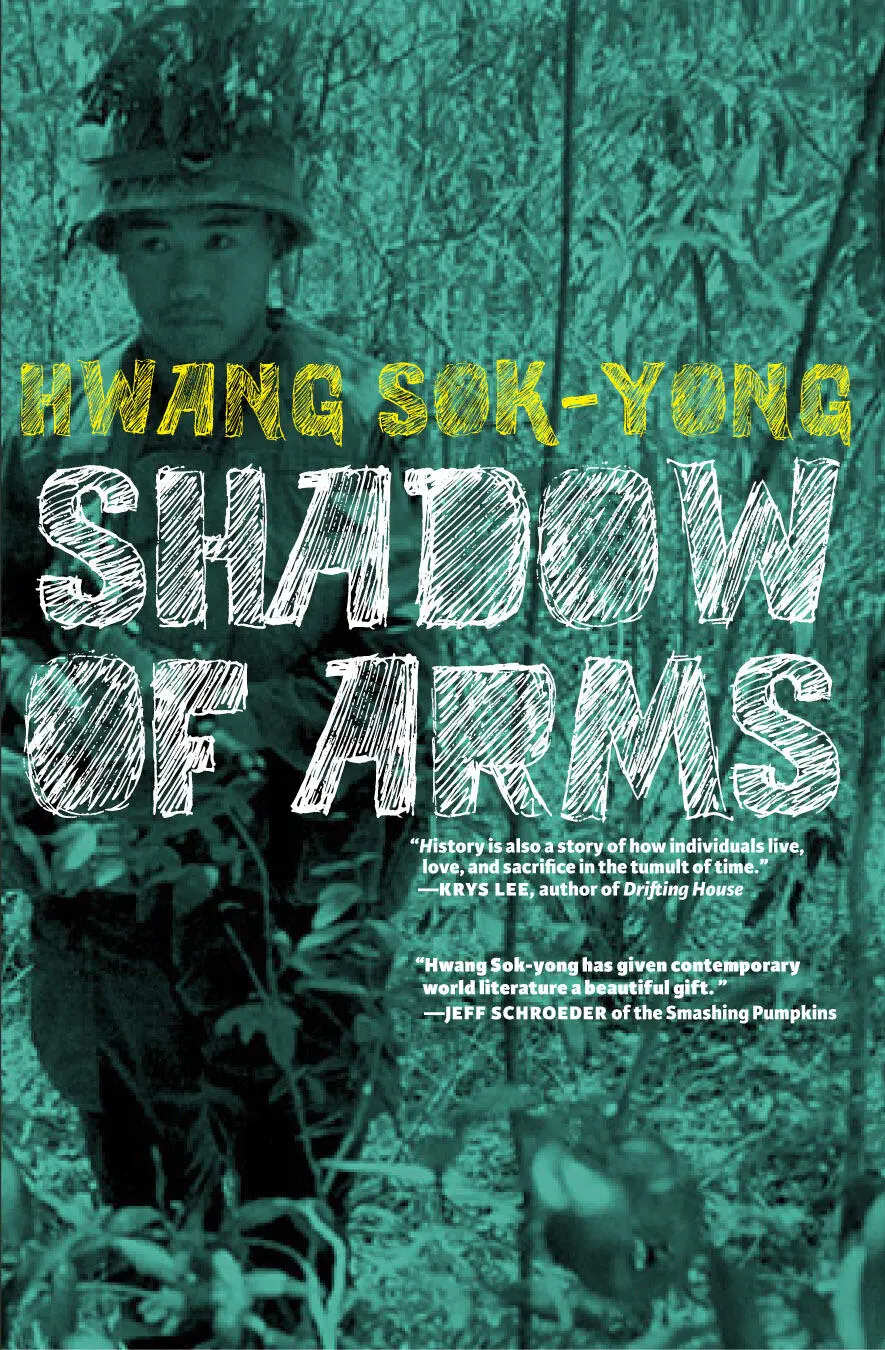
- Название:The Shadow of Arms
- Автор:
- Издательство:Seven Stories Press
- Жанр:
- Год:2014
- ISBN:9781609805081
- Рейтинг книги:5 / 5. Голосов: 1
-
Избранное:Добавить в избранное
- Отзывы:
-
Ваша оценка:
The Shadow of Arms: краткое содержание, описание и аннотация
Предлагаем к чтению аннотацию, описание, краткое содержание или предисловие (зависит от того, что написал сам автор книги «The Shadow of Arms»). Если вы не нашли необходимую информацию о книге — напишите в комментариях, мы постараемся отыскать её.
is a novel of the human condition rather than of the exploits and losses of one side or the other in war.
The Shadow of Arms — читать онлайн бесплатно полную книгу (весь текст) целиком
Ниже представлен текст книги, разбитый по страницам. Система сохранения места последней прочитанной страницы, позволяет с удобством читать онлайн бесплатно книгу «The Shadow of Arms», без необходимости каждый раз заново искать на чём Вы остановились. Поставьте закладку, и сможете в любой момент перейти на страницу, на которой закончили чтение.
Интервал:
Закладка:
“For almost twenty years the Americans have been giving an enormous amount of aid to Vietnam. The first, as I recall, was military aid given to the French under the 1949 Mutual Assistance Agreement. America then was giving military aid to the newly formed NATO, and to Greece, Turkey, Iran, Korea, the Philippines, and Taiwan. France received about two million dollars in the first year. The money was given to strengthen NATO, but France, desiring to recover her colonialist strength, ingeniously earmarked a portion of the grants for Indochina.
“The following year, Secretary of State Acheson announced that America was providing aid to France in order to relieve some of the direct costs incurred in confronting the Viet Minh. Weapons began to be shipped in by air to Saigon. A month later, President Truman’s military aid advisory group arrived and started handling the distribution of bombers, tanks and ammunition used by the French to kill Vietnamese. From then until the defeat of the French in 1954, over four years, America supplied military equipment valued at 2.6 billion dollars. To assist the French colonialists who dreamed of restoring their imperial dominion in Indochina, America took upon itself 80 percent of the war expense.
“The Vietnamese people could not understand why the Americans, on one hand, were helping them by building roads and supplying food and medical supplies, and on the other hand were at the same time trying to kill them by giving cannons and guns to the French. After their defeat at Dien Bien Phu, France lost its suzerainty over Indochina. In an attempt to avoid criticism for colonialist intervention, America went on granting aid under the rubric of SEATO, the Southeast Asian Treaty Organization.
“Once the Diem regime came into power, America gave annual aid of 270 million dollars, covering more than 80 percent of the entire budget of the South Vietnamese government and military. By also underwriting an annual trade deficit on a scale of 178 million dollars, America provided perfect support for the Diem regime. However, today there is not a single Vietnamese who doesn’t know that this fortune was never spent on any worthy causes. Diem and his family opened secret accounts at a Swiss bank and used the money to increase their personal wealth.
“Diem’s younger brother, Ngo Dinh Nhu, stashed huge sums off money and used it to run his own personal secret police agency, expanding the prisons and political concentration camps, thus giving birth to the NLF. He made vast sums of money through the drug trade. Another brother, Archbishop Ngo Dinh Thuc, embezzled relief funds under cover of the church, and the third brother, Ngo Dinh Can, hoarded treasure of his own by controlling disposition of various maritime licenses and trading monopolies.
“Diem appointed his youngest brother ambassador to England and Madame Nhu’s father was the ambassador to the United States. Only when the crisis reached a crescendo did America realize how foolish it had been to support the Diem regime. The so-called ‘aid dividend’ was a term used quite openly and, as I understand it, the loss through corruption of about 200 million dollars in military aid was discussed in the US Senate. Therefore, as we promote this modest and precious program, we hope that the utilization of the aid will be decided by the residents themselves. We should let the villagers sit down together and decide for themselves whether the available funds should be used for wells, for agricultural projects, or for other things.”
Listening to this idiotic harangue by the chief of the agriculture section, Pham Quyen savagely crushed out his cigar. Like a mule wearing blinders, the man could only see what the mule driver wanted him to see. He never tried to think through the root causes for the diversion of the aid money, nor of the ulterior motives for the aid, but merely jabbered about the chronic corruption in its administration. Pham Quyen had been well aware of these problems since his student days when he was in a reading circle in Saigon. There was no longer any doubt that this man was a figure that both sides would drive out and shun. Major Pham felt like giving him, his senior from school, some advice, but after some thought decided to leave him as he was.
Pham Quyen emerged from his musings and lifted his head. The conversation had ground to a halt. It seemed that the AID representative in an ivory-colored suit had been talking in great detail about the corruption uncovered in the past at the provincial government office. Two female office workers were serving those present with coffee and sandwiches brought in from the Grand Hotel.
“At that time we discovered evidence of corruption in the financial records of the office, but by then it was too late. One important project we must carry out in the future is the distribution of the fertilizer necessary to support each farmer’s cultivation of a two-acre plot of land. At the outset, the initial allotment will be to supply forty-four pounds of fertilizer for every quarter acre, and we’ll instruct them on how to mix the three different kinds of fertilizer.
“For the Vietnamese farmers, the introduction of chemical fertilizers will be a momentous transition. The quantities to be used will gradually increase. Right now, the most serious deficiency in the diet of farm families in Quang Nam Province is protein. To increase meat intake is indispensable for suppressing the communist threat. One of the essential parts of the phoenix hamlet program is the pig-breeding plan.
“We’ll also be supplying, besides cement and fertilizer, surplus agricultural products from America. In each hamlet we’ll construct a health center, and necessary medicines will be supplied. So, the chief of the agricultural section should bear in mind the implementation of the agricultural loan system, as well as improvements in livestock husbandry and techniques of cultivation. The chief of the education section should see to the assignment of teachers and delivery of textbooks as well as to education priorities aimed at raising able workers in the phoenix hamlets. I see that all of this is covered in great detail in the project planning documents. We, the US — Vietnam Joint Committee, believe that there should be no divergences of opinion, not even on minor details, as we examine and promote these particular objectives, thus there should be adequate discussion and consultation in advance.”
“The Developmental Revolution Committee would like to say a few words. We suggest that in each hamlet a Residents’ Autonomous Council be formed with members elected by the villagers. What do you say to the idea that the governor and the chairman of the Autonomous Council be joint managers of the project in each hamlet, and that both be involved in the drafting of budgets, with the AID advisor only exercising a confirmation and economic veto power after the budgets are submitted?”
Pham Quyen had floated this proposal that he had jotted down long before in his notebook. The chief of the agricultural section inadvertently had contributed to putting on the agenda the issue of the autonomy of their office in managing the program.
“Fine. Constitute those councils, please.”
“Once the councils are formed, the advisory group will pay for the services rendered by the members.”
Both the US military advisor and the AID representative readily consented. The young Vietnamese general, the commander of the ARVN Second Division, hesitated a little and asked Pham Quyen, “If the autonomous councils are supervised by your office, what will we do?”
“Well. . there’s still the training and control of the militias, isn’t there? You, sir, will be responsible for that.”
Pham Quyen’s reply must have satisfied the general, for he fell silent.
The agriculture section chief asked, “Major Pham, shouldn’t the Residents’ Autonomous Councils be under the direction of the agriculture section?”
Читать дальшеИнтервал:
Закладка:
Похожие книги на «The Shadow of Arms»
Представляем Вашему вниманию похожие книги на «The Shadow of Arms» списком для выбора. Мы отобрали схожую по названию и смыслу литературу в надежде предоставить читателям больше вариантов отыскать новые, интересные, ещё непрочитанные произведения.









Обсуждение, отзывы о книге «The Shadow of Arms» и просто собственные мнения читателей. Оставьте ваши комментарии, напишите, что Вы думаете о произведении, его смысле или главных героях. Укажите что конкретно понравилось, а что нет, и почему Вы так считаете.