Hwang Sok-Yong - The Shadow of Arms
Здесь есть возможность читать онлайн «Hwang Sok-Yong - The Shadow of Arms» весь текст электронной книги совершенно бесплатно (целиком полную версию без сокращений). В некоторых случаях можно слушать аудио, скачать через торрент в формате fb2 и присутствует краткое содержание. Год выпуска: 2014, ISBN: 2014, Издательство: Seven Stories Press, Жанр: Современная проза, на английском языке. Описание произведения, (предисловие) а так же отзывы посетителей доступны на портале библиотеки ЛибКат.
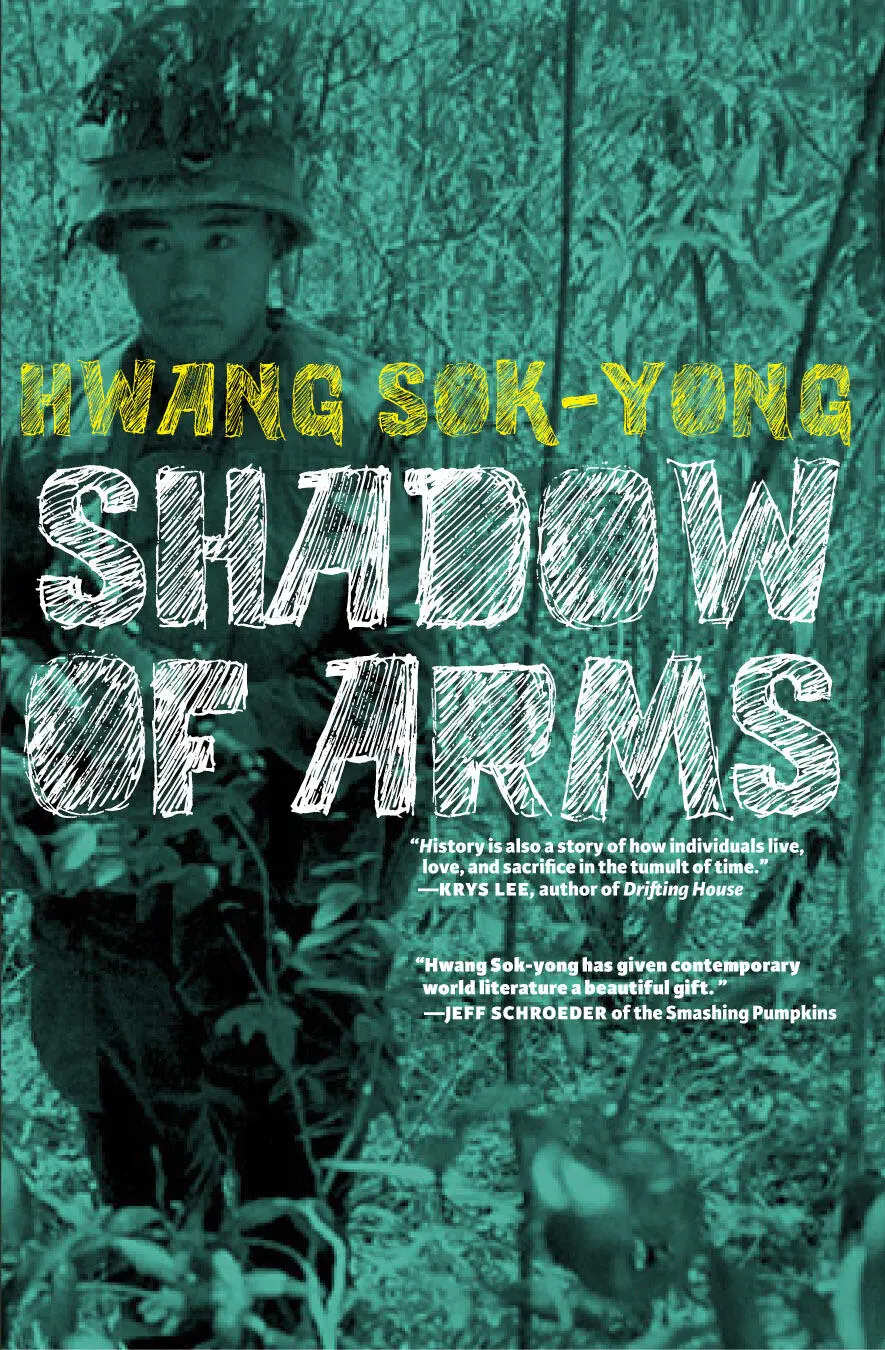
- Название:The Shadow of Arms
- Автор:
- Издательство:Seven Stories Press
- Жанр:
- Год:2014
- ISBN:9781609805081
- Рейтинг книги:5 / 5. Голосов: 1
-
Избранное:Добавить в избранное
- Отзывы:
-
Ваша оценка:
The Shadow of Arms: краткое содержание, описание и аннотация
Предлагаем к чтению аннотацию, описание, краткое содержание или предисловие (зависит от того, что написал сам автор книги «The Shadow of Arms»). Если вы не нашли необходимую информацию о книге — напишите в комментариях, мы постараемся отыскать её.
is a novel of the human condition rather than of the exploits and losses of one side or the other in war.
The Shadow of Arms — читать онлайн бесплатно полную книгу (весь текст) целиком
Ниже представлен текст книги, разбитый по страницам. Система сохранения места последней прочитанной страницы, позволяет с удобством читать онлайн бесплатно книгу «The Shadow of Arms», без необходимости каждый раз заново искать на чём Вы остановились. Поставьте закладку, и сможете в любой момент перейти на страницу, на которой закончили чтение.
Интервал:
Закладка:
Hae Jong seemed happy and poured out more words. “Now that I’ve moved into this house, it seems there’s no such thing as war in this world. I can hardly breathe because of the fragrance of those flowers, you know. Later, let’s go out on the veranda in the back and have dinner out there. I brought some kimchi and red pepper paste from the Dragon Palace.”
Yong Kyu looked at her with vacant eyes. What he saw was a fallen leaf that had been drifting along on stormy waves and now had stopped, shivering for a brief moment, atop a little rock above the water. He sat there facing the only woman from his country in the city of Da Nang. A woman who could go anywhere with a single suitcase. Hae Jong had come to Vietnam with the armed forces, and the army’s deployment and her life in Vietnam were, he thought, facing the same fate.
“What’ll you do when the war ends and our military forces pull out of here?”
Hae Jong’s eyes opened wide and round.
“Ends? Just like that?”
“No war goes on forever. One day they’ll shake hands, or frown, and they’ll end it.”
Well, so much the better, then. A country like this, if there were peace, would be a paradise, don’t you think?”
“Do you love Major Pham?” Yong Kyu asked casually, as if joking. She let out a short laugh but did not answer.
“Jay. . or James was the name, didn’t you say?”
Hae Jong did not remove her eyes from her fingernails.
“Your relationship with him or with Major Pham at present is not so advantageous for you. I’m sorry. . war has been the matchmaker, the mediation. War is always fluctuating. It’s hard to follow through on one’s decisions. No one has any idea what will happen to this country once the war is over.”
Yong Kyu kept thinking he should shut his mouth, but the words kept on streaming out. Unlike back at the headquarters during the interrogation, Hae Jong made no protest about his nosing into her personal life.
“He and I are in the same boat, so I don’t expect any problems,” she replied in a bored tone.
“Because he’s not a Westerner, is that it?”
“No. . he’s like a bullet out of a muzzle. No place to return to. On paper, I’m the bona fide wife of a Vietnamese.”
“Last time at Madame Lin’s, you said you were heading for Bangkok, didn’t you?”
“Things were different, then. They hadn’t yet issued my passport. Now I have a commercial passport that lets me take my pick and fly to America, Europe, Southeast Asia or anywhere for the next two years.”
Then, in protest, Hae Jong raised her voice. “The reason I like you, you shouldn’t forget, Mr. Ahn, is not because we are both Koreans.”
She rose from her chair and Yong Kyu looked up at her.
“Except for your pretensions of giving me the advice of an older brother, you’re a good friend. We speak the same language and you have a kind heart. But that seriousness of yours, I can’t stand it. Oh, the soup must be boiling.”
Toi was sitting by the window, thumbing through some magazines. Shit, Yong Kyu murmured to himself, why bother. He felt awkward. After all, was he so different from the drunken recruit who threw a beer bottle at that Korean dancer for performing a strip show? Neither Pham Quyen nor Mimi seemed to have chosen their paths of life with any conviction.
But then again, on this night with so many killing games going on outside, was it so wrong to have an uncertain future? True, in the end this land would belong to those who, embracing death and yet warring against it, secure their own survival one step at a time. Just the way he came, so Yong Kyu one day would be slipping off quietly with his duffle bag on his shoulder. To sit and gaze at the back of Hae Jong as she set the table for dinner made him think she had become totally at home here. The evening sun was burning deep red just above her as night shaded the sky out there beyond the Ku Dhe River of Son Tinh.
Major Pham emerged from the bathroom in shorts and a casual shirt. Hae Jong stopped setting the table and pointing through the window with the fork in her hand, yelling, “How beautiful! What are those sparks?”
Pham Quyen turned to Yong Kyu with a questioning look. The two men went out onto the veranda to see. Darkness had descended over Da Nang Bay down below them, and streams of fire were flickering in towards the beach from over the ocean. They were probably from helicopters. They seemed to be tracers from heavy machine guns fired as a formation of gunships went up on a night mission.
21
Once in a while a breeze found its way in through the cracks in the truck’s canvas cover, but the heat remained unforgiving. Fifteen urban guerrillas, operatives of the Third Special District, had broken down into teams of five and were departing for Da Nang. They had marched down the Ho Chi Minh Trail along the Atwat Mountains to the border between the Second and Third Districts.
The teams headed into the Third District first had to infiltrate into Long Long, a big village in the Central Highlands from which a rough mountain road ran down to Da Nang. This village on the Thatra River was guarded by a contingent of US Special Forces and was an ARVN reconnaissance outpost. The conditions for infiltration were extremely unfavorable, but once they made it into the confines of the village they could hop on regularly scheduled freight trucks to Da Nang and down the coast on Route 1.
There had been another infiltration route from Atwat into Hue and Da Nang through Bien Hien, but the transfer point had not been securely recovered since a North Vietnam division recently was decimated in the area. With guidance from a local agent they made their way to Nhong Trong and marched through the jungle from there. They had one encounter with an ARVN patrol, but with the guide’s help they hid in the reeds along the Thatra River and waited in silence until the enemy party passed by.
In groups of three they finally arrived at the edge of Long Long where a farmhouse served as a sanctuary. The next afternoon they were escorted to the rendezvous point, a restaurant in the center of the village. Everyone was disguised as a peddler or a traveling peasant. They hid in the attic or the basement air raid shelter of the restaurant until their respective departure times. The freight truck that left the village once a day could only carry five men hidden inside under the cargo of produce. Pham Minh was in the second group to leave. They left at dawn. It was still very dark outside when they got into the truck, bearing loads on their shoulders like ordinary laborers and then burrowed underneath the cargo. Each group’s lead agent sat up front in the cab beside the driver. When they approached a checkpoint he knocked three times on the truck window. Then once they passed a safe distance beyond, he would knock again twice to sound an all-clear.
The road was an unpaved ledge precariously cut into the steep slope running down from the highlands into the jungle valleys and the truck bounced roughly as they cautiously inched their way onward. It had been built for wagons, originally dug out by villagers mobilized by the French colonial government. Pham Minh’s group of five had brought along an empty can so they could relieve their bladders without leaving the truck. For food all they had was lumps of cooked rice wrapped up in banana leaves. By the time they ate it, the rice was salty from the human sweat it had absorbed.
On the road down to the northern side of Da Nang, the truck approached a checkpoint at Kethak near the point where the Kudeh River emptied into Da Nang Bay. From the front they heard the signal of three knocks and instantly the men in back raked the vegetables up over their bodies. The space toward the front of the cargo bed was partitioned with boards so that even if there was an abrupt stop, the fruit and vegetables piled up high in the back would not fall down forward and be damaged. When someone looked into the back of the truck, all they could see was the cargo of produce piled almost to the canvas roof of the truck.
Читать дальшеИнтервал:
Закладка:
Похожие книги на «The Shadow of Arms»
Представляем Вашему вниманию похожие книги на «The Shadow of Arms» списком для выбора. Мы отобрали схожую по названию и смыслу литературу в надежде предоставить читателям больше вариантов отыскать новые, интересные, ещё непрочитанные произведения.







Обсуждение, отзывы о книге «The Shadow of Arms» и просто собственные мнения читателей. Оставьте ваши комментарии, напишите, что Вы думаете о произведении, его смысле или главных героях. Укажите что конкретно понравилось, а что нет, и почему Вы так считаете.