Hwang Sok-Yong - The Shadow of Arms
Здесь есть возможность читать онлайн «Hwang Sok-Yong - The Shadow of Arms» весь текст электронной книги совершенно бесплатно (целиком полную версию без сокращений). В некоторых случаях можно слушать аудио, скачать через торрент в формате fb2 и присутствует краткое содержание. Год выпуска: 2014, ISBN: 2014, Издательство: Seven Stories Press, Жанр: Современная проза, на английском языке. Описание произведения, (предисловие) а так же отзывы посетителей доступны на портале библиотеки ЛибКат.
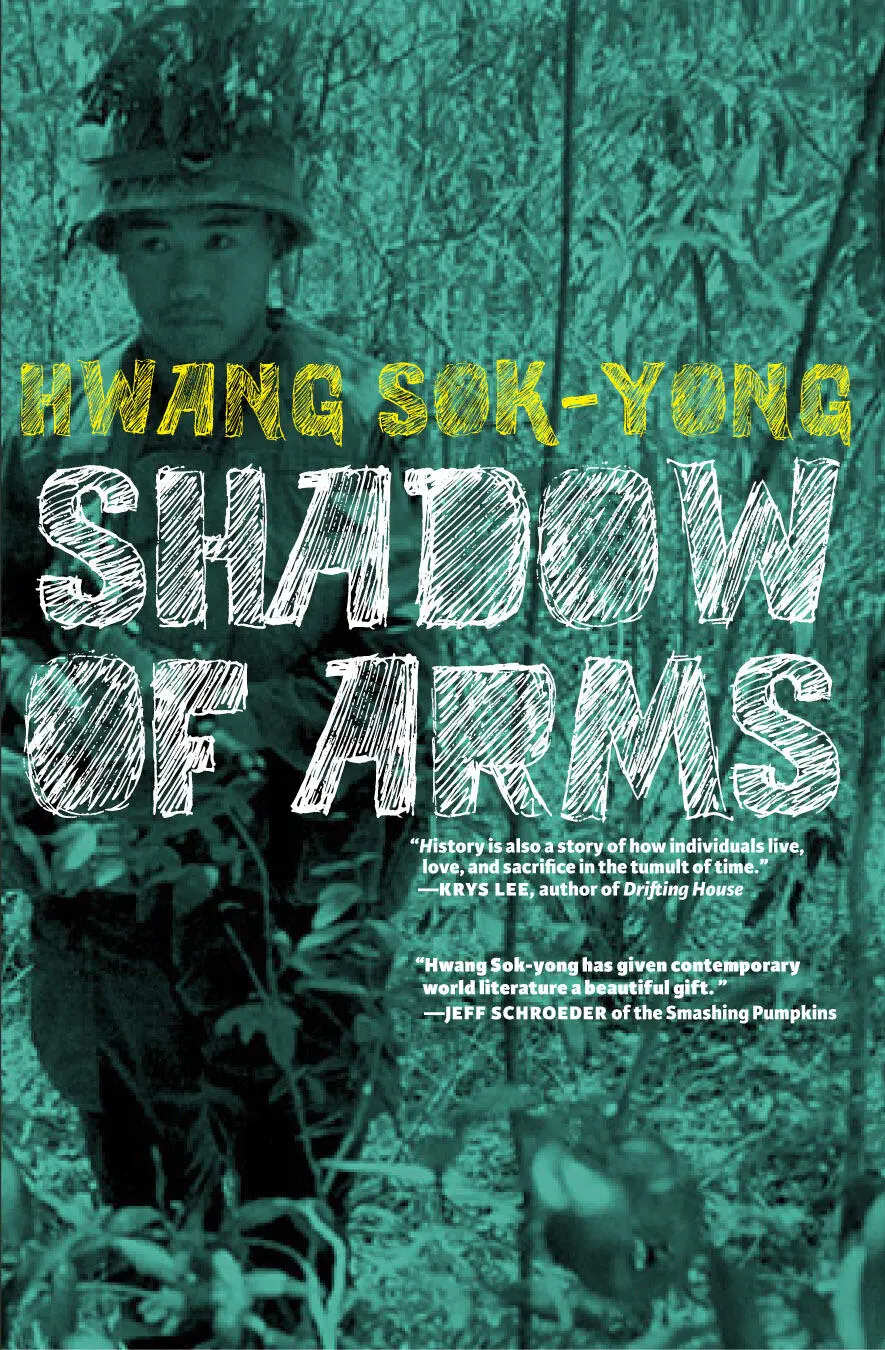
- Название:The Shadow of Arms
- Автор:
- Издательство:Seven Stories Press
- Жанр:
- Год:2014
- ISBN:9781609805081
- Рейтинг книги:5 / 5. Голосов: 1
-
Избранное:Добавить в избранное
- Отзывы:
-
Ваша оценка:
The Shadow of Arms: краткое содержание, описание и аннотация
Предлагаем к чтению аннотацию, описание, краткое содержание или предисловие (зависит от того, что написал сам автор книги «The Shadow of Arms»). Если вы не нашли необходимую информацию о книге — напишите в комментариях, мы постараемся отыскать её.
is a novel of the human condition rather than of the exploits and losses of one side or the other in war.
The Shadow of Arms — читать онлайн бесплатно полную книгу (весь текст) целиком
Ниже представлен текст книги, разбитый по страницам. Система сохранения места последней прочитанной страницы, позволяет с удобством читать онлайн бесплатно книгу «The Shadow of Arms», без необходимости каждый раз заново искать на чём Вы остановились. Поставьте закладку, и сможете в любой момент перейти на страницу, на которой закончили чтение.
Интервал:
Закладка:
Falling in line behind other trucks that had finished loading their cargoes, they made their way without incident back to the Y-junction. When they broke away from the convoy and headed downtown, the Vietnamese QC guards at the checkpoint gestured for them to stop. Slowly the truck rumbled to a stop in front of the guards. Pretending to be annoyed by the delay, Yong Kyu casually held out the special vehicle pass issued by General Liam, the Second Army commander. The guard took a step backward, saluted, and quickly signaled for them to pass through.
“He looked shocked.”
The driver sped down the road in high spirits. They drove straight to the ocean, passed the oil reservoir towers with giant “Gulf” and “Shell” labels on them, and entered the rear gate at the pier. The docks were hectic with the loading of all kinds of civilian cargo arriving in Da Nang for shipment from all around Vietnam. Once more they showed their special pass to the Vietnamese police and were guided in the right direction to go for unloading. As they parked the truck, Toi and another man emerged from a dilapidated wooden shack that served as an office. Toi called up to the cab of the truck, “Container 19 and conex box 5 over there are for our use only. Pull the truck to number 5.”
The truck backed up and a forklift came around and quickly moved the three pallets one at a time into the conex box. Toi locked the iron door, pulled the key out and handed it over to Yong Kyu.
“All done.”
Yong Kyu sent the truck back to the rec center and left with Toi in his Jeep.
“It’s been agreed that we’ll pay a monthly rental fee for the storage. So, when the pass expires, we’ll pay for both together.”
“Major Pham, he’s airtight.”
“You see, I’ve discovered that all the Da Nang docks are in his hands. That huge pile over there, you know what that is?”
Yong Kyu saw innumerable sacks stacked up and covered with tent canvas. The pile was as big as a two or three story building. A series of similar heaps were occupying half the space across the road from the piers.
“What is it? Flour?”
“No. Cement and fertilizer. They’re coming in in unlimited quantities. Ever heard of the phoenix hamlet project?”
“Never heard of it.”
“Three hundred new villages are being constructed. Flour and rice will be arriving, too. Nails, slate, iron bar, glass, paper, you name it. Cattle and feed grain, I can’t even remember all of it.”
“When they get those things, will the war end?”
“Not at all. It’s as if you’ve beaten someone to a pulp and call on the cripple with a bouquet of flowers to express your sympathy.”
“We have an old folktale like that. A man was rewarded for mending the leg of a broken sparrow. So another man found a sparrow and broke its leg just so he could mend it, expecting to be rewarded in the same way.”
“Was he rewarded?”
“All sorts of demons popped out, and he struggled to escape, drowning in shit and filth. Now we’ve got to go keep our rendezvous with the merchant.”
“Right, to the Bamboo.”
“Next time we’d better change the meeting place. The Bamboo is far from ideal.”
“We should rent an office or a shop.”
“Right. Talk with him about it. After all, we have to be there in Le Loi market.”
From the pier they turned off the beach road and walked the whole way, passing through a street packed with stores. They reached the end of Le Loi market, only one alley away from the old market district. Amidst the shouting of the people and the great variety of merchandise on sale, the smell of death seemed to have completely vanished from the city.
19
General Westmoreland decided that the only way to suppress the communist guerrillas was to expel all communists from the phoenix hamlets and establish free-fire zones everywhere else. Warnings had been coming from the operations headquarters. With the combat situation getting hotter, circumstances were pressing the peasants to discard the lukewarm attitude of neutrality they had thus far maintained and to make a decision.
They too were finding it increasingly obvious that to survive in these circumstances they were going to have to choose one side or the other. In the past, the farmers had three options to make a living: in accordance with their natural instincts they could stay put on the land where their ancestors were buried; they could move to zones under secure government control; or they could join the National Liberation Front. From now on, however, those who tried to stay on their land would encounter increasing peril.
The Viet Cong did not even know how to dress wounds properly, but those who moved into the zones of government control would receive food, shelter, and personal safety as well as jobs, along with the hope of returning home after a successful conclusion of the war. The alternative was to join the NLF. But the Front made hollow promises. They could not hold on to the territory they occupied for very long. B-52 strikes would get worse, the Viet Cong would raise the taxes, their young sons would be drafted at gunpoint, and labor would be demanded for transporting supplies. In present circumstances, the tide of battle on the ground was turning gradually in favor of the enemy.
In the conference room of the provincial government office, a monthly meeting of the US — Vietnam Joint Committee was underway. The joint committee was an organization first set up in conjunction with the strategic hamlets initiative in the early 1960s, and it was now being restructured and expanded to administer the phoenix hamlets project. For this resettlement plan the Vietnamese government had inaugurated a “Developmental Revolution Committee,” and the chairman of this committee was none other than General Liam, the military governor of Quang Nam Province.
Present in the room were Major Pham Quyen, acting on behalf of the chairman, AID representatives assigned to Da Nang, an American military advisor for Quang Nam Province, the mayor of Hoi An (also vice-chairman of the Developmental Revolution Committee), the commander of the ARVN Second Division stationed at Da Nang, the chiefs of the agriculture and education sections of the provincial administration, and, up from Saigon as advisors, a Filipino specialist in community development and a young man from the International Support Corps.
The air conditioner was buzzing, but it did not impede their discussions. The thick curtains were drawn on the windows of the conference room that normally looked down on the streets. From inside it was hard to imagine where in the world they might be. The soundproofing was so good that no street noise at all penetrated the conference room. Standing at the front of the room was a huge map of East Asia along with a large chart written in both Vietnamese and English. Nearly a hundred tasks were listed on the chart, in each case with specifications showing the details of the task for each site — such-and-such village in such-and-such province — with budgets and monthly timetables for distribution of supplies. Just now the US military advisor was emphasizing once more the strategic importance of the phoenix hamlet project, reiterating the announcements by the headquarters of the US forces in Saigon. However, the mayor of Hoi An was not convinced and spoke bluntly.
“As for the search-and-destroy operations commenced by General Westmoreland, our commanders on the front have presented some criticisms. In fact, ever since the Tet Offensive, our general staff have also taken the view that, due to the general problems of such operations, it is a very doubtful way to achieve a decisive victory. We would like to believe that the new operational strategy of newly appointed General Abrams will bear our reservations in mind. I’ve long thought that the headquarters policy on designation of free-fire zones was a very dangerous approach. Could it be that headquarters has given up hope of winning the loyalty of the Vietnamese peasantry?
Читать дальшеИнтервал:
Закладка:
Похожие книги на «The Shadow of Arms»
Представляем Вашему вниманию похожие книги на «The Shadow of Arms» списком для выбора. Мы отобрали схожую по названию и смыслу литературу в надежде предоставить читателям больше вариантов отыскать новые, интересные, ещё непрочитанные произведения.










Обсуждение, отзывы о книге «The Shadow of Arms» и просто собственные мнения читателей. Оставьте ваши комментарии, напишите, что Вы думаете о произведении, его смысле или главных героях. Укажите что конкретно понравилось, а что нет, и почему Вы так считаете.