Hwang Sok-Yong - The Shadow of Arms
Здесь есть возможность читать онлайн «Hwang Sok-Yong - The Shadow of Arms» весь текст электронной книги совершенно бесплатно (целиком полную версию без сокращений). В некоторых случаях можно слушать аудио, скачать через торрент в формате fb2 и присутствует краткое содержание. Год выпуска: 2014, ISBN: 2014, Издательство: Seven Stories Press, Жанр: Современная проза, на английском языке. Описание произведения, (предисловие) а так же отзывы посетителей доступны на портале библиотеки ЛибКат.
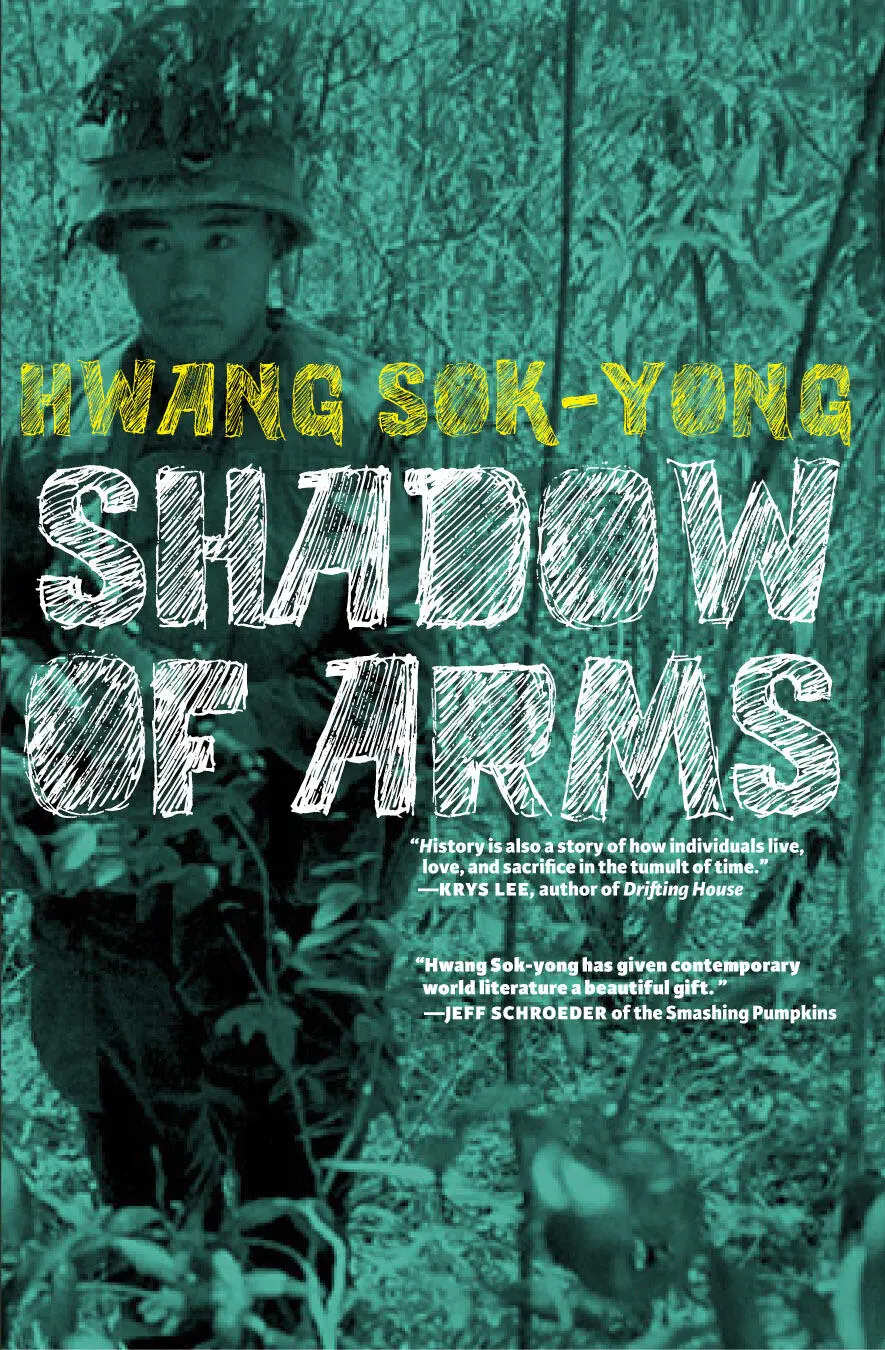
- Название:The Shadow of Arms
- Автор:
- Издательство:Seven Stories Press
- Жанр:
- Год:2014
- ISBN:9781609805081
- Рейтинг книги:5 / 5. Голосов: 1
-
Избранное:Добавить в избранное
- Отзывы:
-
Ваша оценка:
The Shadow of Arms: краткое содержание, описание и аннотация
Предлагаем к чтению аннотацию, описание, краткое содержание или предисловие (зависит от того, что написал сам автор книги «The Shadow of Arms»). Если вы не нашли необходимую информацию о книге — напишите в комментариях, мы постараемся отыскать её.
is a novel of the human condition rather than of the exploits and losses of one side or the other in war.
The Shadow of Arms — читать онлайн бесплатно полную книгу (весь текст) целиком
Ниже представлен текст книги, разбитый по страницам. Система сохранения места последней прочитанной страницы, позволяет с удобством читать онлайн бесплатно книгу «The Shadow of Arms», без необходимости каждый раз заново искать на чём Вы остановились. Поставьте закладку, и сможете в любой момент перейти на страницу, на которой закончили чтение.
Интервал:
Закладка:
“Tomorrow, after you get back from going to Turen with me, be sure to buy a TV and a tape recorder for these boys, OK?”
“Shit, why not?”
The two soldiers saluted once again, their posture still that of penitents being disciplined.
“Hey, enough cringing. No need for that. Take it easy and take care.”
They left and Yong Kyu was sitting in the office by himself. The curtains were flapping in the stiff wind off the South China Sea. To maintain the business at Turen, he had to keep a close eye on the activities of the American side. He remembered the advice of Blue Jacket Kang when the duties were transferred: transactions in combat supplies was the most delicate issue, and neither the Americans nor the Koreans shared their top-secret intelligence on that. The most hidden part is also the most important; as long as we have thorough information on that, the Koreans will be safe to plunge into any transaction in Da Nang; and that is precisely the most vulnerable area for the Americans and the Vietnamese. Yong Kyu had nоt forgotten a single point.
On Monday at twelve-thirty Yong Kyu went to the Y-junction by the garbage dump where Route 1 split to head for Turen and downtown Da Nang. He waited there, wearing American jungle fatigues, a work hat, and his sunglasses. Children passed by, from time to time shouting “ Pilluktang !” They must have taken him for a Filipino who had enlisted in the US Army.
He looked about for a while, then walked into a noodle shop. He bought a can of coke and sipped it sitting at a table. The only other occupants of the shop were the owners, an old Vietnamese couple. The old man approached Yong Kyu and babbled something in Vietnamese. Then he repeated “Cigareh, cigareh.” When Yong Kyu took a pack out of his pocket and offered him one, the old man said “beaucoup.” Many? The old man wanted to buy the pack.
Yong Kyu waved both hands and said, “ Toi kai dor gong ban .”
He refused to sell his pack, but the old man kept staring at him for a long time as if he could not believe what he had heard. At last, a truck slowly pulled up to the junction and stopped. Yong Kyu climbed inside.
“It’s a little late. .”
“The supply convoy passes here between twelve-thirty and twelve-forty.”
“How do you know?”
“We used to have our supplies delivered here.”
“And now?”
“We go directly to the docks at the supply unit.”
“Do you get deliveries every day?”
“No, only once a week.”
Yong Kyu had not thought of that place. Besides, it was almost in the heart of downtown. He recalled there were a few old barracks beside a rundown old factory and next to them the air force warehouses were lined up. It functioned as a relay point between the Turen supply warehouse and the brigade, and also as a liaison office where Korean personnel dispatched to Da Nang were issued their equipment and supplies. Only the American armed forces were excluded. The quantity of goods passing through may not have been so much, but it was an important location nonetheless.
The downtown supply unit was located only one block from the piers. That’s right, he recalled, all the beer for the military was unloaded on those piers. He’d forgotten the biggest route for beer. The Vietnamese consumers had acquired a taste for Korean canned beer, and in the market it brought almost the same price as the American top-of-the-line brand, Hamm’s. Maybe the American sergeant back at the American forces investigation office was peeved about the high price of Korean beer on the black market.
If so, maybe there were cross lines to siphon beer out of the regular distribution channels.
In the brigade, Koreans only drank Korean beer. But beer was not classified as food, so it was outside the ration planning quotas. The amount consumed was unpredictable, varying greatly depending on the random distribution of the elbow-benders. PX goods were always paid for in dollars, and then resold for dollars on the black market. But Korean beer, whether it went straight to the brigade and made its way back out, or slipped into the black market on the way from the supply unit. It has a hot trade. It was the only item that could easily be traded as well as sold to convert profits into American military currency.
Just like with the specialty foods like almonds and peanuts, even when they leaked out, since they were purchased and sold for dollars, the ones suffering the loss in the end would be the Vietnamese city dwellers who consumed them. The war supplies, on the other hand, were bought and eaten by the families of Vietnamese merchants, bureaucrats, and military officers. It was like the delicate web of a deep-sea food chain. The item that had been hardest for them to get a grip on was none other than the Korean beer constantly streaming in from the piers.
“Why didn’t I think of it before?” murmured Yong Kyu aloud.
The driver, not privy to his train of thought, said, “Think of what, sir?”
“Oh, never mind. Hey, do you get the beer for the rec center from the PX?”
“No. Why drink American beer when we have our own? When a holiday for the forces is approaching we load a large quantity at one time. The brigade also gets theirs from the supply detachment downtown.”
Absorbed in trying to compose his thoughts, Yong Kyu did not even notice the plumes of red dust approaching from the south on Route 1. As the driver started the engine, he turned to the left quickly and saw the convoy’s escort Jeep approach with its headlights burning. A platoon of infantry marching along the edge of the road with its sandbag walls on either side presently disappeared, enveloped in the dust. The parade of vehicles made a terrible clatter as they turned at the Y-junction, keeping a wide spread between each. When the last Jeep passed by, they pulled out and fell into the file. They had no trouble passing through the east gate of the Turen supply warehouse. The truck pulled up in front of a B-ration warehouse. Leon, who had been on the lookout for them, gave them a wink as he stood there with his ledger in hand.
“So you survived, kid.”
Leon shook his head wildly. “Whew, you’re one crazy bastard. I did nothing but sleep all day yesterday.”
They sat side-by-side in the air-conditioned warehouse and talked about women.
“Come back after lunch, by then I’ll have the stuff loaded.”
“You can’t load more than two pallets of large cartons?”
“We can do better than that. First, we’ll load two side by side, then we’ll squeeze a third in behind. A tight fit, but we can force them.”
“The payment ought to be made the next day. The rate outside is changing day by day.”
“Fine. No need to pay me this time, since you took me out Saturday night.”
“That was just a good time among friends. You can return the favor next time.”
A black guy driving a forklift grinned at them as he passed by.
“I told him about you. He was cracking up.”
“Where’s Stapley?”
“He’s over at another warehouse.”
“Let’s take him out, too, next time we have a little fun.”
“Sure. He’ll kill you he’s so funny. And he’s a very bright guy.”
By the time Yong Kyu came out of the cafeteria where he had eaten fish, potatoes, and spinach with the other supply troops, the goods were all loaded. Three pallets of salad oil: two hundred forty cans in sixty boxes. The Vietnamese love fried food, and before long a lot of households would be frying shrimp, bananas, corn, and whatever else with that oil. All Leon had to do was leave a space blank for that truckload and move on to the next one on his list of requisitions to be checked. As they left, Leon made an OK signal with his thumb and index finger.
Читать дальшеИнтервал:
Закладка:
Похожие книги на «The Shadow of Arms»
Представляем Вашему вниманию похожие книги на «The Shadow of Arms» списком для выбора. Мы отобрали схожую по названию и смыслу литературу в надежде предоставить читателям больше вариантов отыскать новые, интересные, ещё непрочитанные произведения.







Обсуждение, отзывы о книге «The Shadow of Arms» и просто собственные мнения читателей. Оставьте ваши комментарии, напишите, что Вы думаете о произведении, его смысле или главных героях. Укажите что конкретно понравилось, а что нет, и почему Вы так считаете.