Paul Theroux - The Black House
Здесь есть возможность читать онлайн «Paul Theroux - The Black House» весь текст электронной книги совершенно бесплатно (целиком полную версию без сокращений). В некоторых случаях можно слушать аудио, скачать через торрент в формате fb2 и присутствует краткое содержание. Год выпуска: 1996, Издательство: Penguin Books, Жанр: Современная проза, на английском языке. Описание произведения, (предисловие) а так же отзывы посетителей доступны на портале библиотеки ЛибКат.
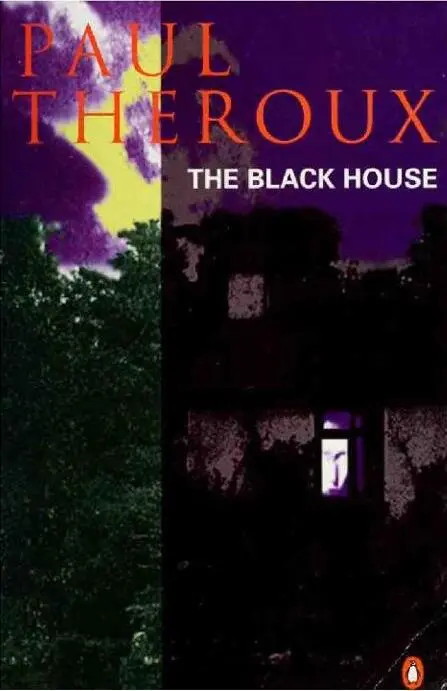
- Название:The Black House
- Автор:
- Издательство:Penguin Books
- Жанр:
- Год:1996
- ISBN:нет данных
- Рейтинг книги:4 / 5. Голосов: 1
-
Избранное:Добавить в избранное
- Отзывы:
-
Ваша оценка:
The Black House: краткое содержание, описание и аннотация
Предлагаем к чтению аннотацию, описание, краткое содержание или предисловие (зависит от того, что написал сам автор книги «The Black House»). Если вы не нашли необходимую информацию о книге — напишите в комментариях, мы постараемся отыскать её.
The Black House — читать онлайн бесплатно полную книгу (весь текст) целиком
Ниже представлен текст книги, разбитый по страницам. Система сохранения места последней прочитанной страницы, позволяет с удобством читать онлайн бесплатно книгу «The Black House», без необходимости каждый раз заново искать на чём Вы остановились. Поставьте закладку, и сможете в любой момент перейти на страницу, на которой закончили чтение.
Интервал:
Закладка:
Emma handed .Munday a cup of coffee when he entered the living room. She said, “Silvano’s telling me about his flat in Earl’s Court.” Munday moved in front of the fire, warming his back. “I thought you had a room at London House.”
“Yes,” said Silvano. “Then I moved. I’m sharing with some other chaps—fellow Ugandans.”
“I should say you’re damned lucky to have a flat,” said Munday. He said peevishly to Emma, “I think of Alec with his bedsitter in Ealing.”
“A flat’s more comfortable,” said Silvano.
“A flat’s more expensive,” said Munday. “But, then Alec’s not on a government grant. His money’s frozen in a Uganda bank account.” Silvano had spoken inoffensively; he was eager to please and impress. But Munday felt a growing resentment against the hair, the new watch, the stylish suit —Silvano plucked at the creases in his trousers—the casual mention of the girl friend, the flat. He was a villager who had for years shared a one-room, grass-rooted hut with his large family. He had served as a subject for one of Munday’s monographs on Bwamba agriculture—he was typical enough for that: a herd-boy, then a clearer of elephant grass, then a family man, indistinguishable from any of the forest people except that he was less quarrelsome, more intelligent, and didn’t drink beer. When Munday first met him, Silvano was convinced that God intended him to be a priest, and it was on the mission’s motorcycle that Silvano went to his extramural classes in Fort Portal. Munday persuaded him against joining the priesthood and, tutoring him privately, got him a place at Makerere. Silvano married; Silvano switched from the School of Agriculture to the English Department; Silvano wrote poems; and on his holidays, when he visited Munday at the Yellow Fever Camp, he had a sharp muhoro in the belt of his drill shorts, and he carried, as a proof of his literacy, a geography book with a faded, soiled cover which gave off the hut smell of dirt and wood-smoke.
“I thought we might go out a bit later and drive to Whitchurch Canonicorum,” said Emma to Silvano. “There’s an English saint buried in the church, and it’s a charming village. We could have a cream tea on the way back. You don’t want to come all this way and miss a cream tea.”
“That sounds super,” said Silvano.
“It doesn't go very well over beer,” said Munday. “But I never miss my tea,” said Silvano.
“Really.”
“I know Alfred wants to take you around the village.”
“There's not an awful lot to see,” said Munday. “I’m sure we’d be more comfortable right here.” But the visit was unavoidable. They drove to the village of Whitchurch shortly after, found St Candida's altar with the three openings, and Munday explained how it was thought that a diseased limb could be cured if it was inserted in one of the holes. Emma was over at the baptismal font. Munday said in a low voice to Silvano, “Or I daresay you could stick your tumba in, if circumstances required.” Silvano giggled and said, “That’s interesting!”
The coarse joke was for the African, and it made Munday view the next days with dread. In Uganda he had been friendly with Silvano, and Silvano had informed part of his research; the relationship had been an easy one. Munday was grateful for that; he had recommended Silvano for a Commonwealth scholarship. But here, and really from the moment Silvano had said, “Only the new style. London style—Munday had viewed him as someone of ponderous weight whom he had managed easily enough in Africa but whom he would struggle with in England—like the gliding sea-animal which becomes insupportable out of water. It wasn’t Silvano's fault, but Munday saw him posing problems to the smallest venture; he was like an invalid guest whose affliction had to be carefully considered before any move could be made. And even then he would remain helpless; he had to be shown things—this church, that house, that view—and for this Munday was required to carry him. Munday was newly conscious of Silvano’s color, and while feeling a prompt sympathy for the African, he knew he might have to defend that color to the villagers. He did not relish the possibility; he wanted to hide him.
More than this (now they had left the churchyard and were driving down a country lane to Shave’s Cross), Munday had the separated lover’s regret, of spending time and effort with people who knew him as the figure he had been in the past, a personality he had outgrown, but one for which they retained a loyal respect: the regret that he was not with his lover, giving her the attention he felt he was wasting on his wife and that burdensome acquaintance. The duties of sentiment and friendship, accumulated obligations, intruded on this secret life. So he drove and he could smell Caroline on his hands and taste the crush of her mouth and breast on his tongue, as pungent as apples.
“Why don’t we give the tea a miss?” said Munday.
“I’d love a cup of tea,” said Emma. “I’m sure Silvano wants one, too. Don’t be a wet blanket, Alfred. You’re brooding so.” Eager to get it over with, he stopped at the first signboard that said Teas. It was a small bungalow of cob and hatch, set back from the road on a stony drive. The cob had been whitewashed and showed large smooth patched places; its windows were set deep in the bulging walls, as if retreating into sockets. It had a satisfying shape, as natural as a ground-swell, and a well-tended look; but dense clouds now filled the late-aftemoon sky, and the gray light on the dark grass that surrounded the dwelling gave it a cheerless air. Smoke billowed from the end chimney, and Munday found it hard to see all that streaming smoke and not think that the bungalow was about to go into motion and chug out of the garden like a locomotive.
A middle-aged woman in a blue smock met them at the door and greeted them uncertainly, avoiding Silvano’s gaze. She showed them to a parlor jammed with small tables. There was a fire crackling in the grate, and two other customers, a man and woman, seated near it. Munday wanted to leave as soon as he saw them. But the proprietor was seating Emma, and Silvano had already taken his place at the table—he was toying with a small oil-lamp which was the centerpiece. The couple at the other table did not look up. The man was wearing an overcoat, the woman a hat, and both were buttering toast with raised arms to keep their sleeves out of the tea.
“Not many customers,” said Silvano.
The woman in the blue smock frowned at her pad. She poised her pencil stub and said, “Will that be three teas?” Munday said, “With clotted cream.”
“Thank you.” She scribbled on the pad, and with deft simultaneous movements of her hands dropped the pad into her apron pocket and pushed the pencil into her hair. She removed the fourth place mat. Emma slipped her coat off; she leaned forward, her arms behind her back, her breasts brushing the table, as she worked her arms out of the sleeves. Munday had always found this one of the most attractive things a woman could do. He saw Silvano staring.
“Believe it or not,” said Munday, “this cottage is made out of mud. The walls are about two feet thick, of course, but it’s mud sure enough—clay, actually—on a wooden frame. Could be a few hundred years old.”
“Mudded walls and grass roof,” said Silvano. “Just like Bundibugyo!”
“But not as civilized,” said Munday.
“Oh, I think so,” said Silvano, seriously.
“Down here for a holiday?” It was the man by the fire who had spoken, and it was some while before Munday realized the man was addressing their table from across the empty room. The man hadn’t looked up. His hands were still raised, stropping a sliver of toast with butter.
“You might say that.” Munday was gruff; he hated the man’s probing question.
Читать дальшеИнтервал:
Закладка:
Похожие книги на «The Black House»
Представляем Вашему вниманию похожие книги на «The Black House» списком для выбора. Мы отобрали схожую по названию и смыслу литературу в надежде предоставить читателям больше вариантов отыскать новые, интересные, ещё непрочитанные произведения.








Обсуждение, отзывы о книге «The Black House» и просто собственные мнения читателей. Оставьте ваши комментарии, напишите, что Вы думаете о произведении, его смысле или главных героях. Укажите что конкретно понравилось, а что нет, и почему Вы так считаете.