Paul Theroux - The Black House
Здесь есть возможность читать онлайн «Paul Theroux - The Black House» весь текст электронной книги совершенно бесплатно (целиком полную версию без сокращений). В некоторых случаях можно слушать аудио, скачать через торрент в формате fb2 и присутствует краткое содержание. Год выпуска: 1996, Издательство: Penguin Books, Жанр: Современная проза, на английском языке. Описание произведения, (предисловие) а так же отзывы посетителей доступны на портале библиотеки ЛибКат.
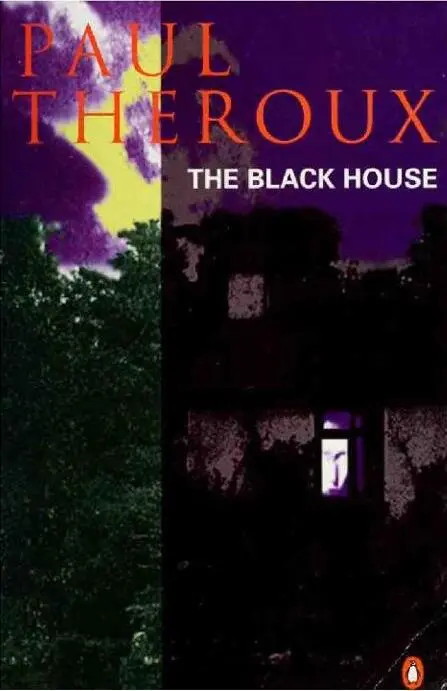
- Название:The Black House
- Автор:
- Издательство:Penguin Books
- Жанр:
- Год:1996
- ISBN:нет данных
- Рейтинг книги:4 / 5. Голосов: 1
-
Избранное:Добавить в избранное
- Отзывы:
-
Ваша оценка:
The Black House: краткое содержание, описание и аннотация
Предлагаем к чтению аннотацию, описание, краткое содержание или предисловие (зависит от того, что написал сам автор книги «The Black House»). Если вы не нашли необходимую информацию о книге — напишите в комментариях, мы постараемся отыскать её.
The Black House — читать онлайн бесплатно полную книгу (весь текст) целиком
Ниже представлен текст книги, разбитый по страницам. Система сохранения места последней прочитанной страницы, позволяет с удобством читать онлайн бесплатно книгу «The Black House», без необходимости каждый раз заново искать на чём Вы остановились. Поставьте закладку, и сможете в любой момент перейти на страницу, на которой закончили чтение.
Интервал:
Закладка:
He kept apart and whispered, “What are you doing to Emma?”
“Nothing.”
“You’re smiling.”
“No.” But she was—he could see her mouth.
“What are you telling her?”
“Only that I want you.” The purr in her voice gave the words an emphatic nakedness.
He said, “Caroline—”
“Hold my Jiand,” she said. She pulled off one glove and reached over and laid her white hand on his thigh.
He covered her hand with his own and said, “You’re a witch.”
“I’m not,” she said, with a pout of amusement on her mouth. “Anyway, what do you know about witches?”
“A great deal,” he said. “You’re using her.”
“I can only reach you through her.”
He mumbled something, not words, the syllables of a sigh.
“What did you say?”
“It doesn’t seem fair,” he said.
Caroline clutched his hand; Munday could feel her fingers, her nails pricking his palm. She said, “You want me, don’t you?”
“Yes.”
“Then it’s fair.” She leaned over and kissed him lightly, but his cheek burned, as if she had scarred him where her lips had brushed his skin.
“I want to make love to you now.”
“We can’t,” she said.
“Please.”
“Here?” She laughed. “On this bench? In the church? Or there, behind that grave?”
“Anywhere,” he said, and looked hopelessly around the graveyard.
She took his chin and turned his face towards hers. She said, “I believe you would!”
“Hurry,” he said. He hugged her and tried to draw her up.
“No,” she said. “Never that. Don’t hurry me— don’t push me into the grass and hike my skirt up, then fumble with me and tell me you have to go when you finish.”
“I won’t.”
“But you will. You have to. It would ruin it.”
Munday said nothing; she was right—Emma was waiting.
“There’s time,” she said. “We’ll do it properly— not hurrying and half-naked and looking at your watch. I know you would if I let you, but I won’t let you cheat me that way. I want to be naked, on top of you, with a fire going like that first night. God, that was wonderful. You were babbling in some African language.”
“Was I? Why didn’t you tell me before?”
“I thought you knew,” she said. “I thought you were doing it deliberately.”
“Perhaps I was,” he said.
“Next time I want to make love to you. Take you in my mouth and swallow you.”
“When?” he whispered.
“Soon,” she said. “You’ll see.”
“I’ve never known anyone like you.”
“But then you’ve been away, haven’t you?”
“For such a long time,” he said. “And so far away. You can’t imagine.”
“I can,” she said. “You still taste of Africa.”
“I used to hate the thought of coming back,” he said. “England—but you’re not English.”
“I am!”
“No,” he said, “not like any woman I’ve ever known here.”
She smiled. “So you’ve known one somewhere else.”
“Africa is full of witches,” he said.
“You’re mad,” she said. “And it’s a wonder you love me.”
“But that’s what I do love!”
The lights in the church had gone out while they were speaking, and Munday left her in darkness and stumbled through the graveyard, choosing his way among the stones and snowdrops in the moonlight which lay like water on the ground. For all he had said, he was afraid, but the fear beating in his blood animated him, caused a leaping in his mind that was next to joy. The panic he felt was vivid enough and yet so wild in him it might have been something he had learned eavesdropping on another person’s passion—emotion so unusual that it eluded memory and that for him to try to recall it would be to lose it entirely, or perhaps admit that it was too intense to be his. And a further fear, which was like a fear of his own courage, one that he had known in Africa, not of being incapable of understanding the witch-ridden mind in the village paralyzed by myth, but of understanding it too well, generating a sympathy so complete it was the same as agreement; the fear that, in time, only the most savage logic would satisfy him and everything else would seem fraudulent and unlikely. It happened, but briefly, and he had overcome it. Now he was home, freed from them by his heart—the blacks and the jungle they owned were a distant trap. He might have died there!
An eager panic held him. It was that glimpse of himself in the churchyard, trampling the tufts of snowdrops he had tried to avoid, his half-remembered desire that approached and taunted him like a masked dance, and the thought of Caroline’s promptings to Emma— the witching appeal to his own body. He refused to doubt that, because simply by believing, he had Caroline to gain. He could only dismiss someone else’s ghost. But his own haunting rewarded him with desire and he remained astonished by what he would willingly risk for her.
“I was right, wasn’t I?” said Emma.
“Yes,” said Munday. “There was something. But it’s over now.”
“You can take him out tomorrow.”
“I’m off to bed,” he said. “Is he well occupied?”
“He’s watching ‘Match of the Day.’ ”
“This way,” said Munday, starting off the road near the Black House to a path partially arched with high bushes. It was a narrow path and, barely used, it promised greater narrowness further on.
“Isn’t the village on this road?” asked Silvano. He hesitated on the tarmac in his pin-striped suit and winced at the untrodden path.
“We’ll go around the back by the path,” said Munday. “Much more interesting the country way. I’m sure you get quite enough of paved roads in London.”
“I like paved roads,” said Silvano.
With Munday in the lead, they walked down the path, bent slightly to prevent bumping the overhanging branches. The path became high grass, then ceased at a sudden coil of brambles. Munday circled it and came to a gate made of rusted pipes. Munday vaulted the gate; Silvano climbed it, straddled it, and swung his legs over, taking care not to soil his suit. But he stumbled and duck-walked to his knees on the other side, and he was brushing them as Munday strode on ahead in his heavy sheepskin coat, the turtleneck sweater Emma had knitted and his already smeared gumboots. Over a small hill, Munday stopped, thwarted by a freshly plowed field. High cracked curls of drying mud were screwed out of long furrows; Munday saw himself tripping and falling. He followed the tractor ruts in the yard-wide fringe of turf at the field’s edge, and fifty yards behind him, Silvano swung his arms, walking unsteadily in his pointed shoes.
At the far end of the field Munday found a low opening in the thorny hedge fence. Without waiting for Silvano, he stooped and pushed himself through and then trotted down a long slope, steadying himself with his stick. He was on the level field below, poking at the undergrowth, when Silvano burst through the opening in the thorns and immediately began slapping the hedge’s deposits from his jacket. He caught up with Munday. Munday sprinted away.
“Please,” said Silvano, calling Munday back. “Just a minute.” He squatted on his heels like a Russian dancer, kicking one leg out, then the other, to pull at his ankle socks.
“Pick up some burrs?”
“They are paining me.”
“You want to keep to the center of the path,” said Munday. “Of course you know you’re wearing the wrong sort of socks and shoes. Finished?” Silvano stood up. He was out of breath from having run down the slope; his spotted eyes bulged, his nostrils were larged flared holes in the squashed snout of his nose, bits of broken leaf and the torn gray veil of a spider’s web clung to his hair. The wind turned one of his lapels over and sent his tie flapping over his shoulder. He hunched and jammed his hands into his pockets. A froth of cloud showed over the ridge of the hill, and in the morning light diffused by the cloud Silvano’s face was unevenly brown, brushed with various shades of pigment.
Читать дальшеИнтервал:
Закладка:
Похожие книги на «The Black House»
Представляем Вашему вниманию похожие книги на «The Black House» списком для выбора. Мы отобрали схожую по названию и смыслу литературу в надежде предоставить читателям больше вариантов отыскать новые, интересные, ещё непрочитанные произведения.


Обсуждение, отзывы о книге «The Black House» и просто собственные мнения читателей. Оставьте ваши комментарии, напишите, что Вы думаете о произведении, его смысле или главных героях. Укажите что конкретно понравилось, а что нет, и почему Вы так считаете.