Paul Theroux - The Black House
Здесь есть возможность читать онлайн «Paul Theroux - The Black House» весь текст электронной книги совершенно бесплатно (целиком полную версию без сокращений). В некоторых случаях можно слушать аудио, скачать через торрент в формате fb2 и присутствует краткое содержание. Год выпуска: 1996, Издательство: Penguin Books, Жанр: Современная проза, на английском языке. Описание произведения, (предисловие) а так же отзывы посетителей доступны на портале библиотеки ЛибКат.
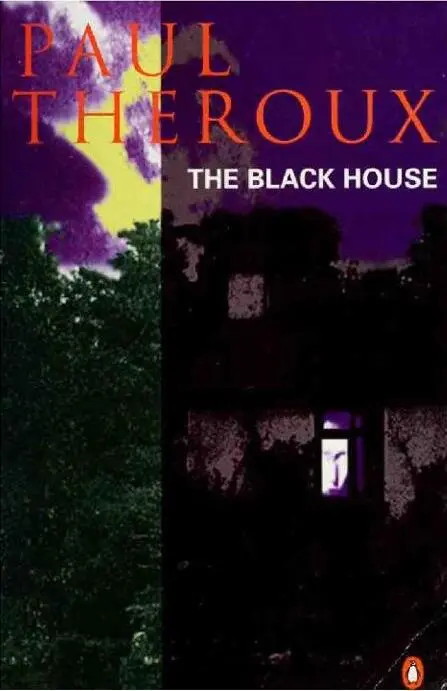
- Название:The Black House
- Автор:
- Издательство:Penguin Books
- Жанр:
- Год:1996
- ISBN:нет данных
- Рейтинг книги:4 / 5. Голосов: 1
-
Избранное:Добавить в избранное
- Отзывы:
-
Ваша оценка:
The Black House: краткое содержание, описание и аннотация
Предлагаем к чтению аннотацию, описание, краткое содержание или предисловие (зависит от того, что написал сам автор книги «The Black House»). Если вы не нашли необходимую информацию о книге — напишите в комментариях, мы постараемся отыскать её.
The Black House — читать онлайн бесплатно полную книгу (весь текст) целиком
Ниже представлен текст книги, разбитый по страницам. Система сохранения места последней прочитанной страницы, позволяет с удобством читать онлайн бесплатно книгу «The Black House», без необходимости каждый раз заново искать на чём Вы остановились. Поставьте закладку, и сможете в любой момент перейти на страницу, на которой закончили чтение.
Интервал:
Закладка:
Silvano’s hair was uncut, and Munday was sorry his self-consciousness had prevented him from welcoming the African on the platform. A mourner deserved better than to arrive at a country railway station and to find his own way to the exit. Munday had driven to the station and parked, and he stayed in the car until the other arriving passengers had been met and driven away—visiting friends with expensive luggage; weekending couples; the tall son rather formally introducing the smartly-dressed girl to his parents, pipe-clutching father, beaming mother; the yawning wife meeting her husband in her station wagon, two children in the back seat, kisses all around and the wife sliding over and letting the husband take the wheel. Then Silvano. And Munday was ashamed of himself when he saw the African, smaller than he remembered, and not black but gray—the gloss was gone from his face. He emerged awkwardly from the station exit after the other people, with a large suitcase and the long hair, looking worried and overwhelmed in the English setting.
Seeing Munday get out of the car, Silvano brightened and called out a Bwamba greeting, “M’okolel” Munday replied softly, “Bulunji,” and was glad there was no one around to hear him. He took the suitcase —it was surprisingly light—and offered his condolences.
“No one is dead,” said Silvano. “Everyone very fit —I got a letter just the other day.”
“But your hair—”
“Oh, that,” said Silvano, and he pushed at it with his hand. “Only the new style. London style, so to Cn,, »
“Of course,” said Munday. “Very fashionable.” He noticed that Silvano was wearing a new pin-striped blue suit, a maroon velvet tie and pink shirt, pointed shoes; Munday had never seen him in anything but gray drill shorts and molded plastic sandals.
In the car, passing through Mosterton, Silvano said, “So—grass on the roofs!” and Munday explained the thatch. Silvano said, further on, “Very narrow road,” and Munday replied, “It’s perfectly adequate. By the way, have you had your lunch?”
“Yes, on the train,” Silvano said. “Chicken-something.”
Munday saw him looking out the car window. They were driving along a stretch of road that ran for about half a mile between some hills and then opened on a prospect of the southeast, an uncluttered sweep of landscape, plowed fields and pastures. It was early afternoon and still sunny; the clouds were beginning to gather, rising against the sun, giving height to the sky and dramatizing the mottled fields. The visibility was good, and for miles Munday could see hills like overturned bowls, and forested hollows and severe hedges dividing the farmland. Past a man plowing, surrounded by flights of wheeling seagulls, layered shadings of green and tweedy winter brown marked the distances.
“Look at that,” said Munday. It was a vista of country so open and empty he wanted to stop the car and march directly across it and lose himself in that expanse.
“Cows,” said Silvano.
“Where?” asked Munday. Then he saw them, at the roadside, cropping grass.
Silvano settled back in the seat and lit a cigarette. He said, “I didn’t know there were so many cows in England.”
“They keep them to pay bride-price,” said Munday. “I had to give half a dozen to Emma’s father when I married her.”
“I think you’re playing, Doctor Alfred,” said Silvano.
“You’re too quick for me.”
“Postgraduate,” said Silvano, and held up his smoking cigarette to examine it.
“Actually, England’s still heavily agricultural,” said Munday. Silvano remained silent, and Munday felt all his old weariness return in the effort of making conversation with -an African, commenting on what was most obvious, spelling out the labored joke. Munday would have preferred to speak in the Bwamba language to mask his insincerity. Somehow, things sounded less trivial spoken in the local dialect. Munday spoke the language well, he used the idioms with ease. He had often said that he knew more about the Bwamba than the Bwamba themselves—it accounted, he thought, for his depressions and their unreasonable cheer.
“Is this your first time out of London?” asked Munday.
“First time,” said Silvano. “So much work to do— always writing and more writing.” Munday said, “Pressure of work.”
“Yes,” said Silvano. He added gravely, “And I have a girl friend.”
“Lucky fellow,” said Munday.
“Young men need to have girl friends,” said Silvano. “Otherwise!” His laughter was full of teeth and greed. Munday knew that Silvano was thirty-five years old; he had a wife who worked in his sizable garden; he supported a pair of aged relatives; he had a bicycle, a short :wave radio, and four children.
“Which reminds me,” said Munday. “How’s your wife?”
“Quite all right,” said Silvano. “Expecting number five.” He continued to smoke calmly. They were passing The Rose and Crown in Broadwindsor. Silvano said, “Are the pubs open?”
“They close early around here,” said Munday. “Two-thirty.”
“We have time for a pint,” said Silvano, looking at his watch. Munday saw that it was a new one. “I always have a pint at this time.”
“I never do,” said Munday.
“There was no beer on the train.”
“I really think we should be getting along,” said Munday as he accelerated past the pub. “Emma’s expecting us. Besides, there’s plenty to drink at the Black House.”
“The Black House,” said Silvano. “Is that a pub?”
“No, no,” said Munday, and he realized that he had spoken the name aloud for the first time. It was like an admission of his acceptance—he had said it quite naturally. “That’s what the locals call my house, don’t ask me why.”
“Interesting,” said Silvano.
Munday explained the English practice of naming houses, illustrating it with the signboards they passed, until, much to his annoyance, Silvano began to call each one out. Munday hoped he would stop, but he kept it up. “The Thistles,” he was saying, “Ladysmith, Aleppo, Bowood House.”
“We’ll let Emma open the door,” said Munday. “She likes the drama.”
“Ah, Silvano,” said Emma, opening the double doors one at a time. “So good to see you.” She had changed into her wool dress and wore a wooden Bwamba brooch, one of the ineptly carved curios they had started to make in the last years of Munday’s residence, to sell in the mission craft-shop.
“He’s eaten,” said Munday. He saw Mrs. Branch lingering at the scullery door, unable to suppress her look of astonishment at the black man chatting in the kitchen. “And this is Mrs. Branch.” She hesitated; in her nervousness she traced a water stain on the wall with her finger. Then she came forward in halting steps, twisting her hands. She said, “Pleased to meet you.” Silvano smiled and put his hand out, but Mrs.
Branch didn’t take it. She locked her fingers together and continued to stare.
“Won’t you have a coffee?” asked Emma.
“Doctor promised me a beer,” said Silvano. He laughed, trumpeting his hilarity with a wide-open mouth.
“So I did,” said Munday. “It’s too early for me, but have one yourself.”
“Let’s go into the other room,” said Emma. “Pauline’s made a fire. It’s lovely and warm.”
“I’ll fetch his case from the car,” said Munday. “Won’t be a minute.” He carried the suitcase upstairs to one of the larger bedrooms (Emma had put flowers in the vase, and a hot-water bottle and towel on the bed), and on an impulse he opened it. It was a large suitcase, heavy cardboard with two leather straps around its middle, the kind that was sold in Indian shops in Uganda. But it contained surprisingly few things—pajamas, a string vest, a sweater, a paperback with Nigger in the title, shaving equipment, several deodorants in aerosol cans (Body Mist, Ban, aftershave lotion). And a picture in a small metal frame. It was a slightly blurred photograph of a rather thin and not young English girl smiling sadly on a bench in a public park. There were thumbprints on the glass. Munday’s first emotion was embarrassment, then great rage at the foolishness of carrying such a picture. But he recognized his anger as unworthy and he returned the picture to the case feeling only pity for the girl, and pity for Emma, and against his will feeling a bit ridiculous himself, as if the glimpse of another man’s desire had devalued and exposed his own.
Читать дальшеИнтервал:
Закладка:
Похожие книги на «The Black House»
Представляем Вашему вниманию похожие книги на «The Black House» списком для выбора. Мы отобрали схожую по названию и смыслу литературу в надежде предоставить читателям больше вариантов отыскать новые, интересные, ещё непрочитанные произведения.






Обсуждение, отзывы о книге «The Black House» и просто собственные мнения читателей. Оставьте ваши комментарии, напишите, что Вы думаете о произведении, его смысле или главных героях. Укажите что конкретно понравилось, а что нет, и почему Вы так считаете.