Paul Theroux - The Black House
Здесь есть возможность читать онлайн «Paul Theroux - The Black House» весь текст электронной книги совершенно бесплатно (целиком полную версию без сокращений). В некоторых случаях можно слушать аудио, скачать через торрент в формате fb2 и присутствует краткое содержание. Год выпуска: 1996, Издательство: Penguin Books, Жанр: Современная проза, на английском языке. Описание произведения, (предисловие) а так же отзывы посетителей доступны на портале библиотеки ЛибКат.
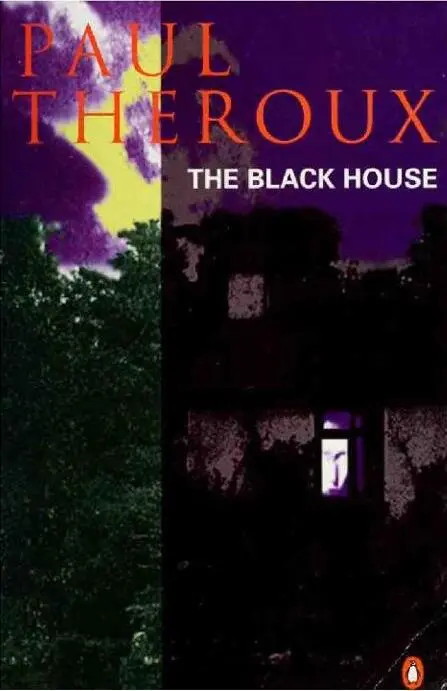
- Название:The Black House
- Автор:
- Издательство:Penguin Books
- Жанр:
- Год:1996
- ISBN:нет данных
- Рейтинг книги:4 / 5. Голосов: 1
-
Избранное:Добавить в избранное
- Отзывы:
-
Ваша оценка:
The Black House: краткое содержание, описание и аннотация
Предлагаем к чтению аннотацию, описание, краткое содержание или предисловие (зависит от того, что написал сам автор книги «The Black House»). Если вы не нашли необходимую информацию о книге — напишите в комментариях, мы постараемся отыскать её.
The Black House — читать онлайн бесплатно полную книгу (весь текст) целиком
Ниже представлен текст книги, разбитый по страницам. Система сохранения места последней прочитанной страницы, позволяет с удобством читать онлайн бесплатно книгу «The Black House», без необходимости каждый раз заново искать на чём Вы остановились. Поставьте закладку, и сможете в любой момент перейти на страницу, на которой закончили чтение.
Интервал:
Закладка:
He spent the rest of the morning in the living room, with his notebook in his lap, writing little, savoring the memory the room inspired in him. Mrs. Branch had cleaned (he had said to her, “Sorry about all those ashes”); she had started a meager fire of sticks and coal—she imposed her frugality everywhere in the house—and restored the room to its former dustiness. The sleeves of sunlight at the window were alive with swirling dust particles that had been hallowed by Caroline; and the few flat splashes of wax on the mantelshelf, seemingly so unimportant, recalled an important moment. The room was special, it held Caroline's presence, her whispers, the worn carpet bore the imprint of her knees; in Mrs. Branch's little fire was a fleeting odor of Caroline’s magnificent blaze, which lingered as well in sooty streaks on the mantletree—that was especially blackened, and looked as if it had contained an explosion.
Not a room, but a setting he understood, that had involved him and given him hope. The Black House was finally his, and it was Caroline’s doing: she knew the house, she had directed him there, and Emma sleeping through it upstairs had kept the act from being casual. It was deliberate. He refused to see it as betrayal. It was too bad that in being faithful to himself he had been unfaithful to Emma, but he consoled himself with the secrecy of it. He did not believe he had wronged her—she barely knew him and she could not know more without being hurt. So he was determined to protect her, the more so now because she needed his reassurance. He would never leave her, and he told himself that he had not lied to her: he dearly loved her—but in a way she kept it from completion, for she required his love, and she depended on him, but she gave him little for it. She had little to give; she was stricken with a kind of poverty and would fail without him.
But this poverty in Emma, demanding his attention, had diminished his respect for her, and the boldness he saw in Caroline, the skeletal brightness in her hair and bones, cornered him, challenged his heart and gave him a feeling of triumph. It would be brief—that was the worst of sex; but he was under a sentence of death: he deserved and needed that adventure. It had led him to an understanding of Emma, whose doom was to live famished; it had also turned him to examine his body. He had begun to despise his heart as a failure, but now he valued it and looked at it with wonderment and a renewed affection. It was a narcissism he did not think was possible in a man his age; but then, he was not old. He had had a second chance. He had enjoyed another woman and was not sorry. With luck he would repeat it; it was not unusual, many people did the same.
The work he had set for himself, so long delayed, began to interest him, and during the days that followed he wrote with purpose, giving every word a meticulous dedication—as if he were being admiringly watched—filling his notebook with observations about the Bwamba. He had been returned to himself, and he was amazed at his resolve. He loved the Black House now, and in his study, using his new patience, he was able to recall particular details of Africa he had earlier thought had been lost to him. He recovered them and saw their value, which was his value as an anthropologist. He had regained his will; his new serenity allowed him the perspective to see the stages of his African experience, how he had grown and changed beside the people he had studied, who were themselves changeless. He wrote with surprise and pleasure of how he had gone to that remote place behind the mountains and set up house and endured suspicion and the discomforts of the equatorial climate in order to witness the daily life of a people whose past and present were indistinguishable, who had confided in him their deepest secrets, which were heart-breaking, and who stank of witchcraft. Like them, he had cut himself off—gladly at first, then with misgivings. And though there had been times among them when he had despairingly seen himself as no different from them, existing in the season-less monotony of swamp and savannah, now on the notebook pages they appeared like little creatures from prehistory, fixed like fossils, with simple habits —using the technology of child campers—and uttering inconsequential threats with a murderous charm. He was so different! The ten years flashed in his mind; he saw the Bwamba from a great height, like a man in a meadow who kicks over a stone and looks down at the mass of wood-lice on the underside scurrying for cover.
He wrote, marveling at how many features of Africa lived within him, appearing at his command from a tangle in a distant precinct of his mind. He made notes on ideas to pursue: on the rarefied atmosphere of isolation and its effect on memory; on the queer crippling delusions he had had to overcome —one had stayed with him for days, a belief that everything that lay outside the camp had been destroyed (it was during the April rains, the road was closed, and it had taken a great effort of will for him to stir outside and find it untrue)—or another, more reasonable fear, that having stayed away so long he had been forgotten by everyone in England who had ever known him.
One day at the end of the first week in January, Munday entered the kitchen for lunch and found a letter propped against his water tumbler. Anxiously he picked it up and turned it over. It had not been opened. Still, his heart raced, as if the simple lifting of the letter had caused him an exertion.
“It came this morning,” said Emma, putting a dish on the table. “I didn’t want to disturb you.” She uncovered the dish. “Do you mind having shepherd’s pie again?”
“Not at all,” said Munday abstractedly. He slit the envelope and held the letter to the window. It was written in spotty failing ballpoint, large regular script on ruled paper from an airmail pad. But it was not from Caroline. He took the message in at once, Forgive my delay, down to the cramped overpracticed signature.
“Surprise, surprise,” he said.
“Who’s it from?”
“Silvano,” said Munday, seating himself at the table and shaking out his napkin. “Seems he’s decided to pay us a visit.”
“But you invited him,” said Emma.
“So he says. I honestly can’t remember.”
“Weeks ago,” said Emma.
Munday folded the frail paper and ran his fingers down the crease. “I wish he’d chosen some other time to write. I’m so busy at the moment.” He opened the paper again and said, “Here, listen, ‘owing to pressure of work I have neglected to reply.’ Pressure of work!”
“Are you going to put him off?”
“No, I suppose the only thing to do is get it over with,” said Munday. “I’ll ask him for next weekend.”
“Strange,” said Emma. “I didn’t think I’d ever want to see another African again as long as I lived. But I feel so starved for company here. It’s like being back in the bush—this feeling I’m standing still in a wretched backwater, and everything’s out of reach.”
“What an extraordinary thing to say,” said Munday.
“You know what I mean. A dead end. You feel it too, don’t deny it.”
“I feel nothing of the kind.”
“Then you’re lucky,” said Emma. ‘Tm quite looking forward to seeing Silvano. He was a nice boy. What did you say he’s doing in London?”
“What they always do,” said Munday. “Economics, political science, moral philosophy. Should be very useful when he goes back to the Inturi Forest—they’re crying out for people like that in Bundibugyo.” Munday made a scoffing snort, then said, “Ah, shepherd’s pie, my favorite.”
“You said you didn’t mind.”
“But twice in one week, Emma!”
“It was all I had time for,” said Emma. “I was doing housework—Pauline left to go shopping. It’s early-closing today.”
Читать дальшеИнтервал:
Закладка:
Похожие книги на «The Black House»
Представляем Вашему вниманию похожие книги на «The Black House» списком для выбора. Мы отобрали схожую по названию и смыслу литературу в надежде предоставить читателям больше вариантов отыскать новые, интересные, ещё непрочитанные произведения.











Обсуждение, отзывы о книге «The Black House» и просто собственные мнения читателей. Оставьте ваши комментарии, напишите, что Вы думаете о произведении, его смысле или главных героях. Укажите что конкретно понравилось, а что нет, и почему Вы так считаете.