Paul Theroux - The Black House
Здесь есть возможность читать онлайн «Paul Theroux - The Black House» весь текст электронной книги совершенно бесплатно (целиком полную версию без сокращений). В некоторых случаях можно слушать аудио, скачать через торрент в формате fb2 и присутствует краткое содержание. Год выпуска: 1996, Издательство: Penguin Books, Жанр: Современная проза, на английском языке. Описание произведения, (предисловие) а так же отзывы посетителей доступны на портале библиотеки ЛибКат.
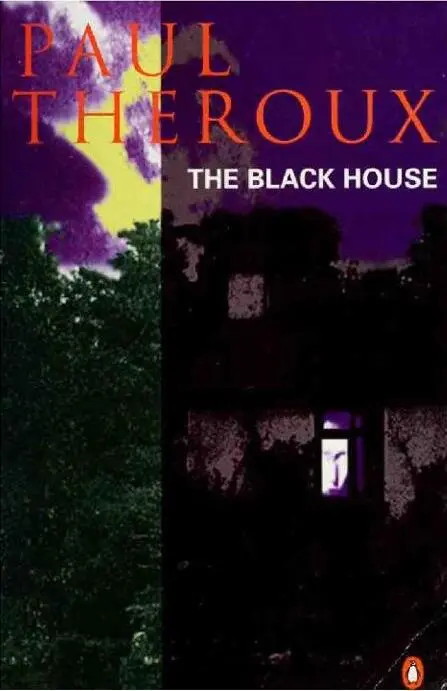
- Название:The Black House
- Автор:
- Издательство:Penguin Books
- Жанр:
- Год:1996
- ISBN:нет данных
- Рейтинг книги:4 / 5. Голосов: 1
-
Избранное:Добавить в избранное
- Отзывы:
-
Ваша оценка:
The Black House: краткое содержание, описание и аннотация
Предлагаем к чтению аннотацию, описание, краткое содержание или предисловие (зависит от того, что написал сам автор книги «The Black House»). Если вы не нашли необходимую информацию о книге — напишите в комментариях, мы постараемся отыскать её.
The Black House — читать онлайн бесплатно полную книгу (весь текст) целиком
Ниже представлен текст книги, разбитый по страницам. Система сохранения места последней прочитанной страницы, позволяет с удобством читать онлайн бесплатно книгу «The Black House», без необходимости каждый раз заново искать на чём Вы остановились. Поставьте закладку, и сможете в любой момент перейти на страницу, на которой закончили чтение.
Интервал:
Закладка:
“I think it’s ill-advised to smoke in bed.”
Later, she had wanted to know what African girls were like in bed. Munday said, “Fairly straightforward, one would guess—I don’t really know. I’ve never had one.”
She said, “You’re lying. Martin’s always screwing them.”
“I’m not Martin, thank God.”
“Are you trying to get at me?”
He had made love to Claudia on three occasions; the first time it was her desire, the second his curiosity, the third time routine—the unchanged circumstances of time and place made it so—and that last time was disappointing for both of them, though only she said it. Those nights returned to him now with horrible clarity: how she had stubbed out her cigarette and then rolled onto her back and lifted and spread her legs, holding her buttocks up with the hands, waiting with a kind of anonymous patience for him to enter her. And he had thought: it was this that troubled women most, it gave them fear, the position that made them most vulnerable, the lifted cunt opened and exposed like a smarting valve the slightest force could injure. Pity killed his desire, but he knew that any hesitation on his part would have ridiculed her surrender. “No, don’t stop,” she had said when he finished, and she had reached down and held him inside her and chafed his penis against her with her hand, finally dropping it and crying out—the cry that reached Alice. “Never mind her,” Claudia had said, but she had changed the bottom sheet so the houseboy wouldn’t see the stain. The next time she didn’t stub out her cigarette, but rested it in the ashtray next to the bed, as if she would return to it shortly. It was a rebuke Munday turned into a challenge, and he had made love to her until the cigarette had burned to ashes.
Ten minutes passed like this. The rain was hitting the car with force now. He was sure Caroline wasn’t coming, and he prepared to leave, but slowly, hoping that in his delay she would appear. The road was dark, there was only the rain and wind; his face was against the glass-and he was peering down the road when the offside door opened. Caroline got in—the overhead light had gone on and off, but he saw only her hands and a wet unfamiliar coat.
“I thought you weren’t coming,” he said.
“I’m glad you waited,” she said. “I was parking my car.”
“It’s windy up here.”
She did not reply to that. She said, “Back up and drive a little further on. But don’t go too fast or you’ll miss the turning.”
He reversed and started slowly down the road, commenting on the rain and the fogged windows. But she said nothing, and it seemed wonderful to him that so little had been spoken and yet they knew so much: they carried directions within them, the wordless sex-wish beneath fixed circuits of hinting talk. Caroline leaned forward and wiped at the window. She said, “There, turn left.”
Munday swung the wheel and they descended a steep curving lane, wetter than the other road had been, and in parts awash with streams of water spilling from the bank, and rivulets that drained from the road they had left. This water coursed over stones by the roadside and cleaned them bone-white, and the falling rain gave motion to the loose briars that hung in bunches at the top of the partially eroded banks.
The storm was more intense in this valley, which seemed at times a flooding cavern riotous with wind.
They traveled on the lane for some minutes, came to a junction and, at Caroline’s word, turned again into a straighter lane; narrowing, the lane led downward. Their slow speed made it hard for Munday to judge how far they had gone; he knew they were in Marshwood Vale, but he had lost his bearings—they might be going in circles, they might easily have been in Bwamba, at night on the forest road in a cold April downpour. It was an unusual feeling, for the size of the lanes and their continuous winding, promising arrival at every curve, suggested to Munday progress through the layout of a gigantic game, crisscrossed with routes. They were players, bluffing their way along, and there was a hopeless comedy in making so many turns. The lanes were walled with earthen banks, from which in places clods had fallen and broken in the road, and just a car’s width, the lane passages were deep square grooves cut in the valley slope. The car splashed round another bend, the engine surging and Caroline spoke up: “Look, a badger.”
The creature was caught in the headlights, amid shooting white flecks of rain. Munday slowed the car. The pinched black and white head faced them, the bright eyes flashed, and then it was off, bounding away from the car. Munday picked up speed but stayed well behind the animal, and as if being chased, it leaped onto the bank, sniffing for refuge. Then it blundered down and scrambled to the opposite bank, keeping ahead of the car. Munday continued on, fascinated by the sleek dark thing darting from bank to bank, nosing for a burrow and finally shooting straight along the roadside for some distance, pursued by the moving lights, running in a low glide, its head down, its damp tail switching.
“He’s scared, poor thing,” said Caroline. “Your lights are blinding him.”
Munday flicked off the headlights and stopped the car. They were in complete darkness: the rain was loud, drumming on the roof. Munday said, “We’ll give him a chance,” and pulled off one glove and reached for Caroline’s thigh. He fumbled under her coat and felt her dress, warmed by her leg, and then a pouch of softness he pushed with his excited hand. She parted her legs and helped with her hips, and his hand found the satin-covered jowls of her cunt At once he was aroused; and the dark, the rain, the road, the badger in flight only provoked a greater fury in him. But she said gentiy, “No,” and she stretched out her arm, reached forward, not so much directing him as seeming to grasp for something that remained invisible to him.
Munday turned on the headlights and the badger’s lighted eyes appeared up the road, beyond her hand. The badger had stopped when they had, and for the moment after the lights were switched on it held its look of curiosity on its striped face. It began again to run, and after twenty feet frisked wildly at the bank. Caroline said, “They kill them.”
As she spoke the badger flung itself up the wet gleaming bank and slid into an opening at the top, disappearing through a tangle of brambles.
She said, “They eat their haunches.”
Concentrating on the badger’s flight and distracted by his touching Caroline (it seemed a swift and crazy memory already—had he done it?—he wore only his left glove), Munday had not noticed that the car was climbing. He crossed a stone bridge; he changed gears and the car labored up a grade. They made their way upward now, along a curving lane, the rain falling in bright beaded screens, slanting against their headlights, passed into the road.
“Don’t tell me you walked all this way.”
“I’m not taking you to my house,” she said.
The sentence captivated him and made that circuitous passage through the wet lanes of the valley an extraordinary event: he was lost, she was showing him the way, directing him through a landscape she knew. The route was hers, a surprise, the suspense her doing; he was in her hands.
The road widened and led to another, even wider; there was a cottage, its front door flush with the roadside, and further on a new turning, The Yew Tree’s hanging sign with its motto on a painted pennant, Be Bold—Be Wyse, the lighted telephone booth, the pillar box, the long row of massive oaks, the bend in the road where he had once panicked— now he drove slowly—the telephone pole, and at last a thick rose-bush beating against a fence. Munday parked. He said, “No—not here.”
Читать дальшеИнтервал:
Закладка:
Похожие книги на «The Black House»
Представляем Вашему вниманию похожие книги на «The Black House» списком для выбора. Мы отобрали схожую по названию и смыслу литературу в надежде предоставить читателям больше вариантов отыскать новые, интересные, ещё непрочитанные произведения.





Обсуждение, отзывы о книге «The Black House» и просто собственные мнения читателей. Оставьте ваши комментарии, напишите, что Вы думаете о произведении, его смысле или главных героях. Укажите что конкретно понравилось, а что нет, и почему Вы так считаете.