Paul Theroux - The Black House
Здесь есть возможность читать онлайн «Paul Theroux - The Black House» весь текст электронной книги совершенно бесплатно (целиком полную версию без сокращений). В некоторых случаях можно слушать аудио, скачать через торрент в формате fb2 и присутствует краткое содержание. Год выпуска: 1996, Издательство: Penguin Books, Жанр: Современная проза, на английском языке. Описание произведения, (предисловие) а так же отзывы посетителей доступны на портале библиотеки ЛибКат.
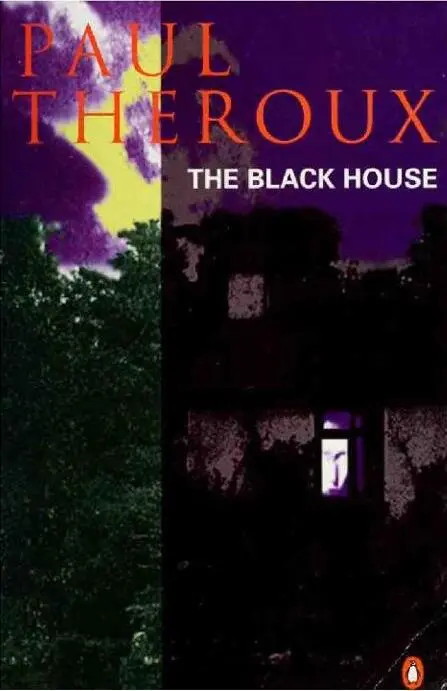
- Название:The Black House
- Автор:
- Издательство:Penguin Books
- Жанр:
- Год:1996
- ISBN:нет данных
- Рейтинг книги:4 / 5. Голосов: 1
-
Избранное:Добавить в избранное
- Отзывы:
-
Ваша оценка:
The Black House: краткое содержание, описание и аннотация
Предлагаем к чтению аннотацию, описание, краткое содержание или предисловие (зависит от того, что написал сам автор книги «The Black House»). Если вы не нашли необходимую информацию о книге — напишите в комментариях, мы постараемся отыскать её.
The Black House — читать онлайн бесплатно полную книгу (весь текст) целиком
Ниже представлен текст книги, разбитый по страницам. Система сохранения места последней прочитанной страницы, позволяет с удобством читать онлайн бесплатно книгу «The Black House», без необходимости каждый раз заново искать на чём Вы остановились. Поставьте закладку, и сможете в любой момент перейти на страницу, на которой закончили чтение.
Интервал:
Закладка:
Munday, the only one at the table still eating, gestured with his knife and fork. “Please eat,” he said, chewing. “She’ll be fine.”
“I’m worried about her,” said Anne.
“Good God,” said Munday, “you talk as if she’s fading away! Emma has survived Africa, and I assure you she’ll survive Four Ashes. She’s really very fit.” But the large paneled room and the hushed listeners gave his overloud denying voice a ring of falsity.
Caroline said, “I’m sure Doctor Munday is right.”
So they resumed, but Emma’s absence made the rest of the meal somber. Anxious, they ate quickly and to the scrape of the knives and forks on the plates they addressed each other inconsequentially, with a whispered respect. From time to time Awdry said, “More wine?” but only Munday accepted it, as if the others thought it unseemly to drink with Emma unwell in the next room. Munday went on eating, but his appetite left him. The rest made a show of dining. The strain was evident. Emma’s absence, so sudden, was an intensification of her presence, which was felt more strongly two rooms away than it had been when she was seated with them at the table. Her chair was empty, she was missing, and their excessively tactful avoidance of commenting on this was like a continual mention of her.
After the dessert of strawberries and clotted cream, which they ate as solemnly as mourners—not cheered by the vicar’s wife saying too clearly “These are awfully good,” inspiring several uncertain responses which diminished down the table, from “Yes, they are” to a grunt of agreement from Jerry Duddle— Mr. Awdry pressed his napkin to his mouth, scraped his chair backward, and said, “Shall we have our coffee in the lounge?” Emma sat on the sofa with a brave half-smile of pain on her face. There was a copy of The Field on her lap; her hands were on the cover, smoothing it. She looked up slowly as the guests entered the room, and Munday at the head of the procession said brusquely, as he might have to a student with a medical excuse, “How are you feeling now?” She shook her head. “I think you’d better take me home.”
“Emma, do you really—”
“Have an early night,” said Awdry. “Do you a world of good.”
“I’m very sorry,” said Emma. “I feel I’ve spoiled your lovely party.”
“Don’t be silly,” said Mrs. Awdry. “I only wish there was something we could do.”
“You’ve been most kind,” said Emma. “Perhaps Alfred could drop me and then come back.”
“Not if you’re sick,” said Munday.
“Do what you think best,” said Awdry, and he helped Emma on with her coat as Janet Strick, squinting in sisterly commiseration, said, “I know just how you feel.” Driving back in the car Emma was silent. Munday said, “There were no paintings on the library ceiling. Branch had that all wrong. Typical! And I saw the gold bell on the table. It was brass.” He pulled up at the Black House and said, “Do you want me to stay?”
“Not if you don’t want to.”
“So you’re leaving it up to me.”
“You’d only be keeping me company,” said Emma. “I think I’ll go straight to bed.”
“Awdry’s right. It’ll do you good.”
Emma opened the car door and said, “Isn’t it odd. For the first time in ages I’m not afraid to go into this house. I know it’s perfectly empty and secure. She’s not here—she’s there.”
“Don’t talk such nonsense,” Munday said.
“I thought I was going mad that day in the garden —imagining things,” said Emma. “Now I know I’m perfectly sane. I did see her.” Emma’s voice was assured, but in the car’s overhead light, a yellow lozenge of plastic, the illness dimming her face made her look complacent. Munday could raise little sympathy for her. Her insisting on being taken home was devious, a withdrawal from the challenge she saw in Caroline. He was ashamed of her. She had no life but his life, no friends aside from those he had made. She had pretended her sickness to chasten him, but her apologies only made him embarrassed for her. She was a part of him, but the weakest part, and he saw that without her he might have succeeded. There was still time for him; she had little claim upon him. Her weakness obliged him to be attentive, but he understood: what she feared he desired, and what had confused him before was that her fear had obsessed her in the same way as his desire. But she had deprived him of his pleasure. It had always been that way, from their first day at the Yellow Fever Camp, when the heat and the musky smells had possessed him physically, and the lushness had made him gasp even after the people themselves had lost all interest—to their arrival at the Black House, where she had been the first to name what they had both seen. She had called it fear, and so he had. But it was not fear at all.
She said, “I know you want to go back.”
“Would you rather I stayed?”
“I’m fine now,” she said. “I’m safe. Please go.”
Emma pressed his hand and got out of the car, and Munday felt that she understood how, in leaving her in the last hour of the year, the parting was crucial; and in saying what she did, she had to accept a share of the responsibility for his going. That touched him, and driving back to the party he felt a tenderness for Emma that he had never known before, as if she was his sad jilted sister, whom he might console but never rescue from her disappointment.
He returned to what seemed a different party. The guests’ mood had changed—the men were talking loudly, some angrily, and he heard bursts of bitter laughter. He saw Caroline but she was the only one who did not look up at him when he entered the room. “Ah, he’s come back,” one of the younger men said. The men were seated, hunched forward on the edge of their chairs with brandy snifters. They went on competing with successive interruptions. The women, holding coffee cups, were in more relaxed attitudes, watching closely but offering little to the discussion. Munday saw it as the conventional after-dinner posture of men and their wives, arranged like contestants and spectators. He heard, “—trouble is, we’re too nice to the Irish.”
“Help yourself to a drink,” said Awdry, who was nearest the fireplace. He lit and relit his pipe, and puffing, used the burnt match to make his point. He concluded his argument by tossing the match into the fire.
Munday’s glass of port had the texture of silk. And he had taken one of Awdry’s cigars; he stood magisterially, just behind the sofa, sucking at the cigar and turning it in his mouth. He heard Anne say to Caroline, “—told me the thing about people nowadays is they never touch each other. Here we are in a permissive age and we don’t even touch! Well, I told him I agreed with him and’that it was really very sad—and I thought so, too. It is terrible, I suppose. But I couldn’t help feeling he was spying that because he wanted to touch me ” He turned to the men’s argument and tried to follow it. Michael Strick was saying, “I know one thing, the Russians wouldn’t handle it this way.” He nodded and sipped at his brandy. “They’d go in there with tanks—that’s the way to do it.”
“I’ll tell you how they could have done this and saved themselves a lot of trouble,” said Jerry. “Internment was a mistake. They know who they want. They have a list of known IRA men. It’s simple. You just wake ’em up at night and bash ’em. By that I mean, kill ’em.”
“It may come to that yet,” said Awdry, and flipped a dead match into the fire.
“But that’s cold-blooded murder,” said Anne, who was clearly shocked. Now she sat forward. She looked to the others for a reaction.
“What is it when they kill one of our young men?” said Michael. “That’s murder too.”
Читать дальшеИнтервал:
Закладка:
Похожие книги на «The Black House»
Представляем Вашему вниманию похожие книги на «The Black House» списком для выбора. Мы отобрали схожую по названию и смыслу литературу в надежде предоставить читателям больше вариантов отыскать новые, интересные, ещё непрочитанные произведения.









Обсуждение, отзывы о книге «The Black House» и просто собственные мнения читателей. Оставьте ваши комментарии, напишите, что Вы думаете о произведении, его смысле или главных героях. Укажите что конкретно понравилось, а что нет, и почему Вы так считаете.