Paul Theroux - The Black House
Здесь есть возможность читать онлайн «Paul Theroux - The Black House» весь текст электронной книги совершенно бесплатно (целиком полную версию без сокращений). В некоторых случаях можно слушать аудио, скачать через торрент в формате fb2 и присутствует краткое содержание. Год выпуска: 1996, Издательство: Penguin Books, Жанр: Современная проза, на английском языке. Описание произведения, (предисловие) а так же отзывы посетителей доступны на портале библиотеки ЛибКат.
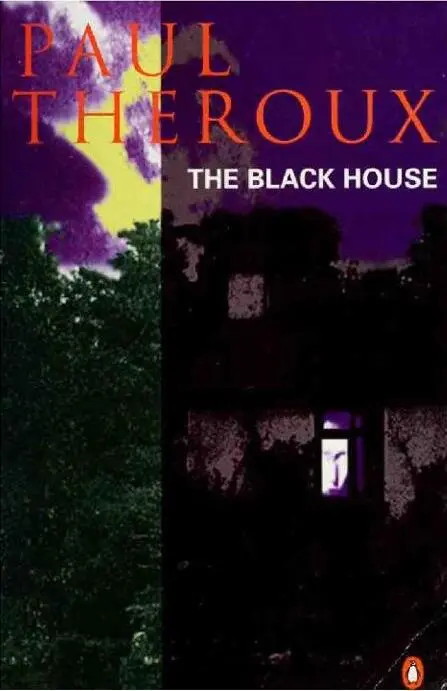
- Название:The Black House
- Автор:
- Издательство:Penguin Books
- Жанр:
- Год:1996
- ISBN:нет данных
- Рейтинг книги:4 / 5. Голосов: 1
-
Избранное:Добавить в избранное
- Отзывы:
-
Ваша оценка:
The Black House: краткое содержание, описание и аннотация
Предлагаем к чтению аннотацию, описание, краткое содержание или предисловие (зависит от того, что написал сам автор книги «The Black House»). Если вы не нашли необходимую информацию о книге — напишите в комментариях, мы постараемся отыскать её.
The Black House — читать онлайн бесплатно полную книгу (весь текст) целиком
Ниже представлен текст книги, разбитый по страницам. Система сохранения места последней прочитанной страницы, позволяет с удобством читать онлайн бесплатно книгу «The Black House», без необходимости каждый раз заново искать на чём Вы остановились. Поставьте закладку, и сможете в любой момент перейти на страницу, на которой закончили чтение.
Интервал:
Закладка:
“Jerry said we should shoot them in their beds,” said Janet. “Do you agree with that?”
“Please,” said the vicar. “You’re upsetting my wife.”
“I’m sorry,” said Michael, shaking his head, “but I’ve got no time for the Irish.” Caroline looked from one face to another. She said, “I think it’s disgraceful the way you’re talking.” Janet turned to Munday. “I suppose you were following this Northern Ireland business when you were in Africa.”
“Not really,” said Munday. “But I wouldn’t be foolish enough to take sides, as some of you are doing, when every side is so barbarous.”
“W rhat would you do?” asked Anne.
“Disarm them, isolate them, and leave them to themselves,” said Munday. “Just as I would any minority tribe that became dangerous. I certainly wouldn’t expect to convert them.”
“I know what I’d do with them,” said Michael.
“They need you to say that,” said Munday, aiming his cigar at the young man. “They need that contempt—it justifies them, and the British army legitimizes their quarrel. They want attention—you see, I believe they like being photographed throwing stones and marching and holding press conferences. They’re performing and they need witnesses badly, because without witnesses you have no spectacle.”
“What you’re actually saying, Munday, is that if we ignore them they’ll stop their fighting,” said Awdry.
“They’d go on fighting in a small way, as they’ve always done,” said Munday. “They wouldn’t do much damage. What none of you seems to realize is that they enjoy it. This squabbling has a social value for them—it gives purpose and shape to their lives. Murder is traditional in a culture of violence, which theirs certainly is. And I suppose you could say headhunting is an aspect of their religion. Religion makes more warriors than politics—God’s a great recruiting officer.” He paused and drew on his cigar. “But as I say, I don’t know very much about it.”
“It doesn’t sound that way,” said Awdry.
“You should talk to Emma,” said Munday. “She’s well up on it.”
“Oh?” Anne inquired. “And does she have a personal interest in it?”
“Well, she has family there, you see,” said Munday, and he smoked and watched their faces register shame, the ungainly muteness that had fallen like a curse on Alec’s cronies when in full cry against Africans they remembered his mistress was black. Before they could become conciliatory, Munday said, “It will be midnight soon.” The guests looked sheepishly at their watches.
“Has everyone got a drink?” asked Awdry.
The empty glasses were filled. They sat in silence, waiting for the hour to strike. Just before midnight, Anne said, “I loathe New Year’s Eve. You look over the past year and you can’t remember a blessed thing that matters.” Awdry rose, and with his back to the fire he said, “I’m not going to bore you with a speech. I just want to say how pleased I am that you’re here tonight, and may I wish you all a happy and prosperous New Year.” He lowered his head and began to sing “Auld Lang Syne.” The others stood up and joined in the song. When it was over Awdry said, “Listen.” Church bells were pealing at the windows, faintly, but the unusual sounds at that hour of the night captured their attention; the muted clangs had no rhythm, they continuously rose and fell, in an irregular tolling, one tone drowning another. Awdry walked through the guests to the front door and threw it open. The bells were louder now and resonant, pealing at various distances in the darkness, their clappers striking like hammers against an anvil.
“I can hear St. Alban’s,” said the vicar. “And there, that tinkling, that’s All Saints.” They rang and rang in different voices, dismay, joy, male and female, coming together and then chiming separately, descending and growing more rapid, and after a few moments competing, like bell buoys in a storm on a dangerous shore, signaling alarm with despairing insistence.
“It’s a beautiful sound,” said Caroline.
Munday walked away from the others, into the drive, then onto the lawn behind the boxwood hedge. The night was cold, but the chill, after that hot brightly-lit room, composed him. The guests’ voices echoed, traveling to him from the very end of the garden where there was only darkness. Gray and black tissues of clouds hung in the sky above the high branches of bare trees, which stood out clearly. Here and there in the tangle of trees he saw the dark slanting shapes of firs. He walked to a white fountain which materialized in the garden as he studied the darkness. He touched the cold marble. Details came slowly to his eye, nest-clusters in some trees and others heavily bundled with ivy, the bulges reaching to the upper branches; he saw nothing hostile in these densely wrapped trees. As he watched, the church bells diminished in volume and number, and those that remained were like lonely voices sounding distantly in different parts of a nearly deserted land, calling out to all those still trees. Then they ceased altogether. But the silence and the darkness he had imagined hunting him at the Black House no longer frightened him. He welcomed and celebrated it as more subtle than jungle. There was no terror in the dark garden, only an inviting shadow, the vague unfinished shapes of hedge, the suggestions of pathways in the blur of lawn, and the dark so dark it had motion.
“In the summer this garden is full of flowers.” Caroline’s voice was just behind him. But he did not turn.
“I prefer it this way,” said Munday. “The dark. Look, that shroud or hood there. In the daylight it’s probably something terribly ordinary.”
“You must be very lonely to say that”
“No,” he said, “I just like things that can’t be photographed.”
“That’s an odd statement from a scientist.”
“I'm not a scientist,” he said. He turned to her and said, “Why did you ask me at the lecture if I ever got depressed?” .
She said, “Why did you remember that?” She was beside him now, and she spoke again with a suddenness that jerked at his heart, “Do you know Pilsdon Pen?”
“That hill outside Broadwindsor?”
“Right,” she said. “It’s not far from here. It’s a sharp left, just as you enter the square. The road to Birdsmoor Gate goes around the hill, but quite high. It’s a beauty spot, so there’s a small parking lot for the view.”
“I’ve driven past it,” said Munday.
Caroline glanced behind her and then at Munday, and he saw her teeth when she said quickly, “Meet me there in half an hour.” She left him and walked towards the doorway where the others were still standing under the bright carriage-lamp. He heard her call out in a new voice, “Doctor Munday’s been showing me the Dog Star!” So all the moves were hers; but it excited him to hear her conceal them—that disguise was proof of her sincerity. Munday looked at his watch and then followed her across the vapor that lay on the grass.
13
It was a high windy spot, on the crest of a hill, with room for a dozen cars, and it was empty. Though Caroline had left the party before he did, and Munday was delayed for what seemed to him a long while at the door by Awdry urging him to explain what he meant by his letter to The Times (Awdry knew the letter by heart and kept repeating, “But why misfits?”), she was not at the parking lot when he arrived. A light rain began to fall, making a pattering like sand grains on the car roof; the sound of the rain isolated him and made him think she wouldn’t show up.
Past the gorse bushes, shaking stiffly at the front of the car, was the valley, some lighted windows which were only pinpricks, and a glow at the horizon, the yellow flare of Bridport. He saw through the dribbling side window an arrow-shaped sign lettered To Trail. He sat in the car with his gloves on wondering if he was being made a fool of: he was not used to acting with such haste. He knew the risk, but it would be far worse if she didn’t meet him. The wind sucked at the windows—he wanted relief. But the moments of his suspense, instead of provoking in him calm, only recalled similar suspense in Africa, Claudia’s eye orbiting his unease, her saying in a tone her clumsiness vulgarized into a threat, “Why don’t you ever come over and see me when you’re in town?” The first night at her house while he was talking she had got up from the sofa and left the room, just like that, and called to him. He found her naked, smoking in bed: “Are you very shocked?”
Читать дальшеИнтервал:
Закладка:
Похожие книги на «The Black House»
Представляем Вашему вниманию похожие книги на «The Black House» списком для выбора. Мы отобрали схожую по названию и смыслу литературу в надежде предоставить читателям больше вариантов отыскать новые, интересные, ещё непрочитанные произведения.






Обсуждение, отзывы о книге «The Black House» и просто собственные мнения читателей. Оставьте ваши комментарии, напишите, что Вы думаете о произведении, его смысле или главных героях. Укажите что конкретно понравилось, а что нет, и почему Вы так считаете.