Paul Theroux - The Black House
Здесь есть возможность читать онлайн «Paul Theroux - The Black House» весь текст электронной книги совершенно бесплатно (целиком полную версию без сокращений). В некоторых случаях можно слушать аудио, скачать через торрент в формате fb2 и присутствует краткое содержание. Год выпуска: 1996, Издательство: Penguin Books, Жанр: Современная проза, на английском языке. Описание произведения, (предисловие) а так же отзывы посетителей доступны на портале библиотеки ЛибКат.
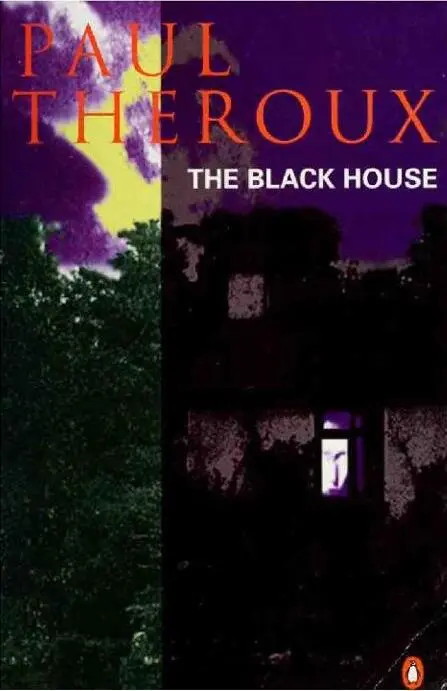
- Название:The Black House
- Автор:
- Издательство:Penguin Books
- Жанр:
- Год:1996
- ISBN:нет данных
- Рейтинг книги:4 / 5. Голосов: 1
-
Избранное:Добавить в избранное
- Отзывы:
-
Ваша оценка:
The Black House: краткое содержание, описание и аннотация
Предлагаем к чтению аннотацию, описание, краткое содержание или предисловие (зависит от того, что написал сам автор книги «The Black House»). Если вы не нашли необходимую информацию о книге — напишите в комментариях, мы постараемся отыскать её.
The Black House — читать онлайн бесплатно полную книгу (весь текст) целиком
Ниже представлен текст книги, разбитый по страницам. Система сохранения места последней прочитанной страницы, позволяет с удобством читать онлайн бесплатно книгу «The Black House», без необходимости каждый раз заново искать на чём Вы остановились. Поставьте закладку, и сможете в любой момент перейти на страницу, на которой закончили чтение.
Интервал:
Закладка:
Finally, he released her and turned her over. But she became active and crouched beside him; she put one arm around his back and bent and took his penis in her mouth. She drew on it and fondled it beneath with her hand. He felt heat mounting in his loins and a tightening in the cords of his groin that made him tremble. He tried to push her head away, but the gesture warned her. She became excited and held him in her mouth with even more determination. Her eyes were wide open; she did not close them until Munday gripped her hair in both his hands, and he heard his own roaring voice reaching him from the flame-lit ceiling as he drained into her skull.
He woke after that; she was above him, still naked, putting a log on the fire, and beyond her on the wall, he saw the dead and disfigured candle stumps, homed, with long strings of stiff wax hanging from the holders. There was a blanket wrapped around him and he felt the fire’s warmth on his legs. At the base of the fire was a shimmering bed of hot coals, dark waves of chevrons floating across the purest red.
“They’re killing each other again in Belfast,” he said.
“What’s that?”
He looked at her and yawned. “You'd better wrap up. You’ll get a chill. That chair,” he said, “it’s got to be fixed.”
She was still feeding the fire, throwing the last sticks into it. She said, “Ireland is so green.”
“But even Africa is green,” he said sleepily. “And England, too . . . from here to the farthest . . . end of the world—” He dropped his head and dozed; he was talking in his sleep. The fire lit his dreams, which were of swamp and pathless jungle and a molten sun erupting at dawn and black shaven-headed girls in loinclothes tending plants like green fountains. The clumsy winged birds were there, and the papyrus; he recognized them, not from Africa, but from his other dreams. When he woke again he was shivering with cold, the fire was nearly out. The room was reduced to the small patch of flickering carpet before the fireplace, where he lay sprawled. The candleholders were empty, the chair righted, and she was gone.
14
Over breakfast he almost told Emma what had happened the previous night in the living room. Emma was joylessly buttering toast and talking about her sick feeling, repeating her apology for having left the party early—and, in exaggerating the offense, seeming to cherish the pathetic image of herself as wayward and unreliable: “They must think I’m awful,” she said. “Did they seem cross? I wouldn’t blame them if they were. It was unforgivable. But really, Alfred, you’ve no idea how I felt.”
And Munday was going to blurt out, “Listen to me! I met Caroline afterward. I took her here and locked you in the bedroom. We were downstairs and we—”
What? His memory stammered at the reply. He had the will to confess but he lacked the words. What he remembered were incomplete and oddly-lit features, like the broken images he had once got after turning over his car on an African road, the wrecked dazzle of his own arms and legs: there was the fire, a tipped-over chair, Caroline naked on all fours, himself contorted on the floor, sucking at her with a kind of insanity. He hadn’t the imagination to contain it all; there was no way for him to describe it to Emma without disparaging it, and to hint at it would have made it ridiculous—besides, how could he hint at that?—so it could only be concealed, an act with no name. So the world turned, and on its darkened half the bravest made love in the postures of animals; but it was the only real life—the earth’s sunset, the senses’ dawn—for which no one had contrived a language. It had taken him this long to discover joy in the dark and he knew how much he had wasted: that return journey, to Africa and back, denying what he could not say. But now the phantom was flesh; he was possessed; he was complete, anjd Emma was a stranger to him.
He was not disgusted by the memory, though he wondered at his bravado, seeing in sexual surrender a kind of courage. Emma was saying, “After all the trouble the Awdrys went to—” He pitied her for knowing so little and he wished to tell her, so she could know how far beyond her be had gone, how she would never again limit his life with her timid shadow. She rearranged her breakfast, making disorder on her plate, sliding and cutting the egg, breaking the toast; but she didn’t eat. He saw her dwelling uneasily here, as she had in Africa, where every day promised him a sensation of special longing and she had complained of the heat and flies.
“Do you suppose we’ll ever see that woman again?” Her question was innocent; he listened for suspicion but heard none.
“Which woman?”
“The glamorous one.”
“Oh, is that what glamorous means?” Munday continued eating. ‘Tve often wondered.”
“She was trying,” Emma said.
“She. was a welcome relief from the others,” said Munday. “They were awfully silly—going on about the Irish.”
“I think I was unfair to her. I hope she didn’t notice.”
Munday was confounded; he had no reply. Even the smallest observation mocked what he knew. Her Caroline was an occasional dread, but his lover was real.
Emma said, “I thought she wanted me to go.”
“I don’t understand you.”
“You don’t know how women look at each other.
They don’t have to say a single word—their faces say everything. She frightened me horribly.”
“They were all pretty frightening.”
“She was different,” said Emma. “You’re not a fool, Alfred—you must have noticed that.”
“And that’s why you left the party.”
Emma nodded. “I really believed she wanted me to go.”
“Do you believe that now?”
“No,” said Emma softly. “It was foolish of me.”
“You had all their sympathy,” said Munday. “They asked about you.”
“After you dropped me, I felt so—I don’t know —so safe. I made a fire, I’m not sure why—it was a lot of bother. I had a glass of warm milk, and then I went to bed. I was ’dead to the world—I didn’t hear you come in, and usually do.” Emma put her hands on the table and sighed. “And I know why I slept so soundly, too.”
“Why?”
“Guilt,” said Emma. “I felt so guilty.”
“Don’t say that,” said Munday, whispering the consolation. Guilt!
“You can’t be expected to know,” said Emma. “I haven’t told you everything.”
“There was that woman you saw at the window.” His bluff businesslike tone suggested it was preposterous.
“I don’t know what I saw,” said Emma. “I hate this house.”
“You wanted to come here,” said Munday. “It was your idea, the country.”
“Don’t throw it in my face,” she said. “Can’t we go to London?”
“The next time I need a haircut,” he said.
“Alfred, I’ve had such terrifying dreams,” she said. But she said it with great sadness rather than shock. “Tell me about them.”
“No,” she said swiftly, and her eyes flashed, “I couldn’t do that”
“Sometimes it helps.”
“Filth,” she said. “You'd think I was raving mad."
“Everyone has unusual dreams.”
“Not like this. Never.” She pushed her plate aside.
“Probably far worse,” he said. He looked at her. “I dream of Africa.”
She turned away and said, “I dream of you."
“Then I’m sorry I disturb your sleep.” he said.
She looked up at him, and as if she knew how distant he was and was calling to him from the edge of an uncrossable deepness, she said, “Alfred, you do love me, don’t you?”
“Very much,” he said. In the past he had answered her like a man testing his voice to reassure himself in a strange place, hoping to hear a confident truth in the echo of his words. This time he was lying— it had to be a lie: the truth would kill her—but, because he knew its falseness beforehand, he said the lie with a convincing vigor, and he added, “With all my heart.”
Читать дальшеИнтервал:
Закладка:
Похожие книги на «The Black House»
Представляем Вашему вниманию похожие книги на «The Black House» списком для выбора. Мы отобрали схожую по названию и смыслу литературу в надежде предоставить читателям больше вариантов отыскать новые, интересные, ещё непрочитанные произведения.







Обсуждение, отзывы о книге «The Black House» и просто собственные мнения читателей. Оставьте ваши комментарии, напишите, что Вы думаете о произведении, его смысле или главных героях. Укажите что конкретно понравилось, а что нет, и почему Вы так считаете.