Paul Theroux - The Black House
Здесь есть возможность читать онлайн «Paul Theroux - The Black House» весь текст электронной книги совершенно бесплатно (целиком полную версию без сокращений). В некоторых случаях можно слушать аудио, скачать через торрент в формате fb2 и присутствует краткое содержание. Год выпуска: 1996, Издательство: Penguin Books, Жанр: Современная проза, на английском языке. Описание произведения, (предисловие) а так же отзывы посетителей доступны на портале библиотеки ЛибКат.
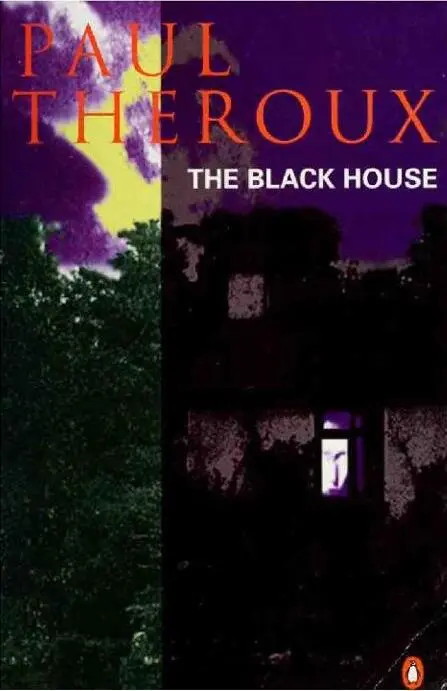
- Название:The Black House
- Автор:
- Издательство:Penguin Books
- Жанр:
- Год:1996
- ISBN:нет данных
- Рейтинг книги:4 / 5. Голосов: 1
-
Избранное:Добавить в избранное
- Отзывы:
-
Ваша оценка:
The Black House: краткое содержание, описание и аннотация
Предлагаем к чтению аннотацию, описание, краткое содержание или предисловие (зависит от того, что написал сам автор книги «The Black House»). Если вы не нашли необходимую информацию о книге — напишите в комментариях, мы постараемся отыскать её.
The Black House — читать онлайн бесплатно полную книгу (весь текст) целиком
Ниже представлен текст книги, разбитый по страницам. Система сохранения места последней прочитанной страницы, позволяет с удобством читать онлайн бесплатно книгу «The Black House», без необходимости каждый раз заново искать на чём Вы остановились. Поставьте закладку, и сможете в любой момент перейти на страницу, на которой закончили чтение.
Интервал:
Закладка:
They stood at the head of another path, a trough that might have served as a water course in heavy rains, overgrown at the sides with toppling still-green swatches of grass and widening past a thicket where it was trampled by hoof prints. Munday held his chin thoughtfully. He was a methodical hiker, and country walks, never a relaxation, seemed to bring out a militarist in him, an authoritarian streak: he took charge, read the Ordnance Survey maps, chose the route, gave orders, and was usually critical of any companion’s slowness. Something that had maddened him in Africa was that when hiking from place to place with his tape-recorder and haversack of note caFds, he had always been led by a small naked man, jinking through the bush, grunting directions. But in the end he had stayed long enough to guide himself—that mastery of the featureless savannah was one of the consolations of his long residence.
He pointed with his walking stick and said, as if to a column of men instead of the single African in his pointed shoes and pin-striped suit, “You see that meadow? I think we’d be advised to skirt round there and head towards the wooded bit. That hill is our objective. You’re not tired, are you?” Silvano shook his head.
“Want my gloves?”
“No, it’s okay.” Silvano pushed his fists deeper into his pockets.
“Off we go then,” said Munday. He hurried down the path, slashing at the grass, tearing out tufts on the ferrule of his walking stick and flinging them into the air. Behind him, Silvano dodged these flying tufts.
“This is where it gets a bit sticky,” said Munday. They were at the shore of a large pool of mud. Munday took a long stride into it.
“The cows come here,” said Silvano. He was balanced, teetering on a stone which stuck up from the mud and stiffened hoofprints.
“Except that cows don’t wear shoes, do they?” said Munday. “Horses, I should say. The hunt most probably.” He continued to stride through the mud, his boots squelching, his stick waving for balance.
Silvano contemplated a move. He stepped to another protruding stone and sank it with his weight. That shoe went deep into the mud. He swung his other leg in a new direction, placed his right foot in the mire further along and sucked his left foot out. Seeing that both shoes were irretrievably wet and large with mud he relaxed, shortened his steps and stopped looking for footholds. He splashed through like a horse, throwing his feet anywhere in the mud, which now daubed his trouser bottoms. In the field beyond, his shoes made a squishing sound and he wrung bubbly water from his toes with each step.
They hiked towards the hill as through a series of baffles, Munday moving briskly and staying far ahead, Silvano falling back, stumped by the fences and dense hedges and stopping to pluck at the barbed seeds that bristled on his suit. Again Munday waited for him to catch up. He stood impatiently at the foot of Lewesdon Hill, leaning on his stick, watching Silvano approach.
“I see you’ve made a meal of it”
Silvano brushed at his suit with muddied hands. The wisp of web had worked itself to the top of Silvano’s thick cap of hair where it fluttered like a shredded pennant.
“Pardon?” Silvano’s eyes were glazed from the wind that had drawn the scattered cloud mass together, behind which the sun showed like a pale wafer.
“You should have worn your wellingtons," said Munday.
“I don’t have any," said Silvano, shaking his head, as if asking for charity.
“No?” Munday gave him a squint of caution. “Never come to the English countryside without a good stout pair of wellies.”
“I understand,” said Silvano. “But my feet are wet.”
“Bad luck,” Munday sang, “however, there’s no sense turning back now.” And jabbing his stick ahead of him he ascended the steep rocky path, climbing into the wind. The clouds moved fast, darkening the wooded slopes, then coming apart as the sun broke through and warmed him. The sun on the dead leaves gave him a whiff of spring. He unbuttoned the sheepskin coat and took a delight in being able to recognize the trees by their bark, by the scattered husks of their nuts, beech and oak, and knobbed stumps with sea-white shells of fungus on their rotted sides. The path became level and on this hillside shelf was a grotto of low firs, contained by their own shade. The recent storms had knocked many over; some showed white flesh where they had broken off and others had taken a whole round platform of roots and earth with them—feathery branches sprouted vertically from those newly-fallen. Munday was reassured by the familiar foliage, the freshness of the moss, the cedar smells. He had not forgotten any names: he saw and remembered the light puffballs.
At the highest and most densely wooded part of the hill was a rock with an elevation marker bolted to it, and a sign-post, paragraphs of small print headed Bye-Laws. That was England, whose remotest corners bore reminding traces of others; it was her mystery, these vanished people and their lingering tracks, even here in the Dorset hills. He was no stranger to these woods—the stranger was behind him, somewhere below, kicking at the path.
Silvano was nowhere in sight. .Munday found a grassy hummock by a tree and he leaned back and closed his eyes, feeling his face go warm and cold from the sun winking past the sailing cloud mass, the glare of the sun burning on his eyes through the blood-red light of his lids. When he opened his eyes to be dazzled Silvano was standing near him, looking a sorry sight, with his mud-caked shoes and cuffs, and his hair and suit speckled with bits of brown leaf, bruises of earth on his knees, and the knot of his necktie yanked small. But it was not only that his clothes were disheveled, looking as if they hadn’t stood up to the ordeal; there was also his color, and the way he was panting—he was maroon with exertion.
He was obviously relieved to have finally caught up with Munday, and he wore a smile of exhaustion and gratitude.
Munday said, “You look worn out.”
Silvano said, “I am!” He dropped beside him and slapped at the stains on his suit. “You were always a champion hiker,” he said. “This mountain climbing is too much for me.”
“This isn’t mountain climbing,” said Munday. “Just working up an appetite for Sunday lunch. Good English habit—Emma’s doing a joint.” Silvano with his fellow Ugandans in their Earl’s Court flat (Munday could see the disorder, hear the radio, smell the stews) knew nothing of that. He didn’t know why they had been hiking or where they had been. It had only confused him. He had allowed Munday to bully him into a walk: he had followed the native through an inhospitable landscape and he had been reminded of his difference, the shallow lungs of the lowland African. And when he got back to London or Africa he would try to tell what he had seen, but description would elude him and he would be left with chance impressions of discomfort—cold, briars, spider webs, wet feet; stinging nettles he would report as ants (the dock leaf a miraculous cure), the pasture mud as swamp, the woods and windbreaks as forest, and how he had spoiled his new shoes. Munday wanted to say, “How do you like it?” But he said, “You can see four counties from here,” and he stood and named them, indicating them with his walking stick, and pausing when he saw Pilsdon Pen and trying to make out the road to Birdsmoor Gate. He said, “I saw a badger down there one night.”
“But we have lions,” said Silvano.
“There are no lions in Bwamba!”
“I mean in Africa.”
“Shall we move on?” said Munday. “I want to try a
new path. It’ll take us down there, through those pines and that farm, and eventually to Stoke Abbot.”
Читать дальшеИнтервал:
Закладка:
Похожие книги на «The Black House»
Представляем Вашему вниманию похожие книги на «The Black House» списком для выбора. Мы отобрали схожую по названию и смыслу литературу в надежде предоставить читателям больше вариантов отыскать новые, интересные, ещё непрочитанные произведения.

Обсуждение, отзывы о книге «The Black House» и просто собственные мнения читателей. Оставьте ваши комментарии, напишите, что Вы думаете о произведении, его смысле или главных героях. Укажите что конкретно понравилось, а что нет, и почему Вы так считаете.