Paul Theroux - The Black House
Здесь есть возможность читать онлайн «Paul Theroux - The Black House» весь текст электронной книги совершенно бесплатно (целиком полную версию без сокращений). В некоторых случаях можно слушать аудио, скачать через торрент в формате fb2 и присутствует краткое содержание. Год выпуска: 1996, Издательство: Penguin Books, Жанр: Современная проза, на английском языке. Описание произведения, (предисловие) а так же отзывы посетителей доступны на портале библиотеки ЛибКат.
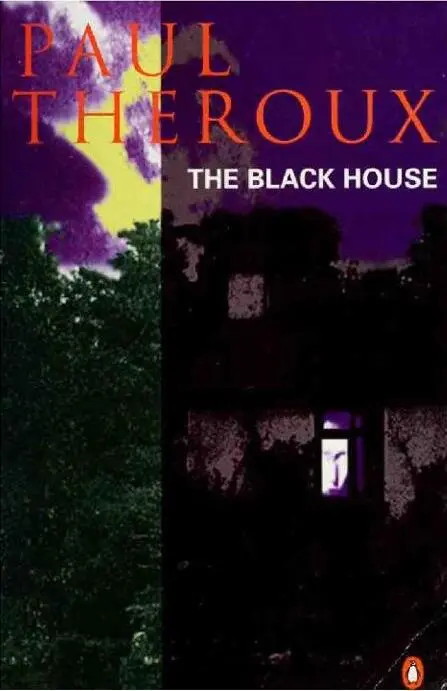
- Название:The Black House
- Автор:
- Издательство:Penguin Books
- Жанр:
- Год:1996
- ISBN:нет данных
- Рейтинг книги:4 / 5. Голосов: 1
-
Избранное:Добавить в избранное
- Отзывы:
-
Ваша оценка:
The Black House: краткое содержание, описание и аннотация
Предлагаем к чтению аннотацию, описание, краткое содержание или предисловие (зависит от того, что написал сам автор книги «The Black House»). Если вы не нашли необходимую информацию о книге — напишите в комментариях, мы постараемся отыскать её.
The Black House — читать онлайн бесплатно полную книгу (весь текст) целиком
Ниже представлен текст книги, разбитый по страницам. Система сохранения места последней прочитанной страницы, позволяет с удобством читать онлайн бесплатно книгу «The Black House», без необходимости каждый раз заново искать на чём Вы остановились. Поставьте закладку, и сможете в любой момент перейти на страницу, на которой закончили чтение.
Интервал:
Закладка:
Inside it was empty without being bare, a freshly-painted interior with blue curtains on the front window blocking out the street. It had a disinfected air about it that was enhanced by several near display cases. A man rested his arms on one of these cases and read a newspaper with a cup of tea. He did not look up when Munday entered. The man was rather short and old, and on his large studying face were incurious features; his swollen nose and heavy jaw and lips, his fleshy ears and pouched eyes didn’t go with the streamlined shop. He might have strayed in to mind the shop for the owner. He was balding, too, and his cardigan was zippered to his neck. He turned a page of the newspaper and as he did so he glanced up at Munday and greeted him, smoothing the page with the flat of his hand.
Munday hesitated. He had seen into the cup of tea at the man’s elbow; a skin of wrinkled milk on its surface nauseated him. The cup was cracked, and the sight of this cold tea made Munday doubtful about the shop. The man put the cup to his lips and sipped. Munday wanted to go.
The man said, “Help you?”
“That device in your window,” said Munday, straightening his back. “Supposed to relax you. I wonder if I might take a look at it. Could be just the thing for my wife.” The man slid open the back door of the case and took out a slender blunt object of white molded plastic. It was about eight inches long, the shape of a probe, and had a grooved handgrip.
“That’s four pounds, forty pence,” said the man, “including batteries.”
It was only when Munday had the thing in his hand that he realized its ugly use. He wanted to drop it and hurry out of the shop. He put it down, but he stayed, to avoid looking a fool. He walked away from the man, along the case, and saw the rest, a row of rubber phalluses in different sizes, simulating erections in a villainous ridicule of flesh, with grotesque knobs and warts, like clowns 1comic noses. Some had fasteners—belts, elastic straps, buckles, and plungers. There was an appalling rubber torso, inflated like a distended beachball, with a crudely mustached vulva. On a tray there were limp stringy contraceptives, flesh-colored, in amazing variety, tongues of shriveled rubber ringed with fur and feathers, or tentacles or protuberances like clusters of spiders. There were jars of cream, bottles of aphrodisiac capsules, manuals of sex technique with titles promising pleasure, thicker and frankly pornographic books wrapped in cellophane, electric condoms wired to transformers, and more vibrators. It was all displayed as in an ethnography exhibit, the pathetic toys of an especially savage tribe. Munday started to go.
The man lifted and rattled his newspaper. “We do mail orders,” he said. “You want the catalogues?” Munday turned and said sharply, “No, I do not.” There were men lingering just outside the shop window, hunched expectantly, like the large scavenging marabou storks which had stood bumping shoulders on a particular roadside in Fort Portal every morning watching for the garbage trucks.
Days passed, and Munday waited for Caroline to contact him through Emma—it had become a ritual for him. Sometimes in corners of the Black House where he felt Caroline’s presence strongest, near the living-room fireplace, at the store of green candles in the back hall, in the draft at the top of the stairs, he appealed to her and he sensed her moving past him like a vibrant column of warm air. He looked to Emma for Caroline’s signal (a watchfulness Emma took for indulgent concern): “Is there anything you’d like me to do, my darling?” But he wasn’t summoned.
He worked on his book, but the collection of Bwamba tools had given their peculiar odor to the study and his scribbled pages, and after writing he craved fresh air. In the afternoon he went out, choosing to walk in low sheltered places, hoping that beyond that tree or hedge she would appear to him. He took these walks alone. Emma stayed in the house. There were days when he went out hoping to come back and find it all changed, to return to a simpler, finished place, his book done, Caroline waiting, Emma dead or gone. These solitary walks were a way, he thought, of giving her a chance to die; but when he returned to the house it was always as he left it. Once, he returned to Emma at the door who alarmed him with: “Guess what she said?” Then she reported something Mrs. Branch had said about a tuft of lungwort she had called a primrose. On the way back from his walks he usually stopped at The Yew Tree for a drink. It was a brief drink, never long enough to support a conversation, and so he was surprised one day when Mr. Flack said, “How’s your book coming along?” Munday didn’t react. He sipped his half-pint and said, “What book is that?”
“Mr. Awdry said you were writing one,” said Flack.
“Mr. Awdry is mistaken.”
“He said it wasn’t about your cannibals, either.”
“No?”
“No sir, he said it’s about us.” Flack challenged Munday with a grin.
Munday said, “Why would anyone want to do a silly thing like that?”
“That’s what I asked Mr. Awdry.”
“What did he say?”
“Money, he said”
“My wife has plenty of money,” said Munday. “She could buy and sell your Mr. Awdry, and don’t you forget it.” Flack changed the subject. He spoke about the miners’ strike, entering its second month. There were power cuts nearly every day, but there were still regular deliveries of coal to houses; Munday’s coal shed was filled to the brim. Munday was not at all inconvenienced by the blackouts; he had learned to read by candlelight and oil lamp at the Yellow Fever Camp, and the Black House was designed to be heated by fireplaces and lighted by candles. The blackouts gave him a great deal of pleasure, but he did not say so.
“You need one of these,” said Flack. He showed Munday a dented miner’s hat, with a small battery-powered lamp on its visor. Flack put it on his head and switched on the lamp. “I wear it behind the bar during these power cuts.”
“Very sensible,” said Munday. But Flack looked foolish and comic in his overcoat and miner’s hat.
“It’s the old people I worry about,” said Flack. “A lot of them will die of the cold this winter because of these strikes. But the miners don’t care about that. Oh no, not them!” An old man sat by the fire, holding a glass of beer on his knee. He wore a long greasy coat and Munday remembered him as the man who had shown him his old clasp knife.
Munday asked him, “How are you managing?”
The old man said, “I don’t have any electricity.”
“None of us has any,” said Munday.
“I mean to say, I didn’t have any lights in my cottage before the strike,” said the man. “I’ve got a paraffin lamp and I cook over coal. If the coal runs out I’ll use wood. It’s all the same to me.”
“That’s the idea,” said Munday.
The man brightened with the compliment and in a
gesture of friendship he reached into his pocket and asked whether Munday would like to see his pictures of the Armenian massacre in Constantinople.
“I shouldn’t have these,” he said. He slipped the rubber band over his wrist and shuffled them furtively. Then he licked his thumb and passed them to Munday one at a time. They were brown postcards, thick with handling, of stacked bodies in a plaza and dark soldiers standing at attention with long rifles; corpses dangling straight down on a lengthy gallows beam; a bundle in a gutter that Munday recognized after a moment as a man; and three of them were of fiercely mustached Turks holding swollen severed heads by their hair. The pictures were passed around the bar and discussed.
“They look a right lot of bastards,” said Hosmer.
“Never saw that many people on a gallows,” said Flack. “Though I’ve seen one or two in my time. Deserters.”
Читать дальшеИнтервал:
Закладка:
Похожие книги на «The Black House»
Представляем Вашему вниманию похожие книги на «The Black House» списком для выбора. Мы отобрали схожую по названию и смыслу литературу в надежде предоставить читателям больше вариантов отыскать новые, интересные, ещё непрочитанные произведения.










Обсуждение, отзывы о книге «The Black House» и просто собственные мнения читателей. Оставьте ваши комментарии, напишите, что Вы думаете о произведении, его смысле или главных героях. Укажите что конкретно понравилось, а что нет, и почему Вы так считаете.