Paul Theroux - The Black House
Здесь есть возможность читать онлайн «Paul Theroux - The Black House» весь текст электронной книги совершенно бесплатно (целиком полную версию без сокращений). В некоторых случаях можно слушать аудио, скачать через торрент в формате fb2 и присутствует краткое содержание. Год выпуска: 1996, Издательство: Penguin Books, Жанр: Современная проза, на английском языке. Описание произведения, (предисловие) а так же отзывы посетителей доступны на портале библиотеки ЛибКат.
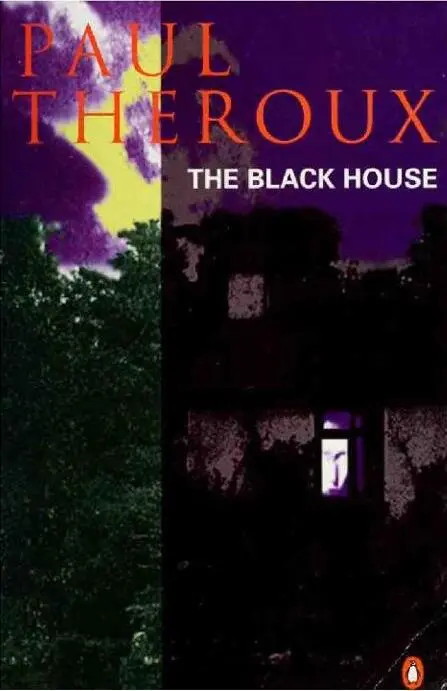
- Название:The Black House
- Автор:
- Издательство:Penguin Books
- Жанр:
- Год:1996
- ISBN:нет данных
- Рейтинг книги:4 / 5. Голосов: 1
-
Избранное:Добавить в избранное
- Отзывы:
-
Ваша оценка:
The Black House: краткое содержание, описание и аннотация
Предлагаем к чтению аннотацию, описание, краткое содержание или предисловие (зависит от того, что написал сам автор книги «The Black House»). Если вы не нашли необходимую информацию о книге — напишите в комментариях, мы постараемся отыскать её.
The Black House — читать онлайн бесплатно полную книгу (весь текст) целиком
Ниже представлен текст книги, разбитый по страницам. Система сохранения места последней прочитанной страницы, позволяет с удобством читать онлайн бесплатно книгу «The Black House», без необходимости каждый раз заново искать на чём Вы остановились. Поставьте закладку, и сможете в любой момент перейти на страницу, на которой закончили чтение.
Интервал:
Закладка:
“I can remember,” said a very old man, “after a hanging in Dorchester, they used to sell the rope by the inch. This was years ago.” He smiled and nodded. “By the inch. I reckon you could make a fortune that way.”
“It’s about time they started on the Irish,” said a stocky and slightly drunk man. Munday knew him. Before Christmas some young schoolchildren climbing in the Cairngorms had got lost in a blizzard. They had made camp, hoping to be rescued, but five had frozen to death. Flack had mentioned it it had been on the six o’clock news. The stocky man had said, “When I was their age I wasn’t in a school. I had to work, help my father with the sheep. No camping trips for me.” He was, Munday discovered later with some surprise, a shepherd. Now he said, “That’s what they should do, hang ’em.”
“They got a few in Londonderry the other day,” said Hosmer.
“They should shoot thirteen of the buggers every day,” said the shepherd.
The man collected his postcards of the Armenian massacre, snapped the rubber band around the pack, and said, “Three of them Irish had nail-bombs in their pockets. That’s a fact.”
“The paras didn’t shoot them,” Flack said. “They were killed by their own people.”
Munday felt they were trying to draw him out. He said nothing, but the subject disturbed him. Even The Times had carried a photograph of a girl whose head had been shaved and who had been tied to a pole and tarred and feathered. He had seen victims of African brutality, but this picture of the Irish girl slumped on a pole, with a blackened face and white eyes, had outraged him.
The shepherd was holding forth on the Irish. Munday wanted to interrupt, to lecture them on barbarism. But it was pointless. He listened, as he had so many times on the verandah of the Mountains of the Moon Hotel, when Alec and his cronies spoke about marauding Africans, uprisings, sometimes the Bwamba and their tortures. Munday had not interrupted then; it was idle conversation, horror reduced to small talk, without menace. An atrocity story, offered to the group, was like a ticket of entry, and a challenge or a rebuke was considered to be in poor taste.
“Mow ’em down,” said the shepherd. He described how it should be done, how he would do it himself if he had a chance: “Don’t think I wouldn’t!” Munday went to the billiard table and pulled out a cue from the rack on the side. Chalking it, he said to the shepherd, “Take a cue.” The shepherd stopped roaring. He smiled at Munday and slipped off his woolen jacket. He said, “If you like.” Flack tossed a coin. Munday called heads and lost. “You go first, mister,” said the shepherd. “Get a tanner from the landlord.” Flack handed Munday a sixpence and leaned on the bar to watch the game. The other drinkers, Hosmer, the very old man, the man with the postcards in the pocket of his long coat, a silent farmboy in boots, drew near, as Munday lined up two balls, red and white, for the break. He aimed carefully and drove his cue ball against the red, sinking it in one of the back holes.
“Red counts double,” said the shepherd. “Forty for you.”
“Flack can keep score,” said Munday.
“Good position,” said Hosmer. The white ball had come to rest near the forward spindle which stood in front of the two-hundred-point hole.
Munday took the red ball out of the chute, aimed, and potted both balls, the white in the two hundred, the red in the twenty.
“Two-eighty,” said Flack. “Nicely played.”
“You played on her before,” said the shepherd.
“He never played here,” said Hosmer.
“Take your shot,” said the shepherd.
“Don’t rush me,” said Munday. He lined up the balls again and shot; his method (“Munday’s One-Two,” Alec had called it) was the same, sinking the red, leaving the white at the lip of the forward hole, then sinking them both with the next shot, collecting two hundred and eighty points each time.
“Five-sixty,” said Flack.
The old man in the long coat grinned at the score and touched his tongue to his nose.
“Call me when you miss,” said the shepherd. He sat down by the wall and chalked his cue while the others watched Munday repeat his shot.
“We should get Doctor Munday on the team,” said Flack.
“I’m afraid not,” said Munday, and went on setting up the balls, potting them, setting them up again.
There was a clunk inside the table.
“Gate’s down,” said Hosmer. “Everything counts double.”
“What’s my score?” asked Munday.
“Five thousand and forty,” said Flack. “That’s a hell of a score.”
Munday said to the shepherd, ‘Tm going to give you a chance now.” He deliberately missed, then stepped aside and said, “Go on.”
“You’re too good for me,” said the shepherd. “I ain’t playing.”
“It’s just a game,” said Flack.
“Bit of fun,” said Hosmer.
The shepherd glowered at Hosmer. He said, “You play him then!”
“I don’t think you’ll find anyone around here who’ll want to play with you,” said Flack.
Munday said, “I don’t think there’s anyone around here I want to play.”
The shepherd came awkwardly up to Munday and said, “Have a drink, mister.”
“I must go,” said Munday. He replaced his cue and put on his coat.
“He won’t drink with me,” said the shepherd angrily.
Flack said, “He can’t. He’s got a house guest, haven’t you, Doctor?”
“Excuse me?” Munday was at the door, the men facing him from different parts of the room.
“That nigger-boy,” said Flack. “Isn’t he still up at your place?”
“I don’t know what you’re talking about,” said Munday, and he bumped out without saying goodbye.
They knew; it was not hard to guess how. He had done his best to hide Silvano, but he could have predicted they would see him. TTiere were few secrets in any village. And yet what Flack had said had given him a jolt, like the rumor of his book (“Not about your cannibals, either . . ”). Munday was surprised and angry, for what continued to disturb him were the shifting similarities between this village and the one he had left. He had found England in Africa; he had always thought it would be preparation for returning, but he had returned to find Africa in England, not the whole of Africa, but a handful of its oldest follies. In some respects the two places were identical in mood, in the size of their customs. What differences he had found had given him occasions to be complacent. The similarities confused him, they reminded him of how exposed he was: he knew he would never have risked with an African woman what he had risked with Caroline. It was not spoken about—no rumors had reached him—but Munday was not sure this silence meant that no one knew, or that it was common knowledge.
17
Then the dagger was found. It was the day of a hunt. Munday had seen some huntsmen from the window of his study in the morning, on their way to assemble at The Yew Tree. But not in red—they were dressed in black jackets and black bowler hats and sat very straight in the saddle. They came up from the back pasture, three of them, at a walk, the dark horses snorting, the riders rocking towards him, like outriders at a stately execution. It was an eerie procession, the black-suited figures in that morning mist, but when they came closer Munday saw they were very young girls with tight thighs and small pale faces, black ribbons on their bowlers and their hair tied behind. They held whips lightly across their laps. Then he had gone outside and seen the others, the red coats and top hats, and the floats and trucks drawn up along the road near the pub. There were cars, too, tilted on the grassy verge, the little Austins and Singers of people who had driven up from Bridport and beyond, the retired people and farm laborers for whom the hunt was an event to follow.
Читать дальшеИнтервал:
Закладка:
Похожие книги на «The Black House»
Представляем Вашему вниманию похожие книги на «The Black House» списком для выбора. Мы отобрали схожую по названию и смыслу литературу в надежде предоставить читателям больше вариантов отыскать новые, интересные, ещё непрочитанные произведения.







Обсуждение, отзывы о книге «The Black House» и просто собственные мнения читателей. Оставьте ваши комментарии, напишите, что Вы думаете о произведении, его смысле или главных героях. Укажите что конкретно понравилось, а что нет, и почему Вы так считаете.