A. AHomes - The Mistress's Daughter
Здесь есть возможность читать онлайн «A. AHomes - The Mistress's Daughter» весь текст электронной книги совершенно бесплатно (целиком полную версию без сокращений). В некоторых случаях можно слушать аудио, скачать через торрент в формате fb2 и присутствует краткое содержание. Год выпуска: 2007, Издательство: Viking Adult, Жанр: Современная проза, Биографии и Мемуары, на английском языке. Описание произведения, (предисловие) а так же отзывы посетителей доступны на портале библиотеки ЛибКат.
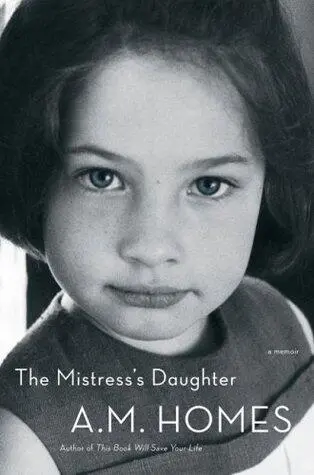
- Название:The Mistress's Daughter
- Автор:
- Издательство:Viking Adult
- Жанр:
- Год:2007
- ISBN:нет данных
- Рейтинг книги:5 / 5. Голосов: 1
-
Избранное:Добавить в избранное
- Отзывы:
-
Ваша оценка:
The Mistress's Daughter: краткое содержание, описание и аннотация
Предлагаем к чтению аннотацию, описание, краткое содержание или предисловие (зависит от того, что написал сам автор книги «The Mistress's Daughter»). Если вы не нашли необходимую информацию о книге — напишите в комментариях, мы постараемся отыскать её.
Before A.M. Homes was born, she was put up for adoption. Her birth mother was a twenty-two- year-old single woman who was having an affair with a much older married man with children of his own.
is the story of what happened when, thirty years later, her birth parents came looking for her.
Homes, renowned for the psychological accuracy and emotional intensity of her storytelling, tells how her birth parents initially made contact with her and what happened afterward (her mother stalked her and appeared unannounced at a reading) and what she was able to reconstruct about the story of their lives and their families. Her birth mother, a complex and lonely woman, never married or had another child, and died of kidney failure in 1998; her birth father, who initially made overtures about inviting her into his family, never did.
Then the story jumps forward several years to when Homes opens the boxes of her mother's memorabilia. She had hoped to find her mother in those boxes, to know her secrets, but no relief came. She became increasingly obsessed with finding out as much as she could about all four parents and their families, hiring researchers and spending hours poring through newspaper morgues, municipal archives and genealogical Web sites. This brave, daring, and funny book is a story about what it means to be adopted, but it is also about identity and how all of us define our sense of self and family.
The Mistress's Daughter — читать онлайн бесплатно полную книгу (весь текст) целиком
Ниже представлен текст книги, разбитый по страницам. Система сохранения места последней прочитанной страницы, позволяет с удобством читать онлайн бесплатно книгу «The Mistress's Daughter», без необходимости каждый раз заново искать на чём Вы остановились. Поставьте закладку, и сможете в любой момент перейти на страницу, на которой закончили чтение.
Интервал:
Закладка:
“You’re making it up,” someone says to me. Maybe and maybe not. I’m certainly imagining it. The only other option is for someone to tell me how it was, what really happened.
I think of Ellen and Norman before this, I picture them in the spring driving along the Potomac River in Washington, D.C., in a powder blue Cadillac convertible, the radio playing, wind blowing through their hair, and thinking, This is it, this is the life.
The Electronic Anthropologist
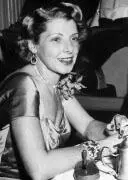
Claire Ballman
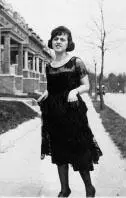
Jewel Rosenberg
Iam compelled to look for more information — I have always known things that I don’t know that I know. Unidentifiable bits and pieces would visit me in my mind’s eye as if somewhere between dream and reality, but now I want to understand what I know and why.
The twenty-first-century search for roots is decidedly different from what it was as recently as the late 1990s. Now it is all about the Internet — Google, Ancestry.com, RootsWeb, and JewishGen. It is about electronic message boards and user-submitted family trees, and all of it a far cry from the days when you pulled out the family Bible and checked the names written in the front, when cousins lived next door, when you sat down and talked with old folks who, even if they weren’t related, had known your family intimately for generations.
On the Internet, one can within seconds locate the long-lost and create a portrait of family out of the scraps of information that float randomly like atoms smashed, like fractured molecules desperate to reconnect. Every clue leads to another; first you find that there are several versions of the person you are looking for — the wrong ones, the almost right ones, and then the one.
Genealogical research is currently one of the top-ranked hobbies in the United States — in some ways it’s more like a sport, collecting ancestors like baseball cards. It’s also a kind of couch potato way of traveling through time — it’s done in isolation, at odd hours, in a virtual world — and yet it is about connection, getting back in touch. And it is addictive. I am at it round the clock, a twenty-first-century Sherlock Holmes, trying to make this information age work for me. I pay $200 to join Ancestry.com. I buy electronic multipacks of articles from the Washington Post archive. I am perpetually punching in my credit card information — blindly buying anything that might be relevant.
I begin with my father’s parents. I do not know their names, I know only that my mother told my father she was pregnant on the day his mother died — so I’m thinking it had to be sometime in 1961. I search the Washington Post archive and there she is, my grandmother Georgia Hecht — passed away on April 11, 1961. (Not so long ago, in my collection of stories Things You Should Know , I wrote about an unmarried woman getting pregnant. She names the child Georgica. Conscience, or coincidence?)
Each time I locate something — a detail, a fact, a missing fragment of information — I have the sense of having made a match. Something lights up. Bingo! We have a winner! And for a moment everything is clear, and then just as quickly I am all too aware that still, always and forever, there will be an enormous amount that remains a mystery.
My father’s father is more difficult. Before I find him I locate his mother’s parents. I put the name Georgia Hecht into a 1930 census search and find her living with my father, who is five, at her parents’ house in Washington, D.C. Now not only do I have her maiden name — Slye — but I have her mother and father, my great-grandparents Mary Elizabeth Slye and Chapman Augustus Slye. I discover that Chapman A. Slye was a steamboat captain and also find in quick succession a dozen great-aunts and-uncles.
Within a week, I have traced the Slye family back to George Slye, born in Lapworth, Warwick, England, in 1564. I locate Robert Slye, born July 8, 1627, in England, who came to America and in 1654 was named as one of the parliamentary commissioners to govern Maryland under Oliver Cromwell, lord high protector of England. He was also speaker of the Lower House of the Maryland General Assembly and captain of the colonial militia in St. Mary’s County, and served as a St. Mary’s County Court justice. Linda Reno, a wonderfully generous researcher I meet online, forwards a historical note showing that on April 24, 1649, a court in Hartford, Connecticut, fined Robert Slye ten pounds of tobacco for exchanging a gun with an Indian.
I am in the Washington Post archive looking up the Slyes, and there — buried in the January 25, 1955, obituary of Mary Elizabeth Slye, wife of the late Captain Chapman A. Slye, mother of “Mrs. Irving Hecht” (aka Georgia Slye) — is the information I’ve been looking for: Irving Hecht — my father’s father. I try to find Irving Hecht in the census and can’t — it is as though he was absent on the day in 1930 when they counted all the people. Who was he? Where was he? What were the circumstances that took him away from his wife and son? What did he do for a living?
Once it begins, the search is urgent; I am up in the night surfing, connecting the dots. Suddenly there are pieces of information I can’t live without. Locating Irving Hecht takes me several more hours, but when I find his obituary — Thursday, July 5, 1956—I also find his brothers, Nathan of New York, Arthur S. of San Francisco, my great-uncles!
And as I am finding the right people I am also just as rapidly finding others that are right for a moment and then are proven wrong. For a long time I am sure one of the Harry Hechts is my grandfather, and then before I find the right Irving Hecht, I find the wrong Irving Hecht, living with his wife, Anna, and young son, Bertram, in Brooklyn on January 6, 1920. With each discard comes the lingering sense that invariably we’re all interconnected, all responsible for one another, and that no one Hecht is any more or less compelling than the next. Coming from a position of having no history, having any history, even if it is the wrong history, is fascinating. Every life lived is of interest.
Bloodlines — I find myself more and more interested in the strangers I never knew, in the blood relations that are unveiling themselves before me. I notice that I am not as motivated to dig for the history of the mother and father I grew up with, and am not sure why. Is it because I already feel familiar and familial with them — or is there something psychically unique about discovering this new biological narrative? There is no escaping that what I am finding resonates; there is the hum of identification, a sense of wholeness and well-being. On a cellular level it makes sense — it matches. And simultaneously there is a kind of contradiction, a challenge to who I think I am, how I experience myself. The best way I can describe this experience, which eludes conventional language, is to say I think of this as the difference or dissonance between the unknown or dormant biological self that I arrived with and the adopted, adapted self that I became. The looking, the digging awakens numb spots, labyrinths in my own experience, in my ability to process. I feel a peculiar overexcited high and at other moments a devastating depression. I continue to dig, thinking that if I consume information, I will be able to inhabit it, I will feel more complete — not realizing that perhaps the exact opposite is just as possible.
Читать дальшеИнтервал:
Закладка:
Похожие книги на «The Mistress's Daughter»
Представляем Вашему вниманию похожие книги на «The Mistress's Daughter» списком для выбора. Мы отобрали схожую по названию и смыслу литературу в надежде предоставить читателям больше вариантов отыскать новые, интересные, ещё непрочитанные произведения.




Обсуждение, отзывы о книге «The Mistress's Daughter» и просто собственные мнения читателей. Оставьте ваши комментарии, напишите, что Вы думаете о произведении, его смысле или главных героях. Укажите что конкретно понравилось, а что нет, и почему Вы так считаете.