A. AHomes - The Mistress's Daughter
Здесь есть возможность читать онлайн «A. AHomes - The Mistress's Daughter» весь текст электронной книги совершенно бесплатно (целиком полную версию без сокращений). В некоторых случаях можно слушать аудио, скачать через торрент в формате fb2 и присутствует краткое содержание. Год выпуска: 2007, Издательство: Viking Adult, Жанр: Современная проза, Биографии и Мемуары, на английском языке. Описание произведения, (предисловие) а так же отзывы посетителей доступны на портале библиотеки ЛибКат.
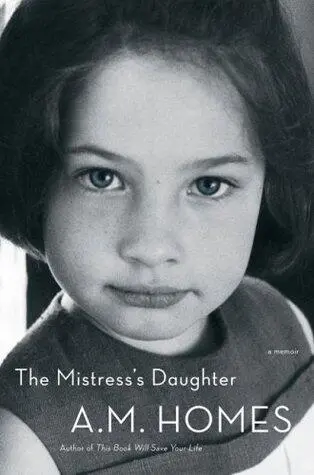
- Название:The Mistress's Daughter
- Автор:
- Издательство:Viking Adult
- Жанр:
- Год:2007
- ISBN:нет данных
- Рейтинг книги:5 / 5. Голосов: 1
-
Избранное:Добавить в избранное
- Отзывы:
-
Ваша оценка:
The Mistress's Daughter: краткое содержание, описание и аннотация
Предлагаем к чтению аннотацию, описание, краткое содержание или предисловие (зависит от того, что написал сам автор книги «The Mistress's Daughter»). Если вы не нашли необходимую информацию о книге — напишите в комментариях, мы постараемся отыскать её.
Before A.M. Homes was born, she was put up for adoption. Her birth mother was a twenty-two- year-old single woman who was having an affair with a much older married man with children of his own.
is the story of what happened when, thirty years later, her birth parents came looking for her.
Homes, renowned for the psychological accuracy and emotional intensity of her storytelling, tells how her birth parents initially made contact with her and what happened afterward (her mother stalked her and appeared unannounced at a reading) and what she was able to reconstruct about the story of their lives and their families. Her birth mother, a complex and lonely woman, never married or had another child, and died of kidney failure in 1998; her birth father, who initially made overtures about inviting her into his family, never did.
Then the story jumps forward several years to when Homes opens the boxes of her mother's memorabilia. She had hoped to find her mother in those boxes, to know her secrets, but no relief came. She became increasingly obsessed with finding out as much as she could about all four parents and their families, hiring researchers and spending hours poring through newspaper morgues, municipal archives and genealogical Web sites. This brave, daring, and funny book is a story about what it means to be adopted, but it is also about identity and how all of us define our sense of self and family.
The Mistress's Daughter — читать онлайн бесплатно полную книгу (весь текст) целиком
Ниже представлен текст книги, разбитый по страницам. Система сохранения места последней прочитанной страницы, позволяет с удобством читать онлайн бесплатно книгу «The Mistress's Daughter», без необходимости каждый раз заново искать на чём Вы остановились. Поставьте закладку, и сможете в любой момент перейти на страницу, на которой закончили чтение.
Интервал:
Закладка:
Whose furniture was it? The woman who lived there before — who finally got married, who took a job in Ohio, who went home to live with her mother, who died lonely of old age at forty. Whose was it really? It was a little of this and that, what people left behind, what no one wanted.
They have fun together — he is able to play with her, to joke and push in a way that he has never been able to before. He has always been the one teased. She tolerates it because it is familiar, and she gives it back to him and then some. He teaches her to drive — he teases her, she gets mad, and he laughs all the more.
When he is not there, she sleeps with the stuffed animals she brought from home.
It is incredibly quiet. She has a radio and then a secondhand television set, and later a phone. There are a few mismatched dishes in the kitchen cabinets, things he’s taken from his mother’s basement, telling her it’s for the kids to play with or needed at the house. There are crocheted rugs on the floor — all of it is a little nubbly, a little dark and depressing, an echo of World War II, but she gets plants and sometimes she gets flowers and she feels like a grown-up, a woman with a home of her own. She sleeps with the light on. If she has one of her high school girlfriends over — they lie and say they are going to someone else’s house — they roast marshmallows on the gas stove, eat candy for dinner, and go to the movies and drink coffee for breakfast. There are other times when she goes to a friend’s house — and is reminded of what most girls/other girls are doing, living at home with their mothers and fathers, eating dinner in the dining room, wearing clothing that is washed and ironed for them, feeling protected. The mothers feel sorry for her and worry that she might be a bad influence. She walks to the zoo, she takes the bus downtown, and she works in the clothing store.
He and she are a good match, except that he is already married and is not going to divorce his wife, and she is already emotionally on edge. They are two people who lost their childhoods, two whose parents abandoned them to one degree or another, two people a little bit lost. I see her entertaining him, tempting and teasing him. I see him as being fatherly and calming and temperate, and I see the two of them having drinks and going wild. I see him excusing himself, washing up, and going home. I see her being angry and taking it out on him — she is dramatic and an actress.
I see her in cashmere sweaters. I see her body, new and fresh and entirely unmarked. I see her and him simultaneously discovering themselves. I see them going out on the town. I see a certain amount of swagger and bravado.
And sometimes he doesn’t have time — his wife needs him, his kids need him. Sometimes he brings one of the kids. His oldest boy waits in the living room while they talk privately for a few minutes in the bedroom; the talking involves giggling and sighing. And then he tells her he can’t do it anymore, it’s too hard on his family. He tells her he means it this time.
She cries. She thinks she will die. She is sure she will die, she feels sick, and she feels pain in her chest. She is up all night. She drinks. She calls a friend of his, his buddy — she cannot bear to be alone.
He returns, promising that soon he will be hers completely. She pretends she is not going to take him back — she pretends she has fallen for his friend. The friend gives her some money — he also gives her something that itches.
She is lonely. She goes out at cocktail hour, to get back at him, to remind him that she is alone and he is married with children. Men buy her drinks, sometimes they buy her dinner. He is irate. He is trying to be in two places at the same time. His wife has found out. She tells him that the girl can’t work at the store anymore.
When she is alone, she eats peanut butter and jelly sandwiches and drinks the liquor he has left behind. At night, when she’s sleeping, she sometimes hears the sound of the men who brought her father home — she hears their voices, their footsteps. She remembers being asleep when it happened, waking up, being afraid to open the door. She remembers looking through the keyhole — seeing her father’s arm hanging limp. She remembers being terrified.
His wife has told him to stop. He has told his wife that it is over and done — he tells Ellen that it is over and done. He sneaks around. He is angry with both of them for wanting so much — for wanting more, wanting it all.
There are times she wants to leave him. She tells him she has met someone new — it is a little bit true. She tries, she attempts to replace him, but it never lasts long. She spends time with friends of his — maybe they have wives, maybe not. Once she spent the night with a friend and his wife.
I picture Norman furious and jealous.
She and his wife are at the same holiday party — they see each other across the room, they know who they are. He is there with his wife, and he ignores Ellen — or tries to. She drinks too much and throws up on the new sea green carpet in the dining room. Someone has to drive her home.
“What was she doing there?”
“She was invited.”
“She should know better.”
“He should know better.”
Red faced.
What is she thinking? She wants to be a little girl, she wants to be taken care of, loved — she thinks his wife could take care of her if only she wanted to. It’s a strange thought but it makes a measure of sense to her — she wants to be part of a family.
And then she is pregnant.
Does she know she is pregnant, or does someone have to tell her?
Does she confide her symptoms to a girlfriend who says, You’re pregnant!
Does she go to the doctor thinking she’s ill?
Does she know that his wife is pregnant too?
She waits to tell him. The day he calls to tell her that his mother has died, she blurts, “We’re going to have a baby.” She wasn’t exactly planning on doing it this way, but it just comes out.
She is thinking that it is good news, that it will make him happy, that now finally they will be together.
He is speechless.
His mother is dead, his wife is pregnant, and now she is too.
What was supposed to be a moment that would inexorably bond them — sharing the grief of his mother’s death, sharing the news of a baby on the way — is all too much.
She is angry with him for not being pleased. He is angry with her for not being more careful.
They fight.
She is angry with herself and she is justifiably angry with the world. Is she angry with her baby?
He sends her to Florida, promising to follow. She waits for him; he never shows up. When she moves back to Maryland they get an apartment together; he stays for four days before going home.
He offers to take her shopping to buy things for the baby.
His wife finds out that she is pregnant and lays down the law.
At some point she tells her mother, or maybe her mother just figures it out. Her mother looks at her and says, “You’re pregnant, aren’t you?”
She nods, wishing someone would have something nice to say. She likes being pregnant, likes the feel of this baby growing inside her, but has no idea what to do. She talks to her baby — she asks the baby, What should I do?
More pregnant and now unable to find work, she moves in with her mother, who has divorced the second husband.
In the end, in labor, she is alone at the hospital. And she still has the fantasy that he will come, that he will snap out of it and rush to her side. She wants to call him. A hundred times she wants to tell the nurse to dial his number.
“Where is your husband?” someone asks, and she cries hysterically.
The baby is beautiful. The nurses encourage her not to hold the baby. “After all, you’ll never see her again,” one of them says.
Читать дальшеИнтервал:
Закладка:
Похожие книги на «The Mistress's Daughter»
Представляем Вашему вниманию похожие книги на «The Mistress's Daughter» списком для выбора. Мы отобрали схожую по названию и смыслу литературу в надежде предоставить читателям больше вариантов отыскать новые, интересные, ещё непрочитанные произведения.











Обсуждение, отзывы о книге «The Mistress's Daughter» и просто собственные мнения читателей. Оставьте ваши комментарии, напишите, что Вы думаете о произведении, его смысле или главных героях. Укажите что конкретно понравилось, а что нет, и почему Вы так считаете.