Marilynne Robinson - Home
Здесь есть возможность читать онлайн «Marilynne Robinson - Home» весь текст электронной книги совершенно бесплатно (целиком полную версию без сокращений). В некоторых случаях можно слушать аудио, скачать через торрент в формате fb2 и присутствует краткое содержание. Год выпуска: 2008, Издательство: Farrar, Straus and Giroux, Жанр: Современная проза, на английском языке. Описание произведения, (предисловие) а так же отзывы посетителей доступны на портале библиотеки ЛибКат.
- Название:Home
- Автор:
- Издательство:Farrar, Straus and Giroux
- Жанр:
- Год:2008
- ISBN:нет данных
- Рейтинг книги:3 / 5. Голосов: 1
-
Избранное:Добавить в избранное
- Отзывы:
-
Ваша оценка:
Home: краткое содержание, описание и аннотация
Предлагаем к чтению аннотацию, описание, краткое содержание или предисловие (зависит от того, что написал сам автор книги «Home»). Если вы не нашли необходимую информацию о книге — напишите в комментариях, мы постараемся отыскать её.
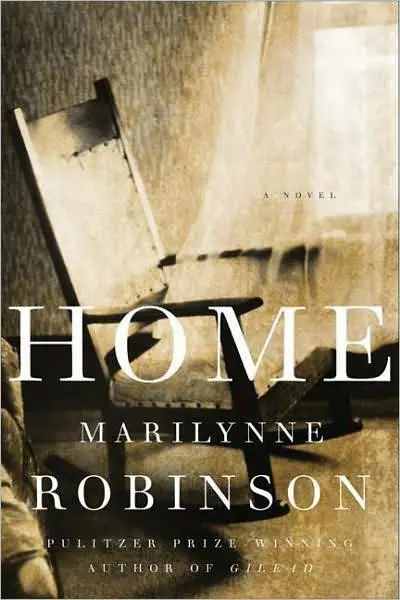
, Marilynne Robinson's Pulitzer Prize — winning novel.
is an entirely independent, deeply affecting novel that takes place concurrently in the same locale, this time in the household of Reverend Robert Boughton, Ames's closest friend.
Glory Boughton, aged thirty-eight, has returned to Gilead to care for her dying father. Soon her brother, Jack — the prodigal son of the family, gone for twenty years — comes home too, looking for refuge and trying to make peace with a past littered with tormenting trouble and pain.
Jack is one of the great characters in recent literature. A bad boy from childhood, an alcoholic who cannot hold a job, he is perpetually at odds with his surroundings and with his traditionalist father, though he remains Boughton’s most beloved child. Brilliant, lovable, and wayward, Jack forges an intense bond with Glory and engages painfully with Ames, his godfather and namesake.
Home
Home — читать онлайн бесплатно полную книгу (весь текст) целиком
Ниже представлен текст книги, разбитый по страницам. Система сохранения места последней прочитанной страницы, позволяет с удобством читать онлайн бесплатно книгу «Home», без необходимости каждый раз заново искать на чём Вы остановились. Поставьте закладку, и сможете в любой момент перейти на страницу, на которой закончили чтение.
Интервал:
Закладка:
She said to her guests, feigning the same slight strangerliness they feigned, too, “Please come into the dining room. Jack will help me serve.”
“Oh, good,” Jack said. “I was feeling a little at a loss.” Then to Lila he said, “No gift for small talk, polite conversation. None at all.”
Lila smiled. “Me neither.” She had a soft, slow, comfortable voice that suggested other regions, and suggested, too, in its very gentleness, that she knew a good deal more about the world than she would ever let on. Jack looked at her with pleasant interest, with a kind of hopefulness, Glory thought. Clearly Ames noticed, too. Poor Jack. People watched him, and he knew it. It was partly distrust. But more than that, the man was at once indecipherable and transparent. Of course they watched him.
He followed her into the kitchen. He said, “Maybe I should go change.”
“No, no. You’re just fine. You look nice.” She put serving dishes into his hands. “I’ll bring the condiments. Come back for the roast.”
He carried in the huge, chipped semi-porcelain platter on which roasts and hams and turkeys had always made their entrances in that house and, after a moment’s hesitation, set it down in front of his father, in keeping with what was once family custom. But the old man was still a little grimly bemused by the apparition he had seen of himself in his relative youth. He said, “I don’t know what I’m supposed to do with that. It might as well still be on the hoof for all the luck I’d have with it. Give it to Ames.”
Jack said, “Yes, sir,” and after Lila had rearranged the serving dishes, he set the roast in front of Ames, who said, “I’ll do my best.”
Jack took the chair next to his father, and then Robby left his mother’s side and came around the table and leaned into the chair beside Jack’s.
“I could sit here,” he said shyly.
Jack said, “You could, indeed. Please do,” and helped him pull the chair a little way from the table. Ames glanced up from the roast.
Lila said, “He’s taken to you. He don’t often act that friendly. Doesn’t.”
Jack said, “I’m honored,” as if he meant it. Then he stood up from the table. “Excuse me. One minute. An oversight,” and left the room. They heard him leave the porch.
His father shook his head. “He’s up to something, I suppose. No idea in the world what it could be.”
They sat waiting for him, and in a few minutes he came back with a handful of sweet peas in a water glass, which he put down in front of Lila. “We can’t have Mrs. Ames as our guest and no flowers on the table!” he said. “It’s not much of a bouquet. A little better than nothing, I hope.”
Lila smiled. “They’re nice,” she said.
Ames cleared his throat. “Well, Reverend Boughton, since I have carved, maybe you could offer the blessing.”
Boughton said, “I was thinking you might do that, too.”
There was a silence.
Jack took a slip of paper from his pocket. “In case of emergency,” he said. “I mean, in case this should fall to me, the grace. I’ve written it out.”
His father looked at him a little balefully. “That’s excellent, Jack. Perhaps it won’t be necessary.”
Jack glanced at Ames, who shrugged, and he began to read. “‘Dear Father,’” he said. He paused and studied the paper, leaning into the candlelight. “My handwriting is very poor. I crossed some things out. ‘You are patient and gracious far beyond our deserving.’” He cleared his throat. “‘You let us hope for your forgiveness when we can find no way to forgive ourselves. You bless our lives even when we have shown ourselves to be utterly ungrateful and unworthy. May we be strengthened and renewed, to make us less unworthy of blessing, through these your gifts of sustenance, of friendship and family.’” And then, “‘In Jesus’ name we pray, amen.’”
Again there was a silence. He looked at Ames, who nodded and said, “Thank you.”
“Jack, that was fine,” his father said.
Jack shrugged. “I thought I’d give it a try. I should have noticed I had the word ‘unworthy’ down twice. I thought ‘sustenance’ was good, though.” He laughed.
After a moment Boughton said to Ames, “We have had some conversation about family over the last few days, and I believe Jack has brought the conversation to a point here. It is in family that we most often feel the grace of God, His faithfulness. Yes.”
Jack nodded. He murmured, “Amen.”
Heartened, his father launched into an account of his views on Dulles’s policy of containment. “It is provocation!” he said. “Pure and simple!” Ames thought Dulles might be proved right in the long term, and Boughton said “the long term” was just a sort of feather pillow that was used to smother arguments.
Ames laughed. “I wish I’d known that sooner.”
Boughton said, “You’ve always enjoyed a good quarrel as much as anybody, Reverend.”
Jack asked his father if he thought the long-term consequences of the violence in Montgomery would be important, and his father said, “I don’t believe there will be any consequences to speak of. These things come and go. The gravy is wonderful, by the way.” Jack absently spindled the slip of paper in his fingers. When he realized Ames had noticed, he smiled and smoothed it out again and slipped it into his pocket. Ames cut Robby’s roast for him, and Jack split and buttered a biscuit and set it on the boy’s plate.
Whatever part of her father’s hopes for the evening could be satisfied by fragrance and candlelight and by food consecrated to the rituals of Boughton celebration, that part at least had been seen to. The roast beef was tender, the glazed beets were pungent, the string beans were as they always were so early in the year, canned. But she had simmered them with bacon to make them taste less like themselves. She waited for someone to remark on the biscuits, but it was the gravy they admired, and she was proud of that, too.
Still, there was something strained about it all, as if time had another burden, like humid air, or as if it were a denser medium and impervious to the trivialization which was all they would expect or hope for on an evening like this one, now that grace was said. Her father gazed at Jack from time to time, pondered him, and Jack was aware of it. His hand trembled when he reached for his water glass, and ordinarily the old man, gentle as he was, would have looked away. But instead he touched Jack’s shoulder and his sleeve. Ames, his expression pensively comprehending, watched his friend take the measure of his erstwhile youth.
Jack said, “Dinner with Lazarus.”
His father drew his hand away. “Sorry, Jack. I didn’t quite hear that.”
“Nothing, it just came to my mind. ‘And Lazarus was one of those at table with him.’ I’ve always thought that must have been strange. For Lazarus. He must have felt a little—‘disreputable’ isn’t the word. Of course he’d have had time to clean himself up a little. Comb his hair. Still—” He laughed. “Sorry.”
Boughton said, “That’s very interesting, but I’m still not sure I see your point.”
Ames turned a long look on Jack, almost the incarnation of his father’s youth. It was a reproving look, as if he suspected that he did see the point and he felt the conversation ought to take another turn. Jack shook his head. “I just—” he said. “I don’t know what I was thinking about.” He glanced at Glory and smiled.
FOR A WHILE TALK DRIFTED GENTLY AND PREDICTABLY from the world situation to baseball to old times. Then there was a lull in the conversation, and Jack turned his gaze on Robby, who had sat beside him quietly, using his spoon to make a fort or embankment of his mashed potatoes.
Читать дальшеИнтервал:
Закладка:
Похожие книги на «Home»
Представляем Вашему вниманию похожие книги на «Home» списком для выбора. Мы отобрали схожую по названию и смыслу литературу в надежде предоставить читателям больше вариантов отыскать новые, интересные, ещё непрочитанные произведения.







Обсуждение, отзывы о книге «Home» и просто собственные мнения читателей. Оставьте ваши комментарии, напишите, что Вы думаете о произведении, его смысле или главных героях. Укажите что конкретно понравилось, а что нет, и почему Вы так считаете.