Marilynne Robinson - Home
Здесь есть возможность читать онлайн «Marilynne Robinson - Home» весь текст электронной книги совершенно бесплатно (целиком полную версию без сокращений). В некоторых случаях можно слушать аудио, скачать через торрент в формате fb2 и присутствует краткое содержание. Год выпуска: 2008, Издательство: Farrar, Straus and Giroux, Жанр: Современная проза, на английском языке. Описание произведения, (предисловие) а так же отзывы посетителей доступны на портале библиотеки ЛибКат.
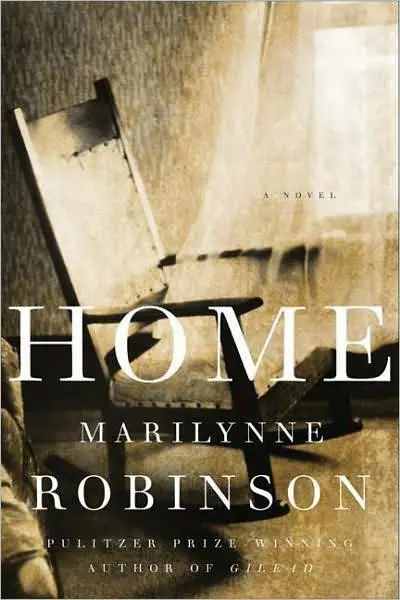
- Название:Home
- Автор:
- Издательство:Farrar, Straus and Giroux
- Жанр:
- Год:2008
- ISBN:нет данных
- Рейтинг книги:3 / 5. Голосов: 1
-
Избранное:Добавить в избранное
- Отзывы:
-
Ваша оценка:
Home: краткое содержание, описание и аннотация
Предлагаем к чтению аннотацию, описание, краткое содержание или предисловие (зависит от того, что написал сам автор книги «Home»). Если вы не нашли необходимую информацию о книге — напишите в комментариях, мы постараемся отыскать её.
, Marilynne Robinson's Pulitzer Prize — winning novel.
is an entirely independent, deeply affecting novel that takes place concurrently in the same locale, this time in the household of Reverend Robert Boughton, Ames's closest friend.
Glory Boughton, aged thirty-eight, has returned to Gilead to care for her dying father. Soon her brother, Jack — the prodigal son of the family, gone for twenty years — comes home too, looking for refuge and trying to make peace with a past littered with tormenting trouble and pain.
Jack is one of the great characters in recent literature. A bad boy from childhood, an alcoholic who cannot hold a job, he is perpetually at odds with his surroundings and with his traditionalist father, though he remains Boughton’s most beloved child. Brilliant, lovable, and wayward, Jack forges an intense bond with Glory and engages painfully with Ames, his godfather and namesake.
Home
Home — читать онлайн бесплатно полную книгу (весь текст) целиком
Ниже представлен текст книги, разбитый по страницам. Система сохранения места последней прочитанной страницы, позволяет с удобством читать онлайн бесплатно книгу «Home», без необходимости каждый раз заново искать на чём Вы остановились. Поставьте закладку, и сможете в любой момент перейти на страницу, на которой закончили чтение.
Интервал:
Закладка:
He nodded. “One brief stint as a dance instructor. The old ladies loved me. But I was drinking at the time, so I never really mastered the samba.”
She laughed. “That’s a sad story.”
“Yes, it is. I thought I was doing all right. But my employer frowned on, you know, improvisation. I did some very interesting steps, but you really have to be able to do them again, at least once. That was his major criticism.”
“Ah, Jack.”
“Jack indeed. I spent that winter at the library. It was such a miserable winter that I seized the opportunity to improve my mind. The old ladies loved me there, too. A gentleman fallen on hard times. I subsisted on bran muffins and white cake. These were not the same old ladies. Less rouge, no henna.”
“I’ve noticed how well-read you are.”
He nodded. “I have been a frequenter of libraries over the years. It’s the last place people think to look for you. The sort of people who come looking for you. Much better than a movie theater. So I thought I might as well read what I was supposed to have read in college. Insofar as memory served. Awfully dull work, a lot of it. I’d never have lasted a week in college if Teddy hadn’t been there to do it for me.”
“Oh.”
“He’s never mentioned that.”
“Not a word, so far as I know.”
“That precocity of his? It came from years of doing my homework. He is deeply in my debt. I would never mention this, of course. Except to you.”
“That’s good of you.”
He nodded. “We are brothers, after all.”
“But you have to sit still.”
“I’m trying.”
“Maybe calm down a little.”
“An interesting suggestion,” he said. “A really good idea.”
“I will not touch another hair of your head unless you sit still.”
“Fair enough. Just let me have the scissors and I’ll finish it up myself.”
“Not a chance, buster.”
He laughed.
“Not in the mood you’re in.”
He nodded. “You’re right to worry. I just want to be rid of this damn forelock. What do they say? Seize Fate by the forelock?”
“Time, I think. It’s Time that has the forelock.”
“Well, something’s got me by the forelock. Nothing so dignified as Fate, I’m pretty sure. If thy forelock offend thee, cut it off. Sorry.”
“Then sit still.”
“Did you ever wonder what that means? If thy right eye offend thee? As if it were not part of thee? It’s true, though. I offend me — eyes, hands, history, prospects—”
“Did you have any breakfast?”
He laughed.
“You didn’t. I’m going to make you a sandwich. You’re worried about seeing Ames tonight at dinner.”
“Yes, well, it seems I’ve done as much as one man could do to make the experience embarrassing.”
“Nonsense. Really. If he did see you on the street, what of it?”
“Good point, Glory. Perspective. Just what is called for here. Would he have noticed my discomfort with myself from that distance? Well, so what? A law-abiding citizen has a perfect right to feel wretched on a public sidewalk, on a Sabbath morning. Even to pause as he does so. Near a church, too. There’s poetry in it, of a sort.”
“You don’t really know that he saw you.”
“Right you are.”
“Meat loaf or tuna salad?”
“Meat loaf. Just a little catsup.”
She started to move his jacket away from the table and he stood up and took it out of her hands, smiling. It was another sensitivity, like the privacy of that bare, orderly room upstairs. Fine. She was sorry she had forgotten. He felt for the slight weight in the left breast pocket, about which she did not let herself wonder, and put the jacket on. “I’ll shake out this towel,” he said. “Then I’ll sweep up a little.”
JACK BROUGHT HIS FATHER’S ARMCHAIR INTO THE KITCHEN so he could be present for the paring of apples and the rolling of pastry. “I have always enjoyed that,” the old man said, “the sound of a knife slicing through an apple.” He asked for a look at the pie before the top crust went on—“More fragrant than flowers!”—and for a look at it afterward, when the edge had been fluted and the vents were cut. He said, “My grandmother used to go out and gather up windfall apples. Our orchard was too young to produce much, but she’d pick them up wherever she found them and bring them home and make a pile of them out there in front of the shed, and they’d stay there till they fermented, and then she’d make them into cider. She said it was medicinal, tonic for her achy bones, she said. She’d give me a taste sometimes. It tasted terrible. But when the morning was chilly, the steam would pour off those apples like smoke. A smoldering pyre of apples. The chickens would roost on it, for the warmth.” He laughed. “The cats would sleep on it. She always had her own little projects. She’d eat kidney when she could find it. Tongue. Mutton. In spring she’d be out in the fields, along the fences, picking dandelion greens as soon as the sun was up. She’d come in with her apron full of purslane. My mother thought it was embarrassing. She’d say, ‘You’d think we didn’t feed her!’ But she always did what she wanted to do.” He talked on with the intermitted constancy of a pot simmering. Jack trimmed mushrooms he had brought in and washed them, and washed them again until he was sure there was no trace of sand left in them. He chopped the onion. The kitchen began to smell of pie baking.
“This is wonderful,” his father said. “So much going on and me right in the middle of it. In the way, too, I suppose. It was kind of you to set me up like this, Jack. You’re very good to me.”
Jack laughed. “You deserve it,” he said.
His father said, “Yes, the pleasures of family life are very real.”
“So I understand.”
“Well, you would remember them yourself, Jack. Your mother was always baking something. Ten of us in the house, and there were people dropping by all the time in those days. She felt she had to have something nice to offer them. The girls would be out here helping her, making cakes and cookies. All the talking and laughing. And a little fussing and scuffling now and then, too. Yes. But you were always off somewhere.”
“Not always.”
“No, not always. That’s just how it seemed to me.”
“Sorry.”
“Well, we missed you, that’s all.”
And now here he is, Glory thought, haggard and probationary, with little of his youth left to him except the wry elusiveness, secretiveness, that he did in fact seem to wear on his skin. He stood propped against the counter with his arms folded and watched his father while his father pondered him, smiling that hard, wistful smile at what he knew his father saw, as if he were saying, “All those years I spared you knowing I wasn’t worth your grief.”
But the old man said, “Come here, son,” and he took Jack’s hands and caressed them and touched them to his cheek. He said, “It’s a powerful thing, family.”
And Jack laughed. “Yes, sir. Yes, it is. I do know that.”
“Well,” he said, “at least you’re home.”
WHEN THE PIE WAS DONE AND THE ROAST WAS IN THE OVEN AND the biscuits were made and set aside and the old man had nodded off in the warmth of the kitchen, Jack went upstairs and Glory sat down to read for a while. The table was set, the kitchen was in reasonable order, Lila was bringing a salad.
She heard Jack washing up, shaving again, no doubt. That was how he nerved himself. By shaving and by polishing his shoes. He ironed his own shirts, very carefully, though not as well as she could have done it for him. He never let himself be a burden to her if he could avoid it, or accepted help he did not immediately repay with help. When she laundered her father’s shirts for him, he in return mopped the kitchen floor and waxed it, too. He did such things with a thoroughness and flair he always quite plausibly ascribed to professional experience. She tried to assure him that it wasn’t necessary to maintain this careful reciprocity, but he only raised his eyebrows, as if to say he might know more about that than she did. She realized it was not only proud but also prudent in a man so disposed as he was, by habit and experience, to doubt his welcome. It calmed him a little to know he had been useful.
Читать дальшеИнтервал:
Закладка:
Похожие книги на «Home»
Представляем Вашему вниманию похожие книги на «Home» списком для выбора. Мы отобрали схожую по названию и смыслу литературу в надежде предоставить читателям больше вариантов отыскать новые, интересные, ещё непрочитанные произведения.




Обсуждение, отзывы о книге «Home» и просто собственные мнения читателей. Оставьте ваши комментарии, напишите, что Вы думаете о произведении, его смысле или главных героях. Укажите что конкретно понравилось, а что нет, и почему Вы так считаете.