Marilynne Robinson - Home
Здесь есть возможность читать онлайн «Marilynne Robinson - Home» весь текст электронной книги совершенно бесплатно (целиком полную версию без сокращений). В некоторых случаях можно слушать аудио, скачать через торрент в формате fb2 и присутствует краткое содержание. Год выпуска: 2008, Издательство: Farrar, Straus and Giroux, Жанр: Современная проза, на английском языке. Описание произведения, (предисловие) а так же отзывы посетителей доступны на портале библиотеки ЛибКат.
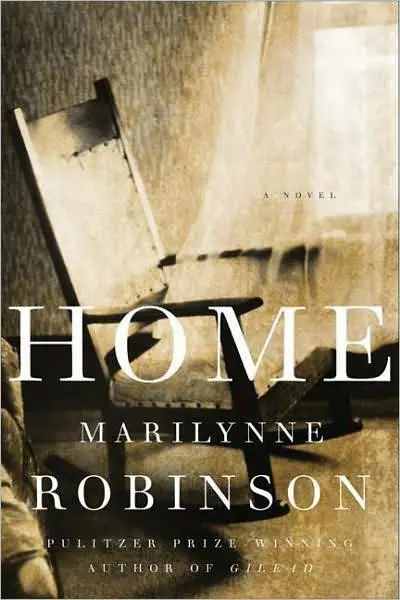
- Название:Home
- Автор:
- Издательство:Farrar, Straus and Giroux
- Жанр:
- Год:2008
- ISBN:нет данных
- Рейтинг книги:3 / 5. Голосов: 1
-
Избранное:Добавить в избранное
- Отзывы:
-
Ваша оценка:
Home: краткое содержание, описание и аннотация
Предлагаем к чтению аннотацию, описание, краткое содержание или предисловие (зависит от того, что написал сам автор книги «Home»). Если вы не нашли необходимую информацию о книге — напишите в комментариях, мы постараемся отыскать её.
, Marilynne Robinson's Pulitzer Prize — winning novel.
is an entirely independent, deeply affecting novel that takes place concurrently in the same locale, this time in the household of Reverend Robert Boughton, Ames's closest friend.
Glory Boughton, aged thirty-eight, has returned to Gilead to care for her dying father. Soon her brother, Jack — the prodigal son of the family, gone for twenty years — comes home too, looking for refuge and trying to make peace with a past littered with tormenting trouble and pain.
Jack is one of the great characters in recent literature. A bad boy from childhood, an alcoholic who cannot hold a job, he is perpetually at odds with his surroundings and with his traditionalist father, though he remains Boughton’s most beloved child. Brilliant, lovable, and wayward, Jack forges an intense bond with Glory and engages painfully with Ames, his godfather and namesake.
Home
Home — читать онлайн бесплатно полную книгу (весь текст) целиком
Ниже представлен текст книги, разбитый по страницам. Система сохранения места последней прочитанной страницы, позволяет с удобством читать онлайн бесплатно книгу «Home», без необходимости каждый раз заново искать на чём Вы остановились. Поставьте закладку, и сможете в любой момент перейти на страницу, на которой закончили чтение.
Интервал:
Закладка:
And his self-sufficiency was also guardedness, as if his personal effects could be interpreted, or as if, few as they were, worn as they were, they were saturated with the particulars of his secretive life and could mock or accuse him, or expose old injury, or old happiness, which seemed to be the same thing, more or less. Once, when he had been home for a week or so, she had gone out to hang the laundry and had found two of his shirts on the line, already dry. So she took them in to iron them, since she would be ironing anyway. Collar, yoke, sleeves — this was the proper order of things, so her mother had said, and she did not depart from it. When she began to iron the first of the sleeves, she noticed that it was spangled with stars and flowers, an elaborate embroidery of white on white from the cuff to the elbow, and one final flower near the shoulder.
Jack came into the porch, stopped abruptly when he saw what she was doing, and smiled at her.
“Sorry,” she said. “I guess I’ve intruded again.”
He said, “Careful. That’s my best shirt.”
“I’m always careful. The embroidery on it is really beautiful.”
“A friend of mine said she would mend it for me, and that’s what she did instead. It was a kind of joke.”
“Very pretty, though.”
He nodded.
She said, “You can finish. You’ve made me nervous.”
He shrugged. “I’m touchy. I know that.”
“No, this is beautiful. You’re right to worry about it.”
He said, “I almost never wear it. But I lost that other suitcase.” He came just close enough to look sidelong at the flowers and stars, pressed smooth, softly bright like damask. “I never expected anything like that. She did it years ago. Years ago.” That was the first she had heard of Della.
JACK CAME DOWNSTAIRS TO HELP PREPARE THEIR FATHER for his dinner, wordlessly, since the old man slept on in the vapors and perfumes of Sabbath. He polished the old man’s shoes and brushed his jacket and rummaged through his ties. He brought out two, one a dark blue stripe and one maroon and ruby. Glory touched the gorgeous one, Jack nodded and draped it over the shoulder of the jacket. Then he rummaged again and found the tie clasp that looked like a dagger with a St. Andrew’s cross on the hilt, and the matching cuff links. She shrugged. Allusions to Scotland aroused in their father a wistful indignation, and a readiness to defend the proposition that history in general ought to have unfolded otherwise, with that one sad instance as case in point. Ames, being no Scot, nor much interested in history after the sack of Rome and before the Continental Congress, heard him out with a patience their father found trying. “Then what does matter?” their father would ask the air, once Ames was out the door. So Jack returned them to the dresser. He came back with the Masonic set, Scottish Rite, of course, but a reminder of power and prosperity won despite all. Ames was no Mason, either, so their father’s vows of secrecy forbade conversational forays that might otherwise have become tedious. She nodded.
She brought out his best new shirt. Jack touched the sleeve and whispered, “Very nice!” Their father had always said it was a false economy to buy clothes of poor quality because he was, in his decorous, ministerial way, a dandy. From time to time, in their childhood, boxes arrived from Chicago. Suits and shirts and ties emerged from them, ordinary enough to pass unnoticed, except as they gave his lanky body an air of composure and grace. A new dress or suit, which also arrived from Chicago, was the reward for the child who gained the most height as a percentage of his or her height the previous Easter. This began as a ploy of their mother’s to get them to eat vegetables. The figuring of percentages was added as a concession to Teddy’s notions of equity. It was he who reflected on the fact that the girls would be sure to grow less than the boys did in absolute terms. Jack never turned up for the measuring ceremony, which was a boisterous business of cake and cocoa and argumentative calculation. But that one year the suit was for him anyway and he did come to Easter service. Looking so beautiful, his father said when he mentioned it.
SO SHE AND JACK MADE A SORT OF PIECEMEAL SIMULACRUM of their dozing father. Jack played solitaire beside him while Glory dressed, then Jack went upstairs while Glory finished the vegetables and the gravy. Half an hour before the Ameses were to arrive, Glory roused her father and helped him into his clothes, washed his face and brushed his hair into a fine white tousle that went handsomely with his glorious tie and the irascible look he assumed to conceal his pleasure at these attentions to his vanity.
“Jack is here,” he said, as if to exclude other possibilities.
“He went upstairs a few minutes ago.”
“He will be back downstairs in time for dinner.”
“Yes.”
Then Ames arrived with Lila and Robby, the three of them in their church clothes, and she took her father into the parlor with them, the company parlor, where they sat on the creaky chairs no one ever sat on. It had been almost forgotten that they were not there just to be dismally ornamental, chairs only in the same sense that the lamp stand was a shepherdess. Ames was clearly bemused by the formality her father had willed upon the occasion. The room was filled with those things that seem to exist so that children can be forbidden to touch them — porcelain windmills and pagodas and china dogs — and Robby’s eyes were bright with suppressed attraction to them. He leaned at his mother’s knee, lifting his face to whisper to her now and then, bunching and twisting the hem of her dress in his hands. There were remarks on the weather. Her father said, “Egypt will have consequences,” and she went into the kitchen to sauté the morels, since Jack had still not appeared.
Just when his absence began to seem conspicuous and awkward, when she had gone into the parlor to tell them that Jack would certainly be down in a minute or two, they heard him on the stairs, and then there he was, standing in the doorway. He was dressed in one of his father’s fine old dark suits. There was a silence of surprise. He brushed at his shoulder. He said, “The cloth is a little faded. It looks like dust.” Then no one spoke until his father said, “I was quite a tall fellow at one time.”
Jack was wearing one of the creamy shirts she had brought down from the chest in the attic and the blue striped tie, and his hair was parted high and combed straight to the side. He looked very like his father in his prime, except for the marked weariness of his face, his mild and uninnocent expression. Aware of the silence, he smiled and touched the scar beneath his eye. But he would have looked elegant, after a decorous and outmoded fashion, if he had not been Jack, and if they had not thought, therefore, What does this mean? what might he do next? And there was something moving in the fact that the suit fit him almost perfectly, or would have if he were not quite so thin. He was the measure of the failure of his father’s body, and also perhaps a portending of the failure of his own.
Ames said, “Well,” and looked at him for a moment before he remembered to rise.
Glory had noticed that men who were on uncertain terms with each other will take one step forward, leaning into a space between them as if the distance had been arrived at by treaty and could be breached only for the moment it took them to shake hands. “Jack,” he said.
Jack said, “Reverend. Mrs. Ames.” And then he laughed and smoothed his lapels and looked at Glory sidelong, as if to say, “Another bad idea!” He was wearing the dagger tie clasp. The brightness in his face meant anxiety. When he was anxious a strange honesty overtook him. He did understandable things for understandable reasons, answering expectation in terms that were startlingly literal, as if in him the skeletal machinery of conventional behavior, the extension and contraction of the pulleys of muscle and sinew, was all exposed. And he was aware of this, embarrassed by it, inclined to pass it off, if he could, as irony, to the irritation of acquaintances and strangers, and, she could only imagine, employers and police.
Читать дальшеИнтервал:
Закладка:
Похожие книги на «Home»
Представляем Вашему вниманию похожие книги на «Home» списком для выбора. Мы отобрали схожую по названию и смыслу литературу в надежде предоставить читателям больше вариантов отыскать новые, интересные, ещё непрочитанные произведения.








Обсуждение, отзывы о книге «Home» и просто собственные мнения читателей. Оставьте ваши комментарии, напишите, что Вы думаете о произведении, его смысле или главных героях. Укажите что конкретно понравилось, а что нет, и почему Вы так считаете.