Marilynne Robinson - Home
Здесь есть возможность читать онлайн «Marilynne Robinson - Home» весь текст электронной книги совершенно бесплатно (целиком полную версию без сокращений). В некоторых случаях можно слушать аудио, скачать через торрент в формате fb2 и присутствует краткое содержание. Год выпуска: 2008, Издательство: Farrar, Straus and Giroux, Жанр: Современная проза, на английском языке. Описание произведения, (предисловие) а так же отзывы посетителей доступны на портале библиотеки ЛибКат.
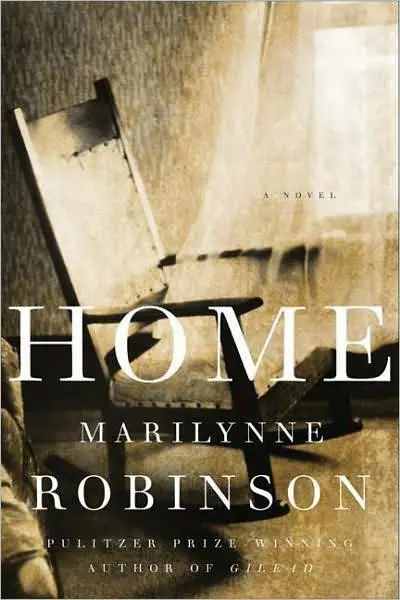
- Название:Home
- Автор:
- Издательство:Farrar, Straus and Giroux
- Жанр:
- Год:2008
- ISBN:нет данных
- Рейтинг книги:3 / 5. Голосов: 1
-
Избранное:Добавить в избранное
- Отзывы:
-
Ваша оценка:
Home: краткое содержание, описание и аннотация
Предлагаем к чтению аннотацию, описание, краткое содержание или предисловие (зависит от того, что написал сам автор книги «Home»). Если вы не нашли необходимую информацию о книге — напишите в комментариях, мы постараемся отыскать её.
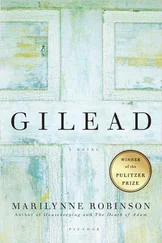
, Marilynne Robinson's Pulitzer Prize — winning novel.
is an entirely independent, deeply affecting novel that takes place concurrently in the same locale, this time in the household of Reverend Robert Boughton, Ames's closest friend.
Glory Boughton, aged thirty-eight, has returned to Gilead to care for her dying father. Soon her brother, Jack — the prodigal son of the family, gone for twenty years — comes home too, looking for refuge and trying to make peace with a past littered with tormenting trouble and pain.
Jack is one of the great characters in recent literature. A bad boy from childhood, an alcoholic who cannot hold a job, he is perpetually at odds with his surroundings and with his traditionalist father, though he remains Boughton’s most beloved child. Brilliant, lovable, and wayward, Jack forges an intense bond with Glory and engages painfully with Ames, his godfather and namesake.
Home
Home — читать онлайн бесплатно полную книгу (весь текст) целиком
Ниже представлен текст книги, разбитый по страницам. Система сохранения места последней прочитанной страницы, позволяет с удобством читать онлайн бесплатно книгу «Home», без необходимости каждый раз заново искать на чём Вы остановились. Поставьте закладку, и сможете в любой момент перейти на страницу, на которой закончили чтение.
Интервал:
Закладка:
Lila said, almost sang, “‘I do my Sunday dreaming, and all my Sunday scheming, every hour, every minute, every day. I’m hoping to discover a certain kind of lover who will show me the way.’”
Jack said, “Why, thank you, Mrs. Ames!” and she smiled.
His father said, “I thought we might enjoy something a little more in keeping with the Sabbath.”
Lila said, “That’s a good song, though.”
“If you wouldn’t mind, Jack.”
He nodded. He played “Our God, Our Help in Ages Past” and “Faith of Our Fathers” with a kind of exuberant solemnity, and they sang, and then Ames said he was weary after a long day and it must be after Robby’s bedtime, too. The boy had climbed up on the piano bench beside Jack and was shyly touching the keys. Jack went to see the guests to the door, but Robby stayed behind, plinking tentatively. When his mother called him and he climbed down from the bench, he noticed that the seat could be lifted, and he opened it. He said, “There’s money in here!”
Ames reflexively took Boughton’s arm. Glory said, “Oh, I put it there,” but her father crept toward the bench to peer into it as if it were a chasm opening. Glory said, “It’s just leftover money from the household allowance. I take it out of the other drawer so I can keep track of what I’m spending,” but her father, with Ames holding his arm, continued to stare at it. Jack looked in at it, too, and then he started to laugh. “Good try, Glory. A likely tale!” He said, “If there are thirty-eight dollars in there I will have to believe in — something.” And he put his hands to his face and laughed.
His father was bewildered to the point of indignation. “Now that,” he said, “is a remark I simply do not understand!”
Robby said, “Well, it is kind of funny to have all those dollar bills in there!”
Ames smoothed the boy’s hair. “Yes, it is. You’re right about that. Now, you go home with your mother. I’ll be along pretty soon.”
When Lila and the boy were out the door, Glory slammed the piano shut, so hard that the strings rang. “Everyone is ignoring me!” she said. Her anger startled all of them. “Wait.” She went into the parlor and came back with the big Bible. She closed the bench and set the Bible on it. “Now watch. Everyone watch.” And she knelt and put her right hand on the Bible. “I solemnly swear, so help me, God, that I personally put that money in the piano bench. It looks as if I were hiding it, but it was just a lazy kind of bookkeeping. That’s all it was. And I did it. No one else. If I’m lying, may God strike me dead.”
Her father said, “That kind of language isn’t really necessary, dear,” but he was clearly impressed, and also relieved. “You’re good to your brother,” he said, and Jack laughed. “I only meant—” he said, and looked so weary that Ames took him into his room and helped him lie down. Before he left, Reverend Ames said goodbye to them both, and shook Jack’s hand again. His cordiality seemed heavily compounded with regret, with suppressed irritation. Still, Jack was clearly grateful for it.
When he was gone Jack said, “That thing you did with the Bible was great. I’m going to have to remember that.” And he laughed. Then, “If you hadn’t rescued it, the whole thing would have been a disaster, but as it was, I thought, well, I didn’t think it was a disaster, all in all.” He looked at her as though he had asked her a question.
Amazing, she thought, but she said, “No, it went well enough.”
He nodded. “I believe it did. My expectations were low. Reasonable in the circumstances. Still. His kid seemed to like me. And the Mrs. That part of it went pretty well.” He went upstairs and came back down again in one of his own shirts and began to help her clear the table.
She said, “Jack, can I ask you something? No, I’ll tell you something. I’m beginning to think your Della can’t be worth all this misery.”
“What? She’s worth it. If I could be any more miserable, she’d be worth that, too. You’ll have to take my word for it.”
“She doesn’t write to you—”
He smiled at her, stung.
“I’m sorry. I don’t know what the problem is.”
He said, “That’s true. You don’t.”
“But I know you a little now, and you’re really not so hard to forgive.”
“Why, thank you.” Then he said, “But you don’t know how much she’s had to forgive. You can’t even imagine. And there’s more every damn day.” He looked at her. He said, “And I think that’s enough about Della.”

THE NEXT DAY GLORY WENT TO THE HARDWARE STORE and bought two pairs of the tan cotton pants and three of the blue denim shirts local men wore when they were not farming or fishing or dressed for a funeral. They were folded over cardboard, stiff when they were new, but she would put them through the wash twice and press them a little and they would be fine. She guessed at Jack’s size. Anything long enough was too wide, but he would have to make the best of that.
While she was hanging them on the clothesline, he walked over from the garden and stood with his hands on his hips, watching. He said, “Those for me?”
“If you think you can use them.”
He laughed. “I’m pretty sure I can.” He said, “Thanks, Glory,” and he reached over and touched a sleeve appreciatively. There was no irony in the gesture. “I’ll have to owe you for this.”
“You don’t owe me for anything. I took some money out of the piano bench. I’m as broke as you are.”
“I lost that other suitcase.”
“I know.”
He was quiet for a minute. “You had a pretty good job.”
“I did.”
“That bastard took your money.”
She shrugged. “I gave it to him. It doesn’t matter. I didn’t have any real plans for it.”
He nodded. “The old fellow thinks you had to quit teaching because you got married.”
“And you know differently.”
“Yes. None of my business.” He took a cigarette from his shirt pocket and tapped it on his thumbnail.
“What?”
“I’ve often thought—” he said. “I mean, it’s been my experience — that women can be too kind. Too kind for their own good.”
She laughed. “I’ve thought so, too, from time to time.”
“You’re kind.”
“Case in point.”
He studied her face, wincing against the smoke from his cigarette. Then he said, “Could you forgive him?” He glanced away. “Sorry. None of my business.” He said, “You brought it up last night. I was just wondering.”
She smiled at him.
“Right,” he said. “You don’t like to talk about it.”
There was something that charmed her in the fact that her brother, the one true worldling in the whole tribe of Boughtons, seemed to be asking her for advice, or for wisdom, standing there in the sunlight with the wind hushing in the dusty lilacs of their childhood and laundry swaying on the lines where their school clothes used to hang. He looked older in sunlight. It brought out a sort of toughened frailty in him. But, standing at a little distance, looking away at nothing in particular, he had that oblique and hesitant persistence about him that meant he was in earnest, so far as she could tell.
So she said, “Could I forgive him? I’m not sure I understand the question. But the answer is no.”
He nodded.
“I don’t wish him any harm, and I’m glad I’ll never see him again. I don’t enjoy being reminded of him.”
“Sorry. I wouldn’t have mentioned it, but you did bring it up. You said I’m not hard to forgive. Something like that.”
“Were you good to her?”
“I tried to be.” He shrugged.
Читать дальшеИнтервал:
Закладка:
Похожие книги на «Home»
Представляем Вашему вниманию похожие книги на «Home» списком для выбора. Мы отобрали схожую по названию и смыслу литературу в надежде предоставить читателям больше вариантов отыскать новые, интересные, ещё непрочитанные произведения.





Обсуждение, отзывы о книге «Home» и просто собственные мнения читателей. Оставьте ваши комментарии, напишите, что Вы думаете о произведении, его смысле или главных героях. Укажите что конкретно понравилось, а что нет, и почему Вы так считаете.